- Welcome to Oil and Gas World Community.

A Community by the Industry and for the Industry

Recent posts
#41
Private Oil & Gas Companies / Hilcorp Energy
Last post by Administrator - Apr 11, 2026, 07:50 AMHilcorp Energy: A Private Powerhouse in U.S. Oil and Gas
Introduction
In an industry where quarterly earnings reports often dictate decision‑making, Hilcorp Energy has charted a different course. As a privately held company, it has the freedom to pursue long‑term strategies, invest in asset rejuvenation, and cultivate a corporate culture that prioritizes both performance and people. This combination of strategic acquisitions, disciplined operations, and employee engagement has propelled Hilcorp into the ranks of the most successful independent producers in the country.
Company Overview
Hilcorp Energy is a privately owned American energy exploration and production company operating in nine U.S. states, including Alaska, Louisiana, New Mexico, Ohio, Pennsylvania, Texas, and Wyoming. Its portfolio spans both oil and natural gas assets, with a particular emphasis on acquiring mature fields from larger producers and extending their productive life through targeted investment and operational improvements.
The company's founder, Jeffery Hildebrand, envisioned a business model that combined entrepreneurial agility with disciplined execution. This vision has allowed Hilcorp to grow steadily without the pressures of public markets, enabling it to make bold acquisitions and long‑term investments.
Business Model and Strategy
Hilcorp's growth strategy rests on three pillars:
Acquisition of Mature Assets
Hilcorp specializes in purchasing oil and gas fields that have been producing for decades—assets that larger companies may consider non‑core. By applying advanced recovery techniques, upgrading infrastructure, and optimizing production processes, Hilcorp often extends the life of these fields by many years.
Operational Efficiency
The company is known for its lean operations and data‑driven decision‑making. Field teams are empowered to identify inefficiencies and implement solutions quickly, reducing downtime and maximizing output. This operational discipline has helped Hilcorp remain profitable even during downturns in commodity prices.
Employee Ownership and Incentives
Perhaps Hilcorp's most distinctive feature is its employee incentive program. The company has run multi‑year challenges where, if production and growth targets are met, every employee—from field technicians to executives—receives substantial rewards. Past incentives have included $50,000 cash bonuses and even brand‑new vehicles for every employee. This approach fosters a sense of shared purpose and motivates teams to work collaboratively toward ambitious goals.
Corporate Culture
Hilcorp's culture is built on transparency, accountability, and empowerment. Leaders share company performance metrics openly, ensuring that employees understand how their work contributes to overall success. Decision‑making is decentralized, allowing field teams to act quickly without excessive bureaucracy.
This culture has earned Hilcorp repeated recognition on Fortune's "100 Best Companies to Work For" list. Employees often cite the company's trust in their abilities, the tangible rewards for performance, and the sense of ownership as key reasons for their loyalty.
Safety and Environmental Responsibility
Operating in the oil and gas sector comes with significant safety and environmental responsibilities. Hilcorp invests heavily in modernizing equipment, implementing rigorous safety protocols, and training employees to prevent accidents. The company also works to minimize its environmental footprint by reducing emissions, managing water use responsibly, and ensuring compliance with all relevant regulations.
In communities where it operates, Hilcorp supports local initiatives in education, healthcare, and infrastructure. This community engagement not only strengthens relationships but also reinforces the company's commitment to being a responsible corporate citizen.
Industry Position and Impact
While Hilcorp does not disclose detailed financials due to its private ownership, industry analysts estimate that it ranks among the top independent oil and gas producers in the United States. Its ability to acquire and revitalize mature assets has made it a key player
Introduction
In an industry where quarterly earnings reports often dictate decision‑making, Hilcorp Energy has charted a different course. As a privately held company, it has the freedom to pursue long‑term strategies, invest in asset rejuvenation, and cultivate a corporate culture that prioritizes both performance and people. This combination of strategic acquisitions, disciplined operations, and employee engagement has propelled Hilcorp into the ranks of the most successful independent producers in the country.
Company Overview
Hilcorp Energy is a privately owned American energy exploration and production company operating in nine U.S. states, including Alaska, Louisiana, New Mexico, Ohio, Pennsylvania, Texas, and Wyoming. Its portfolio spans both oil and natural gas assets, with a particular emphasis on acquiring mature fields from larger producers and extending their productive life through targeted investment and operational improvements.
The company's founder, Jeffery Hildebrand, envisioned a business model that combined entrepreneurial agility with disciplined execution. This vision has allowed Hilcorp to grow steadily without the pressures of public markets, enabling it to make bold acquisitions and long‑term investments.
Business Model and Strategy
Hilcorp's growth strategy rests on three pillars:
Acquisition of Mature Assets
Hilcorp specializes in purchasing oil and gas fields that have been producing for decades—assets that larger companies may consider non‑core. By applying advanced recovery techniques, upgrading infrastructure, and optimizing production processes, Hilcorp often extends the life of these fields by many years.
Operational Efficiency
The company is known for its lean operations and data‑driven decision‑making. Field teams are empowered to identify inefficiencies and implement solutions quickly, reducing downtime and maximizing output. This operational discipline has helped Hilcorp remain profitable even during downturns in commodity prices.
Employee Ownership and Incentives
Perhaps Hilcorp's most distinctive feature is its employee incentive program. The company has run multi‑year challenges where, if production and growth targets are met, every employee—from field technicians to executives—receives substantial rewards. Past incentives have included $50,000 cash bonuses and even brand‑new vehicles for every employee. This approach fosters a sense of shared purpose and motivates teams to work collaboratively toward ambitious goals.
Corporate Culture
Hilcorp's culture is built on transparency, accountability, and empowerment. Leaders share company performance metrics openly, ensuring that employees understand how their work contributes to overall success. Decision‑making is decentralized, allowing field teams to act quickly without excessive bureaucracy.
This culture has earned Hilcorp repeated recognition on Fortune's "100 Best Companies to Work For" list. Employees often cite the company's trust in their abilities, the tangible rewards for performance, and the sense of ownership as key reasons for their loyalty.
Safety and Environmental Responsibility
Operating in the oil and gas sector comes with significant safety and environmental responsibilities. Hilcorp invests heavily in modernizing equipment, implementing rigorous safety protocols, and training employees to prevent accidents. The company also works to minimize its environmental footprint by reducing emissions, managing water use responsibly, and ensuring compliance with all relevant regulations.
In communities where it operates, Hilcorp supports local initiatives in education, healthcare, and infrastructure. This community engagement not only strengthens relationships but also reinforces the company's commitment to being a responsible corporate citizen.
Industry Position and Impact
While Hilcorp does not disclose detailed financials due to its private ownership, industry analysts estimate that it ranks among the top independent oil and gas producers in the United States. Its ability to acquire and revitalize mature assets has made it a key player
#42
Maritime / Eastern Pacific Shipping Partn...
Last post by Administrator - Apr 11, 2026, 07:31 AMSingapore, 17 April 2024 – Eastern Pacific Shipping (EPS) has strengthened its commitment to green shipping and maritime decarbonization by signing Memorandums of Understanding (MoUs) with the Maritime and Port Authority of Singapore (MPA), alongside leading classification societies ABS and Lloyd's Register.
Under the agreement, six ammonia dual-fuel newbuild vessels managed by EPS will be registered under the Singapore Registry of Ships (SRS) upon delivery, reinforcing Singapore's position as a global hub for sustainable shipping and alternative marine fuels.
Advancing Ammonia as a Future Marine Fuel
This strategic collaboration follows EPS's earlier announcement of partnerships with MAN Energy Solutions, HD Hyundai Heavy Industries, and shipyards under China State Shipbuilding Corporation (CSSC) to develop ammonia-powered marine engines. These engines are expected to power EPS's next-generation fleet, positioning the company at the forefront of zero-emission shipping technology.
Ammonia is widely seen as one of the most promising carbon-free marine fuels, offering significant potential to reduce greenhouse gas emissions in line with global climate targets. By investing in ammonia dual-fuel vessels, EPS is taking a proactive step toward future-proofing its fleet against tightening environmental regulations.
Supporting Singapore's Maritime Decarbonization Strategy
The MoUs reaffirm EPS's strong support for MPA's initiatives to decarbonize and digitalize the maritime industry. The collaboration will focus on several key areas:
This partnership aligns with Singapore's ambition to become a leading global center for green maritime innovation and clean energy solutions.
Building Skills and Safety for Next-Generation Fuels
A major component of the collaboration is workforce development. EPS will work closely with MPA to support crew training programs for ammonia and other low-carbon fuels at the upcoming Maritime Energy Training Facility, expected to be operational by 2026.
This initiative ensures that seafarers are equipped with the technical expertise and safety knowledge required to handle new fuel technologies, which is critical as the industry transitions toward alternative energy sources.
Industry Collaboration Driving Sustainable Shipping
EPS CEO Cyril Ducau emphasized the importance of collaboration in accelerating maritime decarbonization. He highlighted that while ammonia is gaining momentum as a viable marine fuel, safety remains a top priority, especially in handling and transportation.
The partnership between EPS, MPA, and leading industry stakeholders reflects a collective "act now" approach to reducing emissions while maintaining the highest standards of safety, training, and environmental responsibility.
Strengthening Singapore's Role in Green Shipping
By registering these ammonia dual-fuel vessels under the Singapore Registry of Ships, EPS is contributing to the growth of Singapore as a global hub for sustainable shipping, LNG alternatives, and zero-emission fuels. The initiative also supports broader industry efforts to meet International Maritime Organization (IMO) targets for reducing carbon emissions.
Driving the Future of Zero-Emission Maritime Transport
This collaboration marks a significant step forward in the adoption of ammonia as a marine fuel and demonstrates how partnerships between shipowners, regulators, and technology providers can accelerate the transition to cleaner, greener shipping.
With six ammonia-ready vessels and ongoing investments in innovation, Eastern Pacific Shipping continues to position itself as a leader in maritime decarbonization, alternative fuels, and next-generation vessel technology, helping shape the future of global shipping.
Under the agreement, six ammonia dual-fuel newbuild vessels managed by EPS will be registered under the Singapore Registry of Ships (SRS) upon delivery, reinforcing Singapore's position as a global hub for sustainable shipping and alternative marine fuels.
Advancing Ammonia as a Future Marine Fuel
This strategic collaboration follows EPS's earlier announcement of partnerships with MAN Energy Solutions, HD Hyundai Heavy Industries, and shipyards under China State Shipbuilding Corporation (CSSC) to develop ammonia-powered marine engines. These engines are expected to power EPS's next-generation fleet, positioning the company at the forefront of zero-emission shipping technology.
Ammonia is widely seen as one of the most promising carbon-free marine fuels, offering significant potential to reduce greenhouse gas emissions in line with global climate targets. By investing in ammonia dual-fuel vessels, EPS is taking a proactive step toward future-proofing its fleet against tightening environmental regulations.
Supporting Singapore's Maritime Decarbonization Strategy
The MoUs reaffirm EPS's strong support for MPA's initiatives to decarbonize and digitalize the maritime industry. The collaboration will focus on several key areas:
- Development of ammonia bunkering infrastructure
- Seafarer training on ammonia safety and handling
- Joint research on ammonia fuel standards and technologies
- Exploration of zero and near-zero emission fuel trials
This partnership aligns with Singapore's ambition to become a leading global center for green maritime innovation and clean energy solutions.
Building Skills and Safety for Next-Generation Fuels
A major component of the collaboration is workforce development. EPS will work closely with MPA to support crew training programs for ammonia and other low-carbon fuels at the upcoming Maritime Energy Training Facility, expected to be operational by 2026.
This initiative ensures that seafarers are equipped with the technical expertise and safety knowledge required to handle new fuel technologies, which is critical as the industry transitions toward alternative energy sources.
Industry Collaboration Driving Sustainable Shipping
EPS CEO Cyril Ducau emphasized the importance of collaboration in accelerating maritime decarbonization. He highlighted that while ammonia is gaining momentum as a viable marine fuel, safety remains a top priority, especially in handling and transportation.
The partnership between EPS, MPA, and leading industry stakeholders reflects a collective "act now" approach to reducing emissions while maintaining the highest standards of safety, training, and environmental responsibility.
Strengthening Singapore's Role in Green Shipping
By registering these ammonia dual-fuel vessels under the Singapore Registry of Ships, EPS is contributing to the growth of Singapore as a global hub for sustainable shipping, LNG alternatives, and zero-emission fuels. The initiative also supports broader industry efforts to meet International Maritime Organization (IMO) targets for reducing carbon emissions.
Driving the Future of Zero-Emission Maritime Transport
This collaboration marks a significant step forward in the adoption of ammonia as a marine fuel and demonstrates how partnerships between shipowners, regulators, and technology providers can accelerate the transition to cleaner, greener shipping.
With six ammonia-ready vessels and ongoing investments in innovation, Eastern Pacific Shipping continues to position itself as a leader in maritime decarbonization, alternative fuels, and next-generation vessel technology, helping shape the future of global shipping.
#43
Maritime / Eastern Pacific Shipping Insta...
Last post by Administrator - Apr 11, 2026, 07:21 AMSingapore, 19 March 2026 – Eastern Pacific Shipping (EPS) has successfully completed its second installation of bound4blue eSAIL® wind propulsion technology, marking a major milestone in sustainable shipping. The latest deployment involves three 22-metre-high eSAIL® units installed on the newbuild MR tanker Pacific Sunstone, reinforcing EPS's commitment to maritime decarbonization, fuel efficiency, and green shipping innovation.
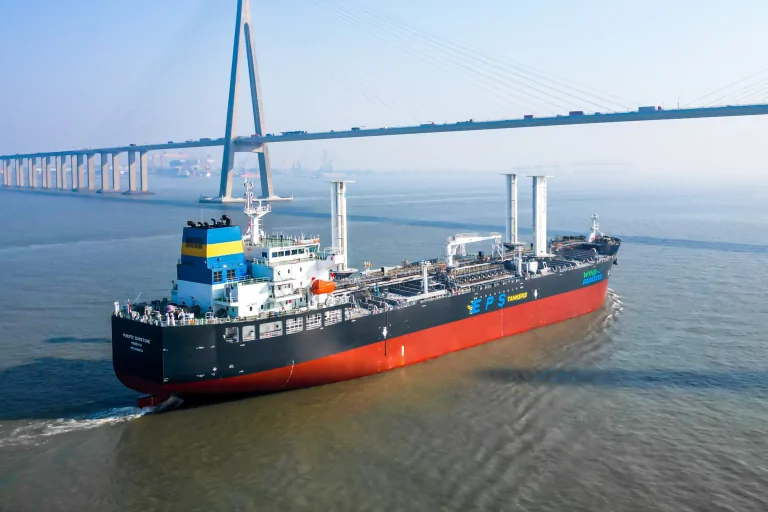
The vessel was constructed at New Times Shipbuilding in Jiangsu Province, China, with the installation seamlessly integrated into the shipbuilding process. This project represents EPS's first newbuild installation of eSAIL® technology, following the successful retrofit of the tanker Pacific Sentinel.
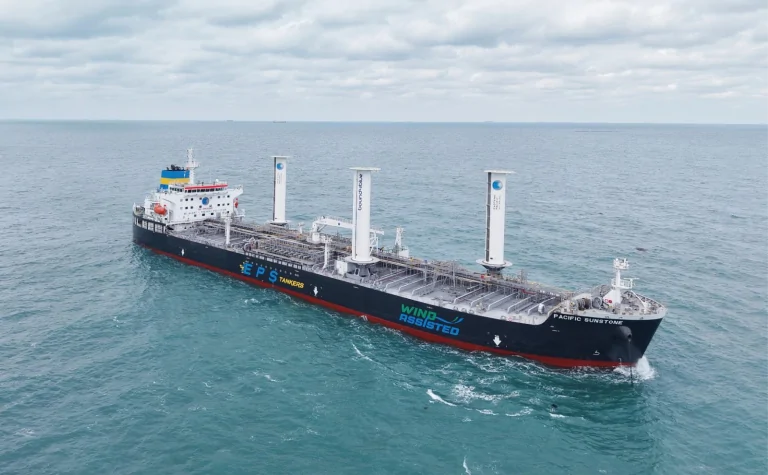
eSAIL® Wind Propulsion: A Game-Changer for Tanker Efficiency
Developed by bound4blue, eSAIL® systems are rapidly gaining traction in the global shipping industry, particularly in the tanker segment. These wind-assisted propulsion systems use suction sail technology to generate aerodynamic lift, delivering up to seven times more efficiency than conventional rigid sails of similar size.
Unlike other wind propulsion solutions, eSAIL® units:
This makes them especially suitable for tankers operating in complex, regulated environments, where safety and operational simplicity are critical.
Seamless Newbuild Integration Improves Operational Efficiency
The installation on Pacific Sunstone was designed for plug-and-play integration, with foundations and electrical systems incorporated during construction. The sails were manufactured in Spain and delivered to China for final installation, ensuring a fast, safe, and cost-efficient deployment without structural modifications or delays.
By embedding wind propulsion technology into the vessel from day one, EPS ensures long-term operational efficiency, reduced fuel consumption, and lower emissions.
Proven Fuel Savings and Emissions Reduction
The newbuild installation builds on proven performance data from the earlier retrofit of Pacific Sentinel. A six-month study conducted by EPS and the Global Centre for Maritime Decarbonisation demonstrated:
These results were achieved even under largely unfavorable wind conditions, highlighting the robust performance and scalability of eSAIL® technology across global shipping routes.
Supporting IMO and EU Decarbonization Regulations
The adoption of wind-assisted propulsion helps shipowners comply with increasingly strict environmental regulations, including:
Through mechanisms like the Wind Reward Factor, eSAIL® systems provide measurable compliance benefits while reducing operational costs. With a typical payback period of less than five years, the technology offers strong ROI for shipowners investing in sustainable shipping solutions.
EPS Expands Commitment to Sustainable Shipping
According to EPS leadership, the decision to install eSAIL® technology on a newbuild vessel was a natural progression following the success of earlier deployments. By collaborating closely with bound4blue and the shipyard, EPS ensured smooth integration while enhancing the vessel's energy efficiency and environmental performance.
This project demonstrates how wind propulsion systems can be scaled across both retrofits and newbuilds, making them a viable solution for a wide range of vessel types, including tankers, bulk carriers, Ro-Ro ships, cruise vessels, and gas carriers.
Growing Adoption of Wind-Assisted Propulsion in Shipping
bound4blue's eSAIL® technology, which has received DNV type approval, is increasingly being adopted by leading global shipowners. Companies such as Odfjell, Maersk Tankers, Klaveness Combination Carriers, and BW Epic Kosan are already leveraging wind propulsion to reduce emissions and improve fuel efficiency.
Driving the Future of Green Shipping
The successful installation of eSAIL® units on Pacific Sunstone highlights the growing role of wind-assisted propulsion in the future of maritime transport. As the shipping industry accelerates its transition toward net-zero emissions, technologies like eSAIL® offer a practical, scalable, and cost-effective pathway to cleaner operations.
With this latest deployment, Eastern Pacific Shipping continues to position itself as a leader in sustainable shipping, LNG alternatives, and green maritime innovation, setting a benchmark for the global industry.
The vessel was constructed at New Times Shipbuilding in Jiangsu Province, China, with the installation seamlessly integrated into the shipbuilding process. This project represents EPS's first newbuild installation of eSAIL® technology, following the successful retrofit of the tanker Pacific Sentinel.
eSAIL® Wind Propulsion: A Game-Changer for Tanker Efficiency
Developed by bound4blue, eSAIL® systems are rapidly gaining traction in the global shipping industry, particularly in the tanker segment. These wind-assisted propulsion systems use suction sail technology to generate aerodynamic lift, delivering up to seven times more efficiency than conventional rigid sails of similar size.
Unlike other wind propulsion solutions, eSAIL® units:
- Require no tilting systems
- Maintain vessel airdraft
- Are non-ATEX compliant, reducing complexity and cost
- Feature a compact footprint for easy integration
This makes them especially suitable for tankers operating in complex, regulated environments, where safety and operational simplicity are critical.
Seamless Newbuild Integration Improves Operational Efficiency
The installation on Pacific Sunstone was designed for plug-and-play integration, with foundations and electrical systems incorporated during construction. The sails were manufactured in Spain and delivered to China for final installation, ensuring a fast, safe, and cost-efficient deployment without structural modifications or delays.
By embedding wind propulsion technology into the vessel from day one, EPS ensures long-term operational efficiency, reduced fuel consumption, and lower emissions.
Proven Fuel Savings and Emissions Reduction
The newbuild installation builds on proven performance data from the earlier retrofit of Pacific Sentinel. A six-month study conducted by EPS and the Global Centre for Maritime Decarbonisation demonstrated:
- 8% average net power reduction
- 5.5% net fuel savings
- Peak savings exceeding 20% in favorable wind conditions
These results were achieved even under largely unfavorable wind conditions, highlighting the robust performance and scalability of eSAIL® technology across global shipping routes.
Supporting IMO and EU Decarbonization Regulations
The adoption of wind-assisted propulsion helps shipowners comply with increasingly strict environmental regulations, including:
- Carbon Intensity Indicator (CII)
- EU Emissions Trading System (EU ETS)
- Energy Efficiency Design Index (EEDI/EEXI)
- FuelEU Maritime regulations
Through mechanisms like the Wind Reward Factor, eSAIL® systems provide measurable compliance benefits while reducing operational costs. With a typical payback period of less than five years, the technology offers strong ROI for shipowners investing in sustainable shipping solutions.
EPS Expands Commitment to Sustainable Shipping
According to EPS leadership, the decision to install eSAIL® technology on a newbuild vessel was a natural progression following the success of earlier deployments. By collaborating closely with bound4blue and the shipyard, EPS ensured smooth integration while enhancing the vessel's energy efficiency and environmental performance.
This project demonstrates how wind propulsion systems can be scaled across both retrofits and newbuilds, making them a viable solution for a wide range of vessel types, including tankers, bulk carriers, Ro-Ro ships, cruise vessels, and gas carriers.
Growing Adoption of Wind-Assisted Propulsion in Shipping
bound4blue's eSAIL® technology, which has received DNV type approval, is increasingly being adopted by leading global shipowners. Companies such as Odfjell, Maersk Tankers, Klaveness Combination Carriers, and BW Epic Kosan are already leveraging wind propulsion to reduce emissions and improve fuel efficiency.
Driving the Future of Green Shipping
The successful installation of eSAIL® units on Pacific Sunstone highlights the growing role of wind-assisted propulsion in the future of maritime transport. As the shipping industry accelerates its transition toward net-zero emissions, technologies like eSAIL® offer a practical, scalable, and cost-effective pathway to cleaner operations.
With this latest deployment, Eastern Pacific Shipping continues to position itself as a leader in sustainable shipping, LNG alternatives, and green maritime innovation, setting a benchmark for the global industry.
#44
Maritime / HMM Orders KRW 4 Trillion New ...
Last post by Administrator - Apr 11, 2026, 07:16 AM16 October 2025
South Korean shipping leader HMM Co., Ltd. has announced a major KRW 4 trillion (approx. USD 3 billion) newbuilding order, reinforcing its commitment to fleet expansion and sustainable shipping. This large-scale investment is set to enhance HMM's competitiveness while aligning with global decarbonization trends in the maritime industry.
The order includes 12 LNG dual-fuel 13,000 TEU container ships and two Very Large Crude Carriers (VLCCs). The container vessels will be constructed by top-tier shipbuilders HD Hyundai Heavy Industries and Hanwha Ocean, both known for delivering technologically advanced and environmentally efficient vessels.
LNG Dual-Fuel Vessels Lead the Green Shipping Transition
A central focus of HMM's investment is the adoption of LNG dual-fuel technology, which allows ships to run on both liquefied natural gas and conventional marine fuels. As stricter emissions regulations from the International Maritime Organization (IMO) and the European Union take effect, LNG is widely seen as a practical and scalable lower-emission fuel.
According to industry data, nearly half of all new ships ordered globally now use alternative fuels, with LNG dominating the segment. By expanding its LNG-powered fleet, HMM strengthens its position in eco-friendly shipping and ensures compliance with future environmental standards.
Strengthening Fleet Diversity and Efficiency
The new vessels will complement HMM's existing fleet, which already includes LNG-powered ships and methanol-fueled containerships. This diversified fuel strategy improves operational flexibility and reduces exposure to future fuel and regulatory risks.
In addition, the two VLCCs will enhance HMM's crude oil transport capabilities, supporting a more balanced portfolio across both container shipping and tanker markets.
Supporting HMM's 2030 Growth Strategy
This investment is a key part of HMM's mid- to long-term 2030 strategy, aimed at building a more flexible, efficient, and future-ready fleet. By modernizing its vessels, HMM is improving fuel efficiency, reducing emissions, and increasing overall operational performance.
Positioning for the Future of Global Shipping
HMM's KRW 4 trillion ship order highlights its proactive approach to navigating industry changes. With growing demand for sustainable transport and increasing regulatory pressure, investments in LNG dual-fuel vessels are becoming essential.
By expanding its fleet and focusing on greener technologies, HMM is positioning itself as a major player in the future of global shipping, LNG transport, and maritime decarbonization.
#45
Maritime / Knutsen Expands LNG Fleet with...
Last post by Administrator - Apr 11, 2026, 07:12 AM
9 Dec 2025
Norwegian shipping company Knutsen Group has announced a major fleet expansion after signing a long-term charter agreement with Italian energy company Edison S.p.A. for a new state-of-the-art liquefied natural gas (LNG) carrier. The deal marks a significant step forward in strengthening Knutsen's position in the global LNG shipping market while supporting the continued growth of sustainable energy transportation.
The new LNG carrier, with a capacity of 174,000 cubic meters, will be constructed by Hanwha Ocean at its shipyard in Geoje (Okpo), South Korea. Scheduled for delivery in 2028, the vessel will be deployed under a long-term charter to Edison, reinforcing the strategic partnership between the two companies. The contract was formally signed at Knutsen's headquarters in Haugesund, Norway, highlighting the importance of this collaboration in the evolving LNG sector.
Designed to meet the highest standards of efficiency and environmental performance, the new LNG vessel will incorporate cutting-edge maritime technology. It will feature four next-generation membrane tanks equipped with advanced insulation systems to minimize LNG boil-off, a natural evaporation process that occurs during transport. By reducing boil-off, the vessel ensures higher cargo efficiency and improved operational reliability, which are critical factors in modern LNG shipping.
In line with the industry's transition toward cleaner energy solutions, the LNG carrier will be powered by a dual-fuel propulsion system capable of operating on both LNG and marine diesel. This flexible system significantly reduces greenhouse gas emissions while maintaining operational efficiency. Additionally, the vessel will include shaft generators for optimized onboard energy usage and a full reliquefaction system that captures and reprocesses boil-off gas, further enhancing fuel efficiency and minimizing environmental impact.
The vessel has been specifically engineered to comply with the latest international and regional environmental regulations, including those set by the International Maritime Organization (IMO), as well as the European Union's FuelEU Maritime and Emissions Trading System (EU ETS). This ensures that the ship will remain competitive and fully compliant with future sustainability standards, positioning both Knutsen and Edison at the forefront of environmentally responsible LNG transportation.
This agreement further strengthens the long-standing partnership between Knutsen and Edison, which began in 2018. One of the key milestones in their collaboration was the development of the Ravenna Knutsen, a highly versatile LNG carrier with a capacity of 30,000 cubic meters. The vessel has been instrumental in supplying LNG to the Corsini port in Ravenna, Italy, supporting small-scale LNG distribution, sustainable mobility initiatives, and LNG bunkering operations for other ships.
The Ravenna Knutsen has demonstrated exceptional operational flexibility, enabling it to serve a wide range of infrastructure, including coastal regasification terminals during periods of energy disruption. Its ability to adapt to different storage facilities and vessel types has made it a valuable asset in enhancing energy security and resilience in the region.
With this new 174,000 cbm LNG carrier, Knutsen continues to expand its global LNG fleet while reinforcing its commitment to innovation, efficiency, and sustainability in maritime transport. The partnership with Edison underscores a shared vision of advancing cleaner energy logistics and meeting the growing global demand for LNG as a transition fuel in the shift toward a lower-carbon future.
#46
Maritime / BW LPG Completes Acquisition o...
Last post by Administrator - Apr 11, 2026, 07:09 AMOn 31 December 2024, BW LPG Limited announced the successful completion of its landmark acquisition of 12 modern Very Large Gas Carriers (VLGCs) from Avance Gas Holdings Ltd. This milestone follows the company's earlier announcement on 15 August 2024 and marks a significant expansion of BW LPG's fleet and global operational capacity. The final vessel, BW Avior, was delivered on schedule, completing a smooth and seamless handover process for all 12 vessels.
As part of the transaction, BW LPG issued 2,141,000 new shares to Avance Gas as partial consideration for the final vessel delivery. Following this issuance, the company's total number of shares increased to 159,282,000, with a total share capital of USD 619.9 million. The newly issued shares are fully paid and legally valid. Avance Gas now holds approximately 19.282 million shares in BW LPG, representing a 12.11% ownership stake, further aligning both companies' strategic interests. Each tranche of shares issued is subject to a 40-day lock-up period after vessel delivery, ensuring market stability.
The total transaction value stands at USD 1.05 billion, making it one of the most significant deals in the LPG shipping sector in recent years. The acquisition was structured through a combination of USD 585.4 million in cash, USD 132 million in sale-leaseback obligations, and USD 332.6 million in equity through the issuance of new shares priced at USD 17.25 each. Upon completion, BW LPG reported strong liquidity of approximately USD 552 million, as highlighted in its Q3 earnings, positioning the company well for future financing opportunities. Notably, 14 vessels within its fleet remain unencumbered and available for financing in 2025, providing additional financial flexibility.
With the addition of these 12 VLGCs, BW LPG now owns and operates a total of 53 vessels, including 22 LPG dual-fuel ships. This expansion firmly establishes BW LPG as the world's largest owner and operator of VLGCs, as well as a leader in dual-fuel LPG vessel technology. The increased fleet size enhances the company's economies of scale, operational efficiency, and global reach in the liquefied petroleum gas shipping market.
BW LPG will continue to implement its balanced chartering strategy, targeting approximately 35–40% fleet coverage through time charters and Freight Forward Agreements (FFAs). This approach allows the company to manage market volatility while capturing upside potential in the spot market. As of late 2024, VLGC spot rates are trading in the mid-USD 40,000s per day, reflecting a dynamic but resilient market environment.
Looking ahead to 2025, BW LPG maintains a positive outlook for the LPG shipping market despite expected rate fluctuations. Recent normalization of Panama Canal transit levels has reduced voyage distances, temporarily putting pressure on freight rates. However, strong underlying fundamentals continue to support the market, particularly the sustained growth in LPG production and exports from North America. Expansion of export terminal infrastructure is expected to further drive demand for VLGC capacity in the second half of the year.
Commenting on the successful completion of the transaction, CEO Kristian Sørensen emphasized the strategic importance of the acquisition. He highlighted that the company has increased its share base by approximately 15% while expanding its owned fleet by 40%, significantly enhancing BW LPG's commercial scale and operational leverage. He also acknowledged the role of Avance Gas in ensuring a smooth and efficient vessel handover process.
This acquisition underscores BW LPG's commitment to growth, efficiency, and market leadership in the global LPG shipping industry. By expanding its fleet and strengthening its financial and operational position, the company is well-positioned to capitalize on future opportunities in a rapidly evolving energy and shipping landscape.
As part of the transaction, BW LPG issued 2,141,000 new shares to Avance Gas as partial consideration for the final vessel delivery. Following this issuance, the company's total number of shares increased to 159,282,000, with a total share capital of USD 619.9 million. The newly issued shares are fully paid and legally valid. Avance Gas now holds approximately 19.282 million shares in BW LPG, representing a 12.11% ownership stake, further aligning both companies' strategic interests. Each tranche of shares issued is subject to a 40-day lock-up period after vessel delivery, ensuring market stability.
The total transaction value stands at USD 1.05 billion, making it one of the most significant deals in the LPG shipping sector in recent years. The acquisition was structured through a combination of USD 585.4 million in cash, USD 132 million in sale-leaseback obligations, and USD 332.6 million in equity through the issuance of new shares priced at USD 17.25 each. Upon completion, BW LPG reported strong liquidity of approximately USD 552 million, as highlighted in its Q3 earnings, positioning the company well for future financing opportunities. Notably, 14 vessels within its fleet remain unencumbered and available for financing in 2025, providing additional financial flexibility.
With the addition of these 12 VLGCs, BW LPG now owns and operates a total of 53 vessels, including 22 LPG dual-fuel ships. This expansion firmly establishes BW LPG as the world's largest owner and operator of VLGCs, as well as a leader in dual-fuel LPG vessel technology. The increased fleet size enhances the company's economies of scale, operational efficiency, and global reach in the liquefied petroleum gas shipping market.
BW LPG will continue to implement its balanced chartering strategy, targeting approximately 35–40% fleet coverage through time charters and Freight Forward Agreements (FFAs). This approach allows the company to manage market volatility while capturing upside potential in the spot market. As of late 2024, VLGC spot rates are trading in the mid-USD 40,000s per day, reflecting a dynamic but resilient market environment.
Looking ahead to 2025, BW LPG maintains a positive outlook for the LPG shipping market despite expected rate fluctuations. Recent normalization of Panama Canal transit levels has reduced voyage distances, temporarily putting pressure on freight rates. However, strong underlying fundamentals continue to support the market, particularly the sustained growth in LPG production and exports from North America. Expansion of export terminal infrastructure is expected to further drive demand for VLGC capacity in the second half of the year.
Commenting on the successful completion of the transaction, CEO Kristian Sørensen emphasized the strategic importance of the acquisition. He highlighted that the company has increased its share base by approximately 15% while expanding its owned fleet by 40%, significantly enhancing BW LPG's commercial scale and operational leverage. He also acknowledged the role of Avance Gas in ensuring a smooth and efficient vessel handover process.
This acquisition underscores BW LPG's commitment to growth, efficiency, and market leadership in the global LPG shipping industry. By expanding its fleet and strengthening its financial and operational position, the company is well-positioned to capitalize on future opportunities in a rapidly evolving energy and shipping landscape.
#47
South Asia / Re: India - Krishna Godavari -...
Last post by Administrator - Apr 11, 2026, 03:20 AMReliance and bp commence production from third deepwater field in India's KG D6 block
Release date: 30 June 2023
At its peak, production from the KG D6 block to account for one third of India's domestic gas production

Reliance Industries Limited (RIL) and bp p.l.c. today confirmed the commencement of production from the MJ field, following testing and commissioning activities. The MJ field represents the last of three major new deepwater developments the RIL-bp consortium have brought into production in block KG D6 off the east coast of India.
The start of gas and condensate production from the MJ field follows the start-up of the R-Cluster field in December 2020 and Satellite Cluster in April 2021. All three developments utilise the existing hub infrastructure for the block.
Together, the three fields are expected to produce around 30 million standard cubic metres of gas a day (1 billion cubic feet a day) when MJ field reaches peak production. This is expected to account for around one third of India's current domestic gas production and meet approximately 15% of India's demand.
Mukesh Ambani, chairman and managing director of Reliance Industries Limited said: "We continue to be proud of our partnership with bp that combines our expertise in commissioning complex projects under some of the most challenging environments in the last few years. Alongside the other KG D6 fields, the MJ development truly supports the 'Make in India' and 'Energy vision' laid out by the Government of India."
bp chief executive Bernard Looney added: "By safely bringing these new developments onstream, RIL and bp are making an important contribution to meeting India's demand for secure supplies of gas. Our close strategic partnership with RIL now stretches back over 15 years and we are proud of how it continues to deepen – in gas, retail, aviation fuels and sustainable mobility solutions. Together we are helping to meet India's growing energy needs, bringing the best of each partner to create real value."
Discovered in 2013 and sanctioned in 2019, the MJ field is located in water depths of up to 1,200 metres about 30 kilometres from the existing onshore terminal at Gadimoga on the east coast of India.
MJ is a high Pressure and high Temperature (HPHT), gas & condensate field. The field will produce from eight wells and reach a peak gas production of around 12 MMSCMD gas and 25,000 barrels of condensate per day.
The development includes a new Floating Production, Storage and Offloading (FPSO) vessel – the 'Ruby' – to process and separate the condensate, gas, water, and impurities, before sending the gas onshore for sale. Condensate is stored on the FPSO before being offloaded to shuttle tankers for supply to Indian refineries.
RIL is the operator of the KG D6 block with a 66.67% participating interest and bp holds a 33.33% participating interest.
Release date: 30 June 2023
At its peak, production from the KG D6 block to account for one third of India's domestic gas production
Reliance Industries Limited (RIL) and bp p.l.c. today confirmed the commencement of production from the MJ field, following testing and commissioning activities. The MJ field represents the last of three major new deepwater developments the RIL-bp consortium have brought into production in block KG D6 off the east coast of India.
The start of gas and condensate production from the MJ field follows the start-up of the R-Cluster field in December 2020 and Satellite Cluster in April 2021. All three developments utilise the existing hub infrastructure for the block.
Together, the three fields are expected to produce around 30 million standard cubic metres of gas a day (1 billion cubic feet a day) when MJ field reaches peak production. This is expected to account for around one third of India's current domestic gas production and meet approximately 15% of India's demand.
Mukesh Ambani, chairman and managing director of Reliance Industries Limited said: "We continue to be proud of our partnership with bp that combines our expertise in commissioning complex projects under some of the most challenging environments in the last few years. Alongside the other KG D6 fields, the MJ development truly supports the 'Make in India' and 'Energy vision' laid out by the Government of India."
bp chief executive Bernard Looney added: "By safely bringing these new developments onstream, RIL and bp are making an important contribution to meeting India's demand for secure supplies of gas. Our close strategic partnership with RIL now stretches back over 15 years and we are proud of how it continues to deepen – in gas, retail, aviation fuels and sustainable mobility solutions. Together we are helping to meet India's growing energy needs, bringing the best of each partner to create real value."
Discovered in 2013 and sanctioned in 2019, the MJ field is located in water depths of up to 1,200 metres about 30 kilometres from the existing onshore terminal at Gadimoga on the east coast of India.
MJ is a high Pressure and high Temperature (HPHT), gas & condensate field. The field will produce from eight wells and reach a peak gas production of around 12 MMSCMD gas and 25,000 barrels of condensate per day.
The development includes a new Floating Production, Storage and Offloading (FPSO) vessel – the 'Ruby' – to process and separate the condensate, gas, water, and impurities, before sending the gas onshore for sale. Condensate is stored on the FPSO before being offloaded to shuttle tankers for supply to Indian refineries.
RIL is the operator of the KG D6 block with a 66.67% participating interest and bp holds a 33.33% participating interest.
#48
South Asia / Re: India - Krishna Godavari -...
Last post by Administrator - Apr 11, 2026, 03:20 AMReliance-BP to get 'Ruby' from South Korea to boost KG-D6 gas output
MJ is the third and last of a set of discoveries that Reliance and its partner BP of UK are developing in the eastern offshore block. The two will use a floating production system at high-sea in the Bay of Bengal to bring to production the deepest gas discovery in the KG-D6 block. While R-Cluster has a plateau gas production of about 12.9 mmscmd, Satellite Cluster will have a peak output of 6 mmscmd.
Ruby, a floating production storage and offloading vessel destined for Reliance Industries Ltd's MJ deep-water oil and gas development project in KG-D6 block, has set sail from South Korea, partner BP plc's CEO Bernard Looney said.
MJ is the third and last of a set of discoveries that Reliance and its partner BP of UK are developing in the eastern offshore block. The two will use a floating production system at high-sea in the Bay of Bengal to bring to production the deepest gas discovery in the KG-D6 block.
"'Ruby' has just set sail for the 5000-km journey from South Korea to Kakinada, India where she'll help ramp up domestic gas production.
"I've been in this industry for many (many) years but the sheer size and engineering genius of vessels like this still amazes me. A big thanks to the teams at bp and Reliance Industries Limited, for making this happen safely and efficiently," Looney wrote in a LinkedIn post.
The MJ-1 gas find is located about 2,000 metres directly below the Dhirubhai-1 and 3 (D1 and D3) fields -- the first and the largest fields in KG-D6 block. MJ-1 is estimated to hold a minimum of 0.988 Trillion cubic feet (Tcf) of contingent resources. The field also has oil deposits which would be produced using a floating system, called FPSO.
"It is indeed a big achievement for the JV and we will not only increase gas production for the people of India, we will help the nation save close to USD 10 billion in import costs!
"On full operations we will be close to 30 per cent of India's gas production. This is a true proud moment for me and my extended RIL-bp team in India," Sashi Mukundan, bp India head, said replying to Looney's post.
The Ruby was built by South Korea's Samsung Heavy Industries, with the engineering, procurement, construction and installation contract awarded in 2019. The double-hulled vessel has a crude production capacity of 60,000 barrels per day and about 12.7 million cubic metres per day of gas.
Reliance and BP are spending about USD 5 billion on further development of KG-D6 through three different projects in block KG-D6 -- R Cluster, Satellite Cluster and MJ -- which together are expected to produce around 30 million standard cubic metres per day of natural gas by 2023.
R-Cluster started production in December 2020 and the Satellite Cluster came onstream in April last year. MJ is expected to come on stream before the end of the year.
While R-Cluster has a plateau gas production of about 12.9 mmscmd, Satellite Cluster will have a peak output of 6 mmscmd.
The MJ field will have a peak output of 12 mmscmd. Combined gas output from the R-Cluster and Satellite Cluster stood at more than 19 mmscmd during April-June quarter, according to Reliance.
Oil-to-telecom conglomerate RIL has so far made 19 gas discoveries in the KG-D6 block. Of these, D-1 and D-3 -- the largest among the lot -- were brought into production from April 2009 and MA, the only oilfield in the block, was put to production in September 2008.
While the MA field stopped producing in 2019, the output from D-1 and D-3 ceased in February 2020. Other discoveries have either been surrendered or taken away by the government for not meeting timelines for beginning production.
Reliance is the operator of the block with a 66.67 per cent participating interest and BP holds a 33.33 per cent stake.
MJ is the third and last of a set of discoveries that Reliance and its partner BP of UK are developing in the eastern offshore block. The two will use a floating production system at high-sea in the Bay of Bengal to bring to production the deepest gas discovery in the KG-D6 block. While R-Cluster has a plateau gas production of about 12.9 mmscmd, Satellite Cluster will have a peak output of 6 mmscmd.
Ruby, a floating production storage and offloading vessel destined for Reliance Industries Ltd's MJ deep-water oil and gas development project in KG-D6 block, has set sail from South Korea, partner BP plc's CEO Bernard Looney said.
MJ is the third and last of a set of discoveries that Reliance and its partner BP of UK are developing in the eastern offshore block. The two will use a floating production system at high-sea in the Bay of Bengal to bring to production the deepest gas discovery in the KG-D6 block.
"'Ruby' has just set sail for the 5000-km journey from South Korea to Kakinada, India where she'll help ramp up domestic gas production.
"I've been in this industry for many (many) years but the sheer size and engineering genius of vessels like this still amazes me. A big thanks to the teams at bp and Reliance Industries Limited, for making this happen safely and efficiently," Looney wrote in a LinkedIn post.
The MJ-1 gas find is located about 2,000 metres directly below the Dhirubhai-1 and 3 (D1 and D3) fields -- the first and the largest fields in KG-D6 block. MJ-1 is estimated to hold a minimum of 0.988 Trillion cubic feet (Tcf) of contingent resources. The field also has oil deposits which would be produced using a floating system, called FPSO.
"It is indeed a big achievement for the JV and we will not only increase gas production for the people of India, we will help the nation save close to USD 10 billion in import costs!
"On full operations we will be close to 30 per cent of India's gas production. This is a true proud moment for me and my extended RIL-bp team in India," Sashi Mukundan, bp India head, said replying to Looney's post.
The Ruby was built by South Korea's Samsung Heavy Industries, with the engineering, procurement, construction and installation contract awarded in 2019. The double-hulled vessel has a crude production capacity of 60,000 barrels per day and about 12.7 million cubic metres per day of gas.
Reliance and BP are spending about USD 5 billion on further development of KG-D6 through three different projects in block KG-D6 -- R Cluster, Satellite Cluster and MJ -- which together are expected to produce around 30 million standard cubic metres per day of natural gas by 2023.
R-Cluster started production in December 2020 and the Satellite Cluster came onstream in April last year. MJ is expected to come on stream before the end of the year.
While R-Cluster has a plateau gas production of about 12.9 mmscmd, Satellite Cluster will have a peak output of 6 mmscmd.
The MJ field will have a peak output of 12 mmscmd. Combined gas output from the R-Cluster and Satellite Cluster stood at more than 19 mmscmd during April-June quarter, according to Reliance.
Oil-to-telecom conglomerate RIL has so far made 19 gas discoveries in the KG-D6 block. Of these, D-1 and D-3 -- the largest among the lot -- were brought into production from April 2009 and MA, the only oilfield in the block, was put to production in September 2008.
While the MA field stopped producing in 2019, the output from D-1 and D-3 ceased in February 2020. Other discoveries have either been surrendered or taken away by the government for not meeting timelines for beginning production.
Reliance is the operator of the block with a 66.67 per cent participating interest and BP holds a 33.33 per cent stake.
#49
South Asia / Re: India - Krishna Godavari -...
Last post by Administrator - Apr 11, 2026, 03:20 AMMcDermott Delivers Gas Field for Largest Subsea Project in Asia Pacific
First ever pipe-in-pipe flowline for production in India as part of ONGC's KG-DWN 98/2 project
HOUSTON, March 23, 2022 /PRNewswire/ -- Deploying more than 2,000 crew members, McDermott successfully navigated both the challenges of COVID-19 and an active monsoon season to deliver a gas field, known as the U-Field, for ONGC's KG-DWN 98/2 Block project.
"Completing this season of the Bay of Bengal campaign to deliver the gas field for ONGC, combined with our previous achievement of early first gas in 14 months, demonstrates McDermott's ability to deliver complex subsea projects in challenging circumstances," said Samik Mukherjee, McDermott's Executive Vice President and Chief Operating Officer.
ONGC's KG-DWN 98/2 Block project, located in the Bay of Bengal off the east coast of India, is the largest and one of the most complex subsea projects in Asia Pacific, involving major subsea infrastructure installation in ultra-deepwater. McDermott is delivering two gas systems for ONGC's gas fields—U-Field and R-Field. The project is being executed in a consortium, with Larsen & Toubro Hydrocarbon Engineering (L&T HE) manufacturing the structures in India.
Upon completion, the gas field is expected to significantly increase domestic production, helping meet India's increasing energy demands while lowering reliance on imports. The project was delivered by a large, India-based project team, embracing the Indian government's Make in India initiative.
"The opening of the U1-B (GX-06) well in the DWN-98/2 block is a major milestone that we can all be immensely proud of," said Subramanian Sarma, Whole-time Director and Senior Executive Vice President (Energy), L&T, CEO and MD, L&T HE. "That we managed to achieve this despite extremely difficult project terrain and weather conditions even as a global pandemic raged on, speaks volumes of the resolve of the project teams. A testament to the combined synergies of all the consortium partners, this achievement will go a long way in ensuring project success and realizing ONGC's vision of harnessing India's rich energy reserves."
The U-Field is now connected to ONGC's Vashishtha subsea infrastructure, a project McDermott was recognized for in 2019 as EPC Contractor of the Year by the Federation of Indian Petroleum Industry.
McDermott's vessels, including Derrick Barge 30, Derrick Lay Vessel 2000, the North Ocean 102 and Lay Vessel 105 (LV105) installed hundreds of miles of pipeline, 37 miles (60 kilometers) of umbilicals and nearly miles (16 kilometers) of flexible pipes.
"This is the fourth gas production milestone McDermott has delivered on the east coast of India in the last 18 months," said Mahesh Swaminathan, McDermott's Senior Vice President, Asia Pacific. "The company's diverse fleet brought significant efficiencies and achieved notable firsts during the offshore campaign. This campaign marked the first use of pipe-in-pipe insulation technology in an offshore India project. The LV105 also installed the first pipe-in-pipe production flowline in India as part of this campaign."
McDermott has achieved five million work hours without a lost-time injury on the project to date. The next phase of the project is scheduled to be executed in 2022.
L&T Hydrocarbon Engineering's Scope
All the structures for the KG-DWN 98/2 Cluster II development are being manufactured at L&T Hydrocarbon Engineering's Modular Fabrication Facility at Kattupalli (LTHE-MFFK) in Tamil Nadu. The U-Field gas manifold, installed in water depth of 4,593 feet (1,400 metres) and the associated subsea distribution unit are the first subsea production system structures manufactured in India and reflect the Consortium's commitment to the nation's "Aatmanirbhar Bharat" initiative for self-reliance.
In addition to these two key components of the U-Field completion, LTHE-MFFK also delivered SURF structures and served as a spoolbase facility for stalk fabrication and reeling of rigid pipelines, which have been installed to facilitate gas flow from the U-Field wells to the onshore terminal at Odalarevu.
First ever pipe-in-pipe flowline for production in India as part of ONGC's KG-DWN 98/2 project
HOUSTON, March 23, 2022 /PRNewswire/ -- Deploying more than 2,000 crew members, McDermott successfully navigated both the challenges of COVID-19 and an active monsoon season to deliver a gas field, known as the U-Field, for ONGC's KG-DWN 98/2 Block project.
"Completing this season of the Bay of Bengal campaign to deliver the gas field for ONGC, combined with our previous achievement of early first gas in 14 months, demonstrates McDermott's ability to deliver complex subsea projects in challenging circumstances," said Samik Mukherjee, McDermott's Executive Vice President and Chief Operating Officer.
ONGC's KG-DWN 98/2 Block project, located in the Bay of Bengal off the east coast of India, is the largest and one of the most complex subsea projects in Asia Pacific, involving major subsea infrastructure installation in ultra-deepwater. McDermott is delivering two gas systems for ONGC's gas fields—U-Field and R-Field. The project is being executed in a consortium, with Larsen & Toubro Hydrocarbon Engineering (L&T HE) manufacturing the structures in India.
Upon completion, the gas field is expected to significantly increase domestic production, helping meet India's increasing energy demands while lowering reliance on imports. The project was delivered by a large, India-based project team, embracing the Indian government's Make in India initiative.
"The opening of the U1-B (GX-06) well in the DWN-98/2 block is a major milestone that we can all be immensely proud of," said Subramanian Sarma, Whole-time Director and Senior Executive Vice President (Energy), L&T, CEO and MD, L&T HE. "That we managed to achieve this despite extremely difficult project terrain and weather conditions even as a global pandemic raged on, speaks volumes of the resolve of the project teams. A testament to the combined synergies of all the consortium partners, this achievement will go a long way in ensuring project success and realizing ONGC's vision of harnessing India's rich energy reserves."
The U-Field is now connected to ONGC's Vashishtha subsea infrastructure, a project McDermott was recognized for in 2019 as EPC Contractor of the Year by the Federation of Indian Petroleum Industry.
McDermott's vessels, including Derrick Barge 30, Derrick Lay Vessel 2000, the North Ocean 102 and Lay Vessel 105 (LV105) installed hundreds of miles of pipeline, 37 miles (60 kilometers) of umbilicals and nearly miles (16 kilometers) of flexible pipes.
"This is the fourth gas production milestone McDermott has delivered on the east coast of India in the last 18 months," said Mahesh Swaminathan, McDermott's Senior Vice President, Asia Pacific. "The company's diverse fleet brought significant efficiencies and achieved notable firsts during the offshore campaign. This campaign marked the first use of pipe-in-pipe insulation technology in an offshore India project. The LV105 also installed the first pipe-in-pipe production flowline in India as part of this campaign."
McDermott has achieved five million work hours without a lost-time injury on the project to date. The next phase of the project is scheduled to be executed in 2022.
L&T Hydrocarbon Engineering's Scope
All the structures for the KG-DWN 98/2 Cluster II development are being manufactured at L&T Hydrocarbon Engineering's Modular Fabrication Facility at Kattupalli (LTHE-MFFK) in Tamil Nadu. The U-Field gas manifold, installed in water depth of 4,593 feet (1,400 metres) and the associated subsea distribution unit are the first subsea production system structures manufactured in India and reflect the Consortium's commitment to the nation's "Aatmanirbhar Bharat" initiative for self-reliance.
In addition to these two key components of the U-Field completion, LTHE-MFFK also delivered SURF structures and served as a spoolbase facility for stalk fabrication and reeling of rigid pipelines, which have been installed to facilitate gas flow from the U-Field wells to the onshore terminal at Odalarevu.
#50
South Asia / Re: India - Krishna Godavari -...
Last post by Administrator - Apr 11, 2026, 03:19 AMMcDermott Completes Reliance's KG-D6 R Cluster Project
HOUSTON, Jan. 11, 2021 /PRNewswire/ -- McDermott International, Ltd today announced it has completed the KG-D6 R Cluster subsea field development project and achieved pre-commissioning and ready for startup for Reliance Industries Ltd., in the Krishna Godavari Basin, located off the east coast of India.
"The safe and successful completion of Reliance's KG-D6 R Cluster project is a testament to McDermott's subsea experience in the Bay of Bengal," said Ian Prescott, McDermott's Senior Vice President, Asia Pacific. "Pre-commissioning and ready for startup was achieved despite difficult circumstances—two severe cyclones during the first campaign and, in the second, navigating the challenging conditions of COVID-19. It is an outstanding achievement and demonstrates McDermott's commitment to reliable execution."
For the KG-D6 R Cluster project, McDermott built a yard facility in India for the fabrication of risers, jumpers and marine logistics support. The project comprised two offshore campaigns. During the first campaign, the DLV 2000 completed McDermott's first piggy-back pipelay in S-lay mode (18-inch plus a four-inch) in 4,265 feet (1,300 meters) water depth. It also included the installation of the first ever ultra-deepwater structure, weighing 343 tons, for the DLV 2000. Several six-inch pipelines, PLETs and manifolds were installed in water depths up to 6,447 feet (1,965 meters). In addition, McDermott installed India's longest dual riser.
The second campaign included installation of manifolds, manifold piles, flowlines, PLETs (S-mode and J-mode), in-line structures, jumpers and umbilicals in ultra-deepwater depths, together with major brownfield modifications to Reliance's control and riser platform. Successful flowline and umbilical installation were completed in 6,561 feet (over 2,000 meters) water depth using McDermott vessels: DLV 2000; Lay Vessel 108; North Ocean 102.
Top
HOUSTON, Jan. 11, 2021 /PRNewswire/ -- McDermott International, Ltd today announced it has completed the KG-D6 R Cluster subsea field development project and achieved pre-commissioning and ready for startup for Reliance Industries Ltd., in the Krishna Godavari Basin, located off the east coast of India.
"The safe and successful completion of Reliance's KG-D6 R Cluster project is a testament to McDermott's subsea experience in the Bay of Bengal," said Ian Prescott, McDermott's Senior Vice President, Asia Pacific. "Pre-commissioning and ready for startup was achieved despite difficult circumstances—two severe cyclones during the first campaign and, in the second, navigating the challenging conditions of COVID-19. It is an outstanding achievement and demonstrates McDermott's commitment to reliable execution."
For the KG-D6 R Cluster project, McDermott built a yard facility in India for the fabrication of risers, jumpers and marine logistics support. The project comprised two offshore campaigns. During the first campaign, the DLV 2000 completed McDermott's first piggy-back pipelay in S-lay mode (18-inch plus a four-inch) in 4,265 feet (1,300 meters) water depth. It also included the installation of the first ever ultra-deepwater structure, weighing 343 tons, for the DLV 2000. Several six-inch pipelines, PLETs and manifolds were installed in water depths up to 6,447 feet (1,965 meters). In addition, McDermott installed India's longest dual riser.
The second campaign included installation of manifolds, manifold piles, flowlines, PLETs (S-mode and J-mode), in-line structures, jumpers and umbilicals in ultra-deepwater depths, together with major brownfield modifications to Reliance's control and riser platform. Successful flowline and umbilical installation were completed in 6,561 feet (over 2,000 meters) water depth using McDermott vessels: DLV 2000; Lay Vessel 108; North Ocean 102.
Top