- Welcome to Oil and Gas World Community.

A Community by the Industry and for the Industry

Recent posts
#1
Altera Infrastructure / Baleine Phase 3 FPSO - Cote d'...
Last post by Administrator - Jul 03, 2026, 11:55 AMAltera Infrastructure and Eni Sign FPSO Deal to Advance Baleine Phase 3 Offshore Oil Project in Côte d'Ivoire

3rd July 2026 - Altera Infrastructure has taken a major step forward in the development of the Baleine Phase 3 offshore oil project after signing the principal agreements with Eni for the supply of a new floating production, storage and offloading (FPSO) vessel. The agreements cover the engineering, procurement, construction, installation and commissioning (EPCIC) of the new FPSO, together with a fixed 15-year bareboat charter that will support long-term production from one of West Africa's fastest-growing offshore energy developments.
The Baleine Phase 3 project marks the next stage in the phased development of the Baleine field, located around 70 kilometers offshore Côte d'Ivoire in water depths ranging from 700 to 1,300 meters. The field has rapidly emerged as one of the country's most strategic energy assets, supporting both crude oil production and domestic natural gas supply while reinforcing Côte d'Ivoire's position as an important energy producer in West Africa.
The new FPSO will be constructed in China by Wison New Energies and is designed to produce up to 90,000 barrels of oil per day, process 160 million cubic feet of natural gas per day, and store approximately 1.4 million barrels of crude oil. Once Baleine Phase 3 enters production, total output from the Baleine field is expected to reach approximately 150,000 barrels of oil per day and 200 million cubic feet of gas per day, making it one of the largest offshore oil and gas developments in West Africa.
A key feature of the project is its contribution to Côte d'Ivoire's domestic energy security. All natural gas produced from the Baleine development will be supplied to the local market, helping expand electricity generation capacity, strengthen industrial development and reduce reliance on imported energy resources. The project aligns with the country's long-term strategy to increase energy availability while supporting economic growth through greater utilization of domestic natural gas resources.
The latest agreement builds on the successful execution of Baleine Phase 2, where Altera Infrastructure redeployed and now operates the FPSO Petrojarl Kong alongside the floating storage and offloading vessel (FSO) Yamoussoukro. The Phase 3 award further deepens Altera's strategic partnership with Eni and significantly expands the company's long-term presence in Côte d'Ivoire's offshore energy sector.
Upon completion of construction, Altera Infrastructure will own the new FPSO and provide long-term operations under the 15-year bareboat charter and associated operating agreements. The long-term contract provides production certainty for the Baleine development while strengthening Altera's position as a leading provider of offshore production infrastructure for complex deepwater projects.
Alongside the execution of the project agreements, Altera has also completed the largest and most sophisticated financing package in its history. The company secured long-term committed funding from leading international institutional investors, providing financial certainty from the start of construction through the full 15-year charter period. The financing underscores investor confidence in both the Baleine Phase 3 project and its long-term commercial outlook.
As global demand for reliable energy infrastructure continues to grow, the Baleine Phase 3 development represents another major milestone for both Altera Infrastructure and Eni. Combining advanced FPSO technology, long-term offshore operations and substantial production capacity, the project is expected to play a central role in Côte d'Ivoire's energy future while reinforcing the Baleine field's status as one of Africa's most significant offshore oil and gas developments.
3rd July 2026 - Altera Infrastructure has taken a major step forward in the development of the Baleine Phase 3 offshore oil project after signing the principal agreements with Eni for the supply of a new floating production, storage and offloading (FPSO) vessel. The agreements cover the engineering, procurement, construction, installation and commissioning (EPCIC) of the new FPSO, together with a fixed 15-year bareboat charter that will support long-term production from one of West Africa's fastest-growing offshore energy developments.
The Baleine Phase 3 project marks the next stage in the phased development of the Baleine field, located around 70 kilometers offshore Côte d'Ivoire in water depths ranging from 700 to 1,300 meters. The field has rapidly emerged as one of the country's most strategic energy assets, supporting both crude oil production and domestic natural gas supply while reinforcing Côte d'Ivoire's position as an important energy producer in West Africa.
The new FPSO will be constructed in China by Wison New Energies and is designed to produce up to 90,000 barrels of oil per day, process 160 million cubic feet of natural gas per day, and store approximately 1.4 million barrels of crude oil. Once Baleine Phase 3 enters production, total output from the Baleine field is expected to reach approximately 150,000 barrels of oil per day and 200 million cubic feet of gas per day, making it one of the largest offshore oil and gas developments in West Africa.
A key feature of the project is its contribution to Côte d'Ivoire's domestic energy security. All natural gas produced from the Baleine development will be supplied to the local market, helping expand electricity generation capacity, strengthen industrial development and reduce reliance on imported energy resources. The project aligns with the country's long-term strategy to increase energy availability while supporting economic growth through greater utilization of domestic natural gas resources.
The latest agreement builds on the successful execution of Baleine Phase 2, where Altera Infrastructure redeployed and now operates the FPSO Petrojarl Kong alongside the floating storage and offloading vessel (FSO) Yamoussoukro. The Phase 3 award further deepens Altera's strategic partnership with Eni and significantly expands the company's long-term presence in Côte d'Ivoire's offshore energy sector.
Upon completion of construction, Altera Infrastructure will own the new FPSO and provide long-term operations under the 15-year bareboat charter and associated operating agreements. The long-term contract provides production certainty for the Baleine development while strengthening Altera's position as a leading provider of offshore production infrastructure for complex deepwater projects.
Alongside the execution of the project agreements, Altera has also completed the largest and most sophisticated financing package in its history. The company secured long-term committed funding from leading international institutional investors, providing financial certainty from the start of construction through the full 15-year charter period. The financing underscores investor confidence in both the Baleine Phase 3 project and its long-term commercial outlook.
As global demand for reliable energy infrastructure continues to grow, the Baleine Phase 3 development represents another major milestone for both Altera Infrastructure and Eni. Combining advanced FPSO technology, long-term offshore operations and substantial production capacity, the project is expected to play a central role in Côte d'Ivoire's energy future while reinforcing the Baleine field's status as one of Africa's most significant offshore oil and gas developments.
#2
BW Offshore / Re: Australia - BW Opal
Last post by Administrator - Jul 02, 2026, 10:13 AMBW Offshore: BW Opal achieves Interim Performance Test milestone
June 15, 2026
BW Opal achieves Interim Performance Test milestone
BW Offshore is pleased to announce the successful completion of the Interim Performance Test (IPT) for the BW Opal FPSO, as part of the commissioning programme for the Santos-operated Barossa LNG project offshore northern Australia.
The completion of IPT constitutes an important operational milestone for BW Opal. The test confirms that key production, processing and utility systems on the FPSO are operating in an integrated manner and are capable of delivering stable performance under production conditions.
Following the restart of production in early May, BW Opal has continued gas production and export. Production is being managed in close coordination with Santos during this phase of the ramp-up and commissioning programme.
BW Offshore remains focused on safe and stable operations, the completion of remaining commissioning activities, and progress toward Practical Completion. Practical Completion will mark the commencement of the long-term firm contract period for BW Opal.
June 15, 2026
BW Opal achieves Interim Performance Test milestone
BW Offshore is pleased to announce the successful completion of the Interim Performance Test (IPT) for the BW Opal FPSO, as part of the commissioning programme for the Santos-operated Barossa LNG project offshore northern Australia.
The completion of IPT constitutes an important operational milestone for BW Opal. The test confirms that key production, processing and utility systems on the FPSO are operating in an integrated manner and are capable of delivering stable performance under production conditions.
Following the restart of production in early May, BW Opal has continued gas production and export. Production is being managed in close coordination with Santos during this phase of the ramp-up and commissioning programme.
BW Offshore remains focused on safe and stable operations, the completion of remaining commissioning activities, and progress toward Practical Completion. Practical Completion will mark the commencement of the long-term firm contract period for BW Opal.
#3
Occupational Accidents and Hazards / FSO Sepat Incident: Three Work...
Last post by Administrator - Jun 12, 2026, 10:39 AMFSO Sepat Incident: Three Workers Killed During Lifeboat Maintenance at PETRONAS Offshore Facility
A tragic incident occurred at the PETRONAS-operated FSO Sepat facility in the Sepat Field, located offshore Terengganu on the east coast of Peninsular Malaysia, on June 11, 2026.
According to PETRONAS, the incident took place at approximately 12:50 PM during routine lifeboat maintenance activities. Four contractor personnel were involved in the accident.
Three of the workers were later pronounced dead upon arrival at Hospital Sultanah Nur Zahirah in Kuala Terengganu at around 5:57 PM. The fourth individual sustained injuries and was evacuated for medical treatment, where the person remains under medical observation.
What Happened at FSO Sepat?
PETRONAS confirmed that the incident occurred while maintenance work was being carried out on a lifeboat aboard the Floating Storage and Offloading (FSO) vessel, FSO Sepat. The facility serves operations in the Sepat offshore oil and gas field off the coast of Terengganu, Malaysia.
At this stage, the exact cause of the accident has not been disclosed. PETRONAS stated that a full investigation is underway in cooperation with the relevant authorities.
Investigation Underway
Authorities and company representatives are currently investigating the circumstances surrounding the FSO Sepat incident. Findings from the investigation are expected to determine the root cause and whether additional safety measures may be required for future offshore maintenance operations.
## PETRONAS Statement
PETRONAS expressed its deepest condolences to the families, friends, and colleagues of the deceased workers. The company stated that its immediate priority is providing support and assistance to those affected by the tragedy.
Community Discussion
The FSO Sepat accident has raised concerns within Malaysia's offshore oil and gas industry regarding maintenance safety procedures, contractor welfare, and risk management during lifeboat servicing operations.
Community members are encouraged to share verified information, safety insights, and constructive discussions while respecting the privacy of the victims and their families.
#FSO Sepat incident, #PETRONAS offshore accident, #Sepat Field Terengganu, lifeboat maintenance accident, offshore platform safety Malaysia, contractor fatalities offshore, oil and gas industry safety.
#4
LNG Liquefaction (Export) Terminals / Indonesia - Badak LNG
Last post by Administrator - Jun 06, 2026, 01:26 AMEni moves forward with major deep water gas hubs in Indonesia with dual FIDs
San Donato Milanese (Milan), 18 March 2026 – Eni has taken the Final Investment Decisions (FIDs) for the Gendalo and Gandang gas project (South Hub) and for the Geng North and Gehem fields (North Hub), only 18 months after the approval of the Projects of Development (PODs) in 2024. The milestone confirms the fast pace of development of Eni's deep‑water gas projects offshore East Kalimantan.
The developments combine state‑of‑the‑art technologies with the leveraging of existing infrastructure, including the Jangkrik Floating Production Unit (FPU) and the Bontang liquefaction plant. This integrated approach enables significant cost efficiencies and accelerates time to market.
The Final Investment Decision for the North Hub and South Hub projects once again demonstrates Eni's strong ability to maximize value by combining exceptional exploration performance with a distinctive fast‑track development model. This milestone reflects the excellent cooperation among Eni, co-venturers and the Government of Indonesia, allowing Eni to deliver material volumes of gas and LNG to support long‑term domestic and global energy security.
The Gendalo and Gandang development plan, in water depths ranging from 1,000 to 1,800 meters, includes the drilling of seven producing wells and the installation of deep‑water subsea production systems tied back to Jangkrik FPU. For the North Hub, the project foresees the drilling of 16 producing wells at water depths between 1,700 and 2,000 meters, and the installation of subsea systems linked to a newly built FPSO capable of processing over 1 bscfd of gas and 90,000 bpd of condensate, with a storage capacity of 1.4 million barrels.
The combined volumes in place for the two projects amount to nearly 10 Tcf of gas initially in place (GIIP), with 550 million barrels of associated condensate. The two projects are expected to start up in 2028 and Eni will reach a production plateau of 2 bscfd of gas and 90,000 bpd of condensate in 2029. The gas will be transported onshore via an export pipeline to a receiving facility feeding both the existing domestic pipeline network and the Bontang LNG plant. The LNG produced will supply domestic demand as well as international markets. Condensate will be processed and stored offshore in the FPSO for export via shuttle tanker.
The development plan also includes extending the operating life of the Bontang LNG plant by reactivating one of its currently idle liquefaction trains (Train F).
These projects reaffirm Eni's long‑term commitment to Indonesia's growing offshore gas sector, enhancing gas supply while maximizing synergies with existing infrastructure in East Kalimantan and the involvement of significant local content. In particular, the development of Geng North and Gehem will establish a new production hub in the northern Kutei Basin, creating additional tie‑back opportunities for future discoveries.
Both projects will form part of the assets Eni intends to contribute to the ongoing business combination with Petronas, aimed at creating a new company that is expected to produce more than 500 kboepd by 2029.
Eni has been operating in Indonesia since 2001 and is a significant natural gas producer in the country, with activities ranging from exploration to development and production, particularly in the deep‑water areas of the Kutei Basin in the Makassar Strait and more recently in the agri-feedstocks and biofuels business.
San Donato Milanese (Milan), 18 March 2026 – Eni has taken the Final Investment Decisions (FIDs) for the Gendalo and Gandang gas project (South Hub) and for the Geng North and Gehem fields (North Hub), only 18 months after the approval of the Projects of Development (PODs) in 2024. The milestone confirms the fast pace of development of Eni's deep‑water gas projects offshore East Kalimantan.
The developments combine state‑of‑the‑art technologies with the leveraging of existing infrastructure, including the Jangkrik Floating Production Unit (FPU) and the Bontang liquefaction plant. This integrated approach enables significant cost efficiencies and accelerates time to market.
The Final Investment Decision for the North Hub and South Hub projects once again demonstrates Eni's strong ability to maximize value by combining exceptional exploration performance with a distinctive fast‑track development model. This milestone reflects the excellent cooperation among Eni, co-venturers and the Government of Indonesia, allowing Eni to deliver material volumes of gas and LNG to support long‑term domestic and global energy security.
The Gendalo and Gandang development plan, in water depths ranging from 1,000 to 1,800 meters, includes the drilling of seven producing wells and the installation of deep‑water subsea production systems tied back to Jangkrik FPU. For the North Hub, the project foresees the drilling of 16 producing wells at water depths between 1,700 and 2,000 meters, and the installation of subsea systems linked to a newly built FPSO capable of processing over 1 bscfd of gas and 90,000 bpd of condensate, with a storage capacity of 1.4 million barrels.
The combined volumes in place for the two projects amount to nearly 10 Tcf of gas initially in place (GIIP), with 550 million barrels of associated condensate. The two projects are expected to start up in 2028 and Eni will reach a production plateau of 2 bscfd of gas and 90,000 bpd of condensate in 2029. The gas will be transported onshore via an export pipeline to a receiving facility feeding both the existing domestic pipeline network and the Bontang LNG plant. The LNG produced will supply domestic demand as well as international markets. Condensate will be processed and stored offshore in the FPSO for export via shuttle tanker.
The development plan also includes extending the operating life of the Bontang LNG plant by reactivating one of its currently idle liquefaction trains (Train F).
These projects reaffirm Eni's long‑term commitment to Indonesia's growing offshore gas sector, enhancing gas supply while maximizing synergies with existing infrastructure in East Kalimantan and the involvement of significant local content. In particular, the development of Geng North and Gehem will establish a new production hub in the northern Kutei Basin, creating additional tie‑back opportunities for future discoveries.
Both projects will form part of the assets Eni intends to contribute to the ongoing business combination with Petronas, aimed at creating a new company that is expected to produce more than 500 kboepd by 2029.
Eni has been operating in Indonesia since 2001 and is a significant natural gas producer in the country, with activities ranging from exploration to development and production, particularly in the deep‑water areas of the Kutei Basin in the Makassar Strait and more recently in the agri-feedstocks and biofuels business.
#5
SBM Offshore / SBM Offshore Orders Two More F...
Last post by Administrator - May 31, 2026, 08:56 AMSBM Offshore Orders Two More Fast4Ward® Hulls and What Does This Signal for the Future FPSO Market?
SBM Offshore has revealed a major vote of confidence in the offshore energy sector by ordering two additional Fast4Ward® Multi-Purpose Floater (MPF) hulls, further expanding its industry-leading standardized FPSO program. The move comes as global demand for large-scale deepwater developments continues to accelerate, particularly for projects requiring increasingly complex gas processing capabilities.
The company reported that its turnkey portfolio remains on a strong growth trajectory, with three major projects currently under construction and advancing according to schedule. SBM Offshore credits much of this momentum to its Fast4Ward® strategy, which combines pre-engineered hulls with an integrated lifecycle execution model designed to shorten delivery times, reduce project risk, and improve cost certainty for operators.
A key driver behind the latest hull orders appears to be a rapidly strengthening FPSO tendering pipeline. In Guyana, SBM Offshore recently secured Front-End Engineering and Design (FEED) contracts for the Longtail development. If approved, the project could lead to the deployment of what may become the highest gas-handling-capacity FPSO ever built, highlighting the growing importance of gas monetization in future offshore developments.
At the same time, SBM Offshore remains actively engaged in competitive bidding for two FPSO projects in Brazil's Sergipe-Alagoas Basin. Both developments are expected to feature significant gas processing infrastructure, reinforcing a broader industry trend toward larger and more technically advanced floating production systems.
Against this backdrop, SBM Offshore's decision to order two new Fast4Ward® hulls suggests management sees sustained demand extending well beyond the current project cycle. The company now has four new-build hulls in its future project inventory, with one already earmarked for the potential Longtail FPSO in Guyana.
Is SBM Offshore Preparing for a New FPSO Supercycle?
The timing of these additional hull orders raises several questions for the offshore industry:
Beyond FPSOs, SBM Offshore also indicated that it is evaluating a replacement for its joint-venture installation vessel later this decade. Such an investment would strengthen the company's ability to maintain a full Engineering, Procurement, Construction, Installation and Operations (EPCIO) offering and support long-term growth across both FPSO and broader offshore infrastructure markets.
With Guyana continuing to expand, Brazil's offshore developments moving forward, and new deepwater opportunities emerging globally, SBM Offshore's latest Fast4Ward® hull commitment could be one of the clearest indicators yet that the company anticipates a strong FPSO market for years to come.
Some pointers worth pondering about
SBM Offshore has revealed a major vote of confidence in the offshore energy sector by ordering two additional Fast4Ward® Multi-Purpose Floater (MPF) hulls, further expanding its industry-leading standardized FPSO program. The move comes as global demand for large-scale deepwater developments continues to accelerate, particularly for projects requiring increasingly complex gas processing capabilities.
The company reported that its turnkey portfolio remains on a strong growth trajectory, with three major projects currently under construction and advancing according to schedule. SBM Offshore credits much of this momentum to its Fast4Ward® strategy, which combines pre-engineered hulls with an integrated lifecycle execution model designed to shorten delivery times, reduce project risk, and improve cost certainty for operators.
A key driver behind the latest hull orders appears to be a rapidly strengthening FPSO tendering pipeline. In Guyana, SBM Offshore recently secured Front-End Engineering and Design (FEED) contracts for the Longtail development. If approved, the project could lead to the deployment of what may become the highest gas-handling-capacity FPSO ever built, highlighting the growing importance of gas monetization in future offshore developments.
At the same time, SBM Offshore remains actively engaged in competitive bidding for two FPSO projects in Brazil's Sergipe-Alagoas Basin. Both developments are expected to feature significant gas processing infrastructure, reinforcing a broader industry trend toward larger and more technically advanced floating production systems.
Against this backdrop, SBM Offshore's decision to order two new Fast4Ward® hulls suggests management sees sustained demand extending well beyond the current project cycle. The company now has four new-build hulls in its future project inventory, with one already earmarked for the potential Longtail FPSO in Guyana.
Is SBM Offshore Preparing for a New FPSO Supercycle?
The timing of these additional hull orders raises several questions for the offshore industry:
- Does SBM Offshore expect a new wave of FPSO sanctions across Guyana, Brazil, Namibia, and other emerging deepwater regions?
- Could increasing gas-processing requirements create a competitive advantage for companies with standardized hull programs like Fast4Ward®?
- Is SBM positioning itself to secure market share before rivals can expand capacity?
- Will the growing backlog eventually create supply constraints for FPSO hull construction and offshore installation resources?
Beyond FPSOs, SBM Offshore also indicated that it is evaluating a replacement for its joint-venture installation vessel later this decade. Such an investment would strengthen the company's ability to maintain a full Engineering, Procurement, Construction, Installation and Operations (EPCIO) offering and support long-term growth across both FPSO and broader offshore infrastructure markets.
With Guyana continuing to expand, Brazil's offshore developments moving forward, and new deepwater opportunities emerging globally, SBM Offshore's latest Fast4Ward® hull commitment could be one of the clearest indicators yet that the company anticipates a strong FPSO market for years to come.
Some pointers worth pondering about
- Why does SBM Offshore orders additional Fast4Ward® hulls before final project awards?
- Could the Longtail project become the most technically advanced FPSO ever deployed?
- How many additional FPSO awards do you expect SBM Offshore to secure between 2026 and 2030?
- Will standardized FPSO concepts like Fast4Ward® become the dominant model for future deepwater developments?
#6
SBM Offshore / Re: Brazil - SEAP I - P-81 FPS...
Last post by Administrator - May 31, 2026, 08:52 AMPetrobras Awards SBM Offshore Contracts for Two 120,000-bpd FPSOs in Sergipe Deepwater Development
Petrobras has awarded SBM Offshore contracts for the construction and operation of two large floating production, storage and offloading (FPSO) vessels for the Sergipe Águas Profundas (SEAP) development in the Sergipe-Alagoas Basin offshore northeastern Brazil. The awards cover FPSO SEAP-I (P-81) and FPSO SEAP-II (P-87), which will play a central role in one of Petrobras' largest deepwater oil and gas developments planned for this decade.
The contracts were formally announced during a Petrobras investment event attended by Brazilian President Luiz Inácio Lula da Silva in Sergipe state. Petrobras confirmed that more than R$60 billion will be invested in the SEAP development, part of a broader R$70 billion investment package in Sergipe that includes upstream oil and gas projects, fertilizer production and offshore decommissioning activities.
Under the agreement, Petrobras-led consortia will retain ownership of both FPSOs, while SBM Offshore will be responsible for engineering, procurement, construction, installation, operation and maintenance of the facilities. Separate operations and maintenance contracts will run for an initial period of 6.5 years following startup.
The two FPSOs will be based on SBM Offshore's Fast4Ward® standardized design program, utilizing the company's 11th and 12th multipurpose newbuild hulls. The approach is intended to reduce project execution risk, improve schedule certainty and accelerate delivery for large-scale offshore developments.
FPSO P-87 (SEAP-II) will have a production capacity of 120,000 barrels of oil per day, associated gas treatment capacity of 425 million standard cubic feet per day and water injection capacity of 120,000 barrels per day. The vessel is scheduled for delivery in 2030 and will operate approximately 80 kilometres offshore in water depths of around 2,500 metres.
FPSO P-81 (SEAP-I) will also be designed to produce 120,000 barrels of oil per day. The unit will feature gas processing capacity of 355 million standard cubic feet per day and water injection capacity of 200,000 barrels per day. Delivery is expected in 2031, with operations located roughly 100 kilometres offshore in water depths of approximately 2,500 metres.
Combined, the two FPSOs will provide installed production capacity of 240,000 barrels of oil per day and significant offshore gas processing capability. Petrobras plans to begin oil production from the project in 2030, while gas exports are expected to commence in 2031.
A key feature of the SEAP development is its integrated gas export strategy. Unlike many offshore projects where associated gas is reinjected or flared, both FPSOs will be connected to an export pipeline system enabling direct gas delivery to onshore markets. Petrobras expects the development to substantially increase domestic gas supply, with the Northeast region's share of Brazil's natural gas availability projected to rise from approximately 16% today to around 31% by 2035.
According to Petrobras President Magda Chambriard, the project will transform Sergipe into the largest oil-producing state in northeastern Brazil while expanding regional gas supply. Each FPSO will incorporate dedicated natural gas processing facilities, supporting the company's objective of increasing production and improving long-term market availability.
Beyond the FPSOs, the SEAP project includes the drilling and connection of 32 subsea wells and the installation of approximately 134 kilometres of production and export pipelines. Procurement activities are already underway for subsea production systems, including wet Christmas trees and related subsea infrastructure.
Petrobras estimates that the development, including offshore facilities and pipeline construction, will generate more than 25,000 direct and indirect jobs during execution and operations. The project is expected to become one of Brazil's most significant deepwater investments, reinforcing the strategic importance of the Sergipe-Alagoas Basin within Petrobras' long-term growth portfolio.
Commenting on the award, SBM Offshore Chief Executive Officer Øivind Tangen said the contracts reinforce the company's long-standing partnership with Petrobras and highlight SBM Offshore's expertise in advanced offshore gas processing systems. He noted that the gas export infrastructure will contribute to greater energy availability in northeastern Brazil while creating long-term economic value for local communities and stakeholders.
The contract awards further strengthen SBM Offshore's leading position in the global FPSO market and underscore Petrobras' commitment to expanding production from Brazil's deepwater pre-salt and frontier offshore developments while accelerating the commercialization of offshore natural gas resources.
Petrobras has awarded SBM Offshore contracts for the construction and operation of two large floating production, storage and offloading (FPSO) vessels for the Sergipe Águas Profundas (SEAP) development in the Sergipe-Alagoas Basin offshore northeastern Brazil. The awards cover FPSO SEAP-I (P-81) and FPSO SEAP-II (P-87), which will play a central role in one of Petrobras' largest deepwater oil and gas developments planned for this decade.
The contracts were formally announced during a Petrobras investment event attended by Brazilian President Luiz Inácio Lula da Silva in Sergipe state. Petrobras confirmed that more than R$60 billion will be invested in the SEAP development, part of a broader R$70 billion investment package in Sergipe that includes upstream oil and gas projects, fertilizer production and offshore decommissioning activities.
Under the agreement, Petrobras-led consortia will retain ownership of both FPSOs, while SBM Offshore will be responsible for engineering, procurement, construction, installation, operation and maintenance of the facilities. Separate operations and maintenance contracts will run for an initial period of 6.5 years following startup.
The two FPSOs will be based on SBM Offshore's Fast4Ward® standardized design program, utilizing the company's 11th and 12th multipurpose newbuild hulls. The approach is intended to reduce project execution risk, improve schedule certainty and accelerate delivery for large-scale offshore developments.
FPSO P-87 (SEAP-II) will have a production capacity of 120,000 barrels of oil per day, associated gas treatment capacity of 425 million standard cubic feet per day and water injection capacity of 120,000 barrels per day. The vessel is scheduled for delivery in 2030 and will operate approximately 80 kilometres offshore in water depths of around 2,500 metres.
FPSO P-81 (SEAP-I) will also be designed to produce 120,000 barrels of oil per day. The unit will feature gas processing capacity of 355 million standard cubic feet per day and water injection capacity of 200,000 barrels per day. Delivery is expected in 2031, with operations located roughly 100 kilometres offshore in water depths of approximately 2,500 metres.
Combined, the two FPSOs will provide installed production capacity of 240,000 barrels of oil per day and significant offshore gas processing capability. Petrobras plans to begin oil production from the project in 2030, while gas exports are expected to commence in 2031.
A key feature of the SEAP development is its integrated gas export strategy. Unlike many offshore projects where associated gas is reinjected or flared, both FPSOs will be connected to an export pipeline system enabling direct gas delivery to onshore markets. Petrobras expects the development to substantially increase domestic gas supply, with the Northeast region's share of Brazil's natural gas availability projected to rise from approximately 16% today to around 31% by 2035.
According to Petrobras President Magda Chambriard, the project will transform Sergipe into the largest oil-producing state in northeastern Brazil while expanding regional gas supply. Each FPSO will incorporate dedicated natural gas processing facilities, supporting the company's objective of increasing production and improving long-term market availability.
Beyond the FPSOs, the SEAP project includes the drilling and connection of 32 subsea wells and the installation of approximately 134 kilometres of production and export pipelines. Procurement activities are already underway for subsea production systems, including wet Christmas trees and related subsea infrastructure.
Petrobras estimates that the development, including offshore facilities and pipeline construction, will generate more than 25,000 direct and indirect jobs during execution and operations. The project is expected to become one of Brazil's most significant deepwater investments, reinforcing the strategic importance of the Sergipe-Alagoas Basin within Petrobras' long-term growth portfolio.
Commenting on the award, SBM Offshore Chief Executive Officer Øivind Tangen said the contracts reinforce the company's long-standing partnership with Petrobras and highlight SBM Offshore's expertise in advanced offshore gas processing systems. He noted that the gas export infrastructure will contribute to greater energy availability in northeastern Brazil while creating long-term economic value for local communities and stakeholders.
The contract awards further strengthen SBM Offshore's leading position in the global FPSO market and underscore Petrobras' commitment to expanding production from Brazil's deepwater pre-salt and frontier offshore developments while accelerating the commercialization of offshore natural gas resources.
#7
SBM Offshore / Re: Brazil - SEAP II - P-87 FP...
Last post by Administrator - May 31, 2026, 08:52 AMPetrobras Awards SBM Offshore Contracts for Two 120,000-bpd FPSOs in Sergipe Deepwater Development
Petrobras has awarded SBM Offshore contracts for the construction and operation of two large floating production, storage and offloading (FPSO) vessels for the Sergipe Águas Profundas (SEAP) development in the Sergipe-Alagoas Basin offshore northeastern Brazil. The awards cover FPSO SEAP-I (P-81) and FPSO SEAP-II (P-87), which will play a central role in one of Petrobras' largest deepwater oil and gas developments planned for this decade.
The contracts were formally announced during a Petrobras investment event attended by Brazilian President Luiz Inácio Lula da Silva in Sergipe state. Petrobras confirmed that more than R$60 billion will be invested in the SEAP development, part of a broader R$70 billion investment package in Sergipe that includes upstream oil and gas projects, fertilizer production and offshore decommissioning activities.
Under the agreement, Petrobras-led consortia will retain ownership of both FPSOs, while SBM Offshore will be responsible for engineering, procurement, construction, installation, operation and maintenance of the facilities. Separate operations and maintenance contracts will run for an initial period of 6.5 years following startup.
The two FPSOs will be based on SBM Offshore's Fast4Ward® standardized design program, utilizing the company's 11th and 12th multipurpose newbuild hulls. The approach is intended to reduce project execution risk, improve schedule certainty and accelerate delivery for large-scale offshore developments.
FPSO P-87 (SEAP-II) will have a production capacity of 120,000 barrels of oil per day, associated gas treatment capacity of 425 million standard cubic feet per day and water injection capacity of 120,000 barrels per day. The vessel is scheduled for delivery in 2030 and will operate approximately 80 kilometres offshore in water depths of around 2,500 metres.
FPSO P-81 (SEAP-I) will also be designed to produce 120,000 barrels of oil per day. The unit will feature gas processing capacity of 355 million standard cubic feet per day and water injection capacity of 200,000 barrels per day. Delivery is expected in 2031, with operations located roughly 100 kilometres offshore in water depths of approximately 2,500 metres.
Combined, the two FPSOs will provide installed production capacity of 240,000 barrels of oil per day and significant offshore gas processing capability. Petrobras plans to begin oil production from the project in 2030, while gas exports are expected to commence in 2031.
A key feature of the SEAP development is its integrated gas export strategy. Unlike many offshore projects where associated gas is reinjected or flared, both FPSOs will be connected to an export pipeline system enabling direct gas delivery to onshore markets. Petrobras expects the development to substantially increase domestic gas supply, with the Northeast region's share of Brazil's natural gas availability projected to rise from approximately 16% today to around 31% by 2035.
According to Petrobras President Magda Chambriard, the project will transform Sergipe into the largest oil-producing state in northeastern Brazil while expanding regional gas supply. Each FPSO will incorporate dedicated natural gas processing facilities, supporting the company's objective of increasing production and improving long-term market availability.
Beyond the FPSOs, the SEAP project includes the drilling and connection of 32 subsea wells and the installation of approximately 134 kilometres of production and export pipelines. Procurement activities are already underway for subsea production systems, including wet Christmas trees and related subsea infrastructure.
Petrobras estimates that the development, including offshore facilities and pipeline construction, will generate more than 25,000 direct and indirect jobs during execution and operations. The project is expected to become one of Brazil's most significant deepwater investments, reinforcing the strategic importance of the Sergipe-Alagoas Basin within Petrobras' long-term growth portfolio.
Commenting on the award, SBM Offshore Chief Executive Officer Øivind Tangen said the contracts reinforce the company's long-standing partnership with Petrobras and highlight SBM Offshore's expertise in advanced offshore gas processing systems. He noted that the gas export infrastructure will contribute to greater energy availability in northeastern Brazil while creating long-term economic value for local communities and stakeholders.
The contract awards further strengthen SBM Offshore's leading position in the global FPSO market and underscore Petrobras' commitment to expanding production from Brazil's deepwater pre-salt and frontier offshore developments while accelerating the commercialization of offshore natural gas resources.
Petrobras has awarded SBM Offshore contracts for the construction and operation of two large floating production, storage and offloading (FPSO) vessels for the Sergipe Águas Profundas (SEAP) development in the Sergipe-Alagoas Basin offshore northeastern Brazil. The awards cover FPSO SEAP-I (P-81) and FPSO SEAP-II (P-87), which will play a central role in one of Petrobras' largest deepwater oil and gas developments planned for this decade.
The contracts were formally announced during a Petrobras investment event attended by Brazilian President Luiz Inácio Lula da Silva in Sergipe state. Petrobras confirmed that more than R$60 billion will be invested in the SEAP development, part of a broader R$70 billion investment package in Sergipe that includes upstream oil and gas projects, fertilizer production and offshore decommissioning activities.
Under the agreement, Petrobras-led consortia will retain ownership of both FPSOs, while SBM Offshore will be responsible for engineering, procurement, construction, installation, operation and maintenance of the facilities. Separate operations and maintenance contracts will run for an initial period of 6.5 years following startup.
The two FPSOs will be based on SBM Offshore's Fast4Ward® standardized design program, utilizing the company's 11th and 12th multipurpose newbuild hulls. The approach is intended to reduce project execution risk, improve schedule certainty and accelerate delivery for large-scale offshore developments.
FPSO P-87 (SEAP-II) will have a production capacity of 120,000 barrels of oil per day, associated gas treatment capacity of 425 million standard cubic feet per day and water injection capacity of 120,000 barrels per day. The vessel is scheduled for delivery in 2030 and will operate approximately 80 kilometres offshore in water depths of around 2,500 metres.
FPSO P-81 (SEAP-I) will also be designed to produce 120,000 barrels of oil per day. The unit will feature gas processing capacity of 355 million standard cubic feet per day and water injection capacity of 200,000 barrels per day. Delivery is expected in 2031, with operations located roughly 100 kilometres offshore in water depths of approximately 2,500 metres.
Combined, the two FPSOs will provide installed production capacity of 240,000 barrels of oil per day and significant offshore gas processing capability. Petrobras plans to begin oil production from the project in 2030, while gas exports are expected to commence in 2031.
A key feature of the SEAP development is its integrated gas export strategy. Unlike many offshore projects where associated gas is reinjected or flared, both FPSOs will be connected to an export pipeline system enabling direct gas delivery to onshore markets. Petrobras expects the development to substantially increase domestic gas supply, with the Northeast region's share of Brazil's natural gas availability projected to rise from approximately 16% today to around 31% by 2035.
According to Petrobras President Magda Chambriard, the project will transform Sergipe into the largest oil-producing state in northeastern Brazil while expanding regional gas supply. Each FPSO will incorporate dedicated natural gas processing facilities, supporting the company's objective of increasing production and improving long-term market availability.
Beyond the FPSOs, the SEAP project includes the drilling and connection of 32 subsea wells and the installation of approximately 134 kilometres of production and export pipelines. Procurement activities are already underway for subsea production systems, including wet Christmas trees and related subsea infrastructure.
Petrobras estimates that the development, including offshore facilities and pipeline construction, will generate more than 25,000 direct and indirect jobs during execution and operations. The project is expected to become one of Brazil's most significant deepwater investments, reinforcing the strategic importance of the Sergipe-Alagoas Basin within Petrobras' long-term growth portfolio.
Commenting on the award, SBM Offshore Chief Executive Officer Øivind Tangen said the contracts reinforce the company's long-standing partnership with Petrobras and highlight SBM Offshore's expertise in advanced offshore gas processing systems. He noted that the gas export infrastructure will contribute to greater energy availability in northeastern Brazil while creating long-term economic value for local communities and stakeholders.
The contract awards further strengthen SBM Offshore's leading position in the global FPSO market and underscore Petrobras' commitment to expanding production from Brazil's deepwater pre-salt and frontier offshore developments while accelerating the commercialization of offshore natural gas resources.
#8
LNG Regasification (Import) Terminals / Singapore - 2nd LNG Terminal F...
Last post by Administrator - May 29, 2026, 06:52 AMConstruction of the FSRU for Singapore's Second LNG Terminal Begins
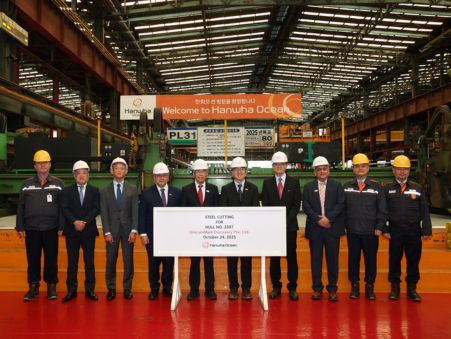
Singapore LNG Corporation Pte Ltd (SLNG) participated in a steel cutting ceremony held today at Hanwha Ocean Shipyard in Geoje, South Korea, to mark the start of construction of the Floating Storage and Regasification Unit (FSRU) for Singapore's Second Liquefied Natural Gas (LNG) Terminal. The ceremony marks a significant project milestone, as it initiates the development of a strategic infrastructure asset to strengthen Singapore's energy security and support the nation's increasing energy needs. The ceremony was attended by SLNG Chairman, Mr Gan Seow Kee, SLNG Chief Executive Officer, Mr Leong Wei Hung, and Energy Market Authority (EMA) Chief Executive Mr Puah Kok Keong. Mr Hisashi Umemura, Senior Managing Executive Officer of Mitsui O.S.K. Lines Ltd (MOL), the owner and operator of the FSRU, and Mr Sang Don Kang, President & Chief Operating Officer, Head of Commercial Vessel Business of Hanwha Ocean, the South Korean shipbuilder building the FSRU, also participated in the ceremony.
To meet SLNG's operational requirements, the FSRU has been designed and engineered to operate for up to a 25-year charter period without the need for dry docking, which is a first for FSRUs worldwide. To achieve this, the ship has adopted several American Bureau of Shipping (ABS) 'SMART' Class notations that leverage advanced digital technologies to enhance operational efficiency, enable predictive maintenance, and strengthen safety assurance. For example, its main generator engines carry the SMART MHM (Machinery Health Monitoring) notation, delivering real-time insights into machinery health and enabling proactive, data-driven servicing. Coupled with dedicated onboard maintenance spaces and purpose-built clearances within the vessel's design, critical systems servicing can be carried out in situ, ensuring compliance and maintaining peak performance without entering a shipyard.
The FSRU will have a storage capacity of 204,000m3 and a regasification capacity of 5 Million Tonnes Per Annum (MTPA). This regasification capacity is sufficient to power roughly 6 million 4-room HDB flats for an entire year. When completed, the FSRU will measure some 299m in length, which is about the length of three football fields, while spanning 51m in width and rising 55m in height. It will have living quarters that can accommodate up to 45 ship crew personnel, and include facilities for meeting, medical and recreational use.
The FSRU is on track to enter into service by the end of the decade.
Singapore LNG Corporation Pte Ltd (SLNG) participated in a steel cutting ceremony held today at Hanwha Ocean Shipyard in Geoje, South Korea, to mark the start of construction of the Floating Storage and Regasification Unit (FSRU) for Singapore's Second Liquefied Natural Gas (LNG) Terminal. The ceremony marks a significant project milestone, as it initiates the development of a strategic infrastructure asset to strengthen Singapore's energy security and support the nation's increasing energy needs. The ceremony was attended by SLNG Chairman, Mr Gan Seow Kee, SLNG Chief Executive Officer, Mr Leong Wei Hung, and Energy Market Authority (EMA) Chief Executive Mr Puah Kok Keong. Mr Hisashi Umemura, Senior Managing Executive Officer of Mitsui O.S.K. Lines Ltd (MOL), the owner and operator of the FSRU, and Mr Sang Don Kang, President & Chief Operating Officer, Head of Commercial Vessel Business of Hanwha Ocean, the South Korean shipbuilder building the FSRU, also participated in the ceremony.
To meet SLNG's operational requirements, the FSRU has been designed and engineered to operate for up to a 25-year charter period without the need for dry docking, which is a first for FSRUs worldwide. To achieve this, the ship has adopted several American Bureau of Shipping (ABS) 'SMART' Class notations that leverage advanced digital technologies to enhance operational efficiency, enable predictive maintenance, and strengthen safety assurance. For example, its main generator engines carry the SMART MHM (Machinery Health Monitoring) notation, delivering real-time insights into machinery health and enabling proactive, data-driven servicing. Coupled with dedicated onboard maintenance spaces and purpose-built clearances within the vessel's design, critical systems servicing can be carried out in situ, ensuring compliance and maintaining peak performance without entering a shipyard.
The FSRU will have a storage capacity of 204,000m3 and a regasification capacity of 5 Million Tonnes Per Annum (MTPA). This regasification capacity is sufficient to power roughly 6 million 4-room HDB flats for an entire year. When completed, the FSRU will measure some 299m in length, which is about the length of three football fields, while spanning 51m in width and rising 55m in height. It will have living quarters that can accommodate up to 45 ship crew personnel, and include facilities for meeting, medical and recreational use.
The FSRU is on track to enter into service by the end of the decade.
#9
Industry News & Market Insights / Harbour Energy’s $3.2B LLOG Ac...
Last post by Administrator - May 24, 2026, 09:50 AMHarbour Energy has officially completed its $3.2 billion acquisition of LLOG Exploration Company — a move that gives Harbour a major foothold in the deepwater US Gulf of America and potentially reshapes its long-term production strategy.
The deal marks Harbour's expansion into one of the world's most established offshore oil regions, adding a fully operated, oil-heavy portfolio with long-life assets and future drilling opportunities.
Key Highlights From the Deal
The acquisition also creates a new core business region for Harbour alongside its operations in:
Why This Matters
Deepwater oil projects were once seen as high-risk, high-cost ventures. But with improved drilling technology, stronger oil prices, and demand for long-life production assets, major players are once again doubling down offshore.
Harbour's move could signal:
At the same time, the deal raises questions about:
What Stands Out
One interesting angle is the projected production ramp:
That's nearly doubling output within three years — ambitious, especially in offshore development where delays and cost overruns are common.
Another point:
The seller now owns roughly 11% of Harbour Energy through newly issued shares, with 70% locked up for one year. That suggests continued alignment between both parties rather than a clean exit.
The deal marks Harbour's expansion into one of the world's most established offshore oil regions, adding a fully operated, oil-heavy portfolio with long-life assets and future drilling opportunities.
Key Highlights From the Deal
- Acquisition value: $3.2 billion
- Entry into the US Gulf of America deepwater market
- LLOG produced approximately 36,000 barrels of oil equivalent per day (kboepd) in 2025
- Harbour expects production growth to 65,000–70,000 boepd by 2028
- Deal funded through:
- $2.7B cash
- $1B bridge facility
- $1B term loan
- Existing liquidity
- $0.5B in newly issued shares
The acquisition also creates a new core business region for Harbour alongside its operations in:
- Norway
- UK
- Argentina
- Mexico
Why This Matters
Deepwater oil projects were once seen as high-risk, high-cost ventures. But with improved drilling technology, stronger oil prices, and demand for long-life production assets, major players are once again doubling down offshore.
Harbour's move could signal:
- Confidence in long-term oil demand
- A strategic pivot toward higher-margin barrels
- Increased competition in Gulf deepwater operations
- Consolidation among mid-to-large energy companies
At the same time, the deal raises questions about:
- Debt exposure and financing risks
- Oil price dependency
- ESG pressures on fossil fuel expansion
- Whether offshore mega-projects still make sense in the energy transition era
What Stands Out
One interesting angle is the projected production ramp:
- From 36k boepd in 2025
- To potentially 70k boepd by 2028
That's nearly doubling output within three years — ambitious, especially in offshore development where delays and cost overruns are common.
Another point:
The seller now owns roughly 11% of Harbour Energy through newly issued shares, with 70% locked up for one year. That suggests continued alignment between both parties rather than a clean exit.
QuoteCEO Statement
According to CEO Linda Z Cook, the acquisition strengthens Harbour's long-term growth platform and adds experienced exploration and development teams in a prolific basin.
The company says the combination positions Harbour to deliver "significant value" for shareholders.
#10
OceanSTAR Elite / Re: Vietnam - Lac Da Vang FSO
Last post by Administrator - May 16, 2026, 07:18 AMOCEANSTAR ELITE LDV FSO Successfully Launched – A Major Project Milestone
On 6 February 2026, OceanSTAR Elite Group (OSE) successfully held the launching ceremony of the LDV Floating Storage and Offloading (FSO) unit at Nantong Strongwind Shipyard, China. This milestone follows the steel cutting in February 2025 and keel laying in July 2025, marking the project's transition into the delivery stage.
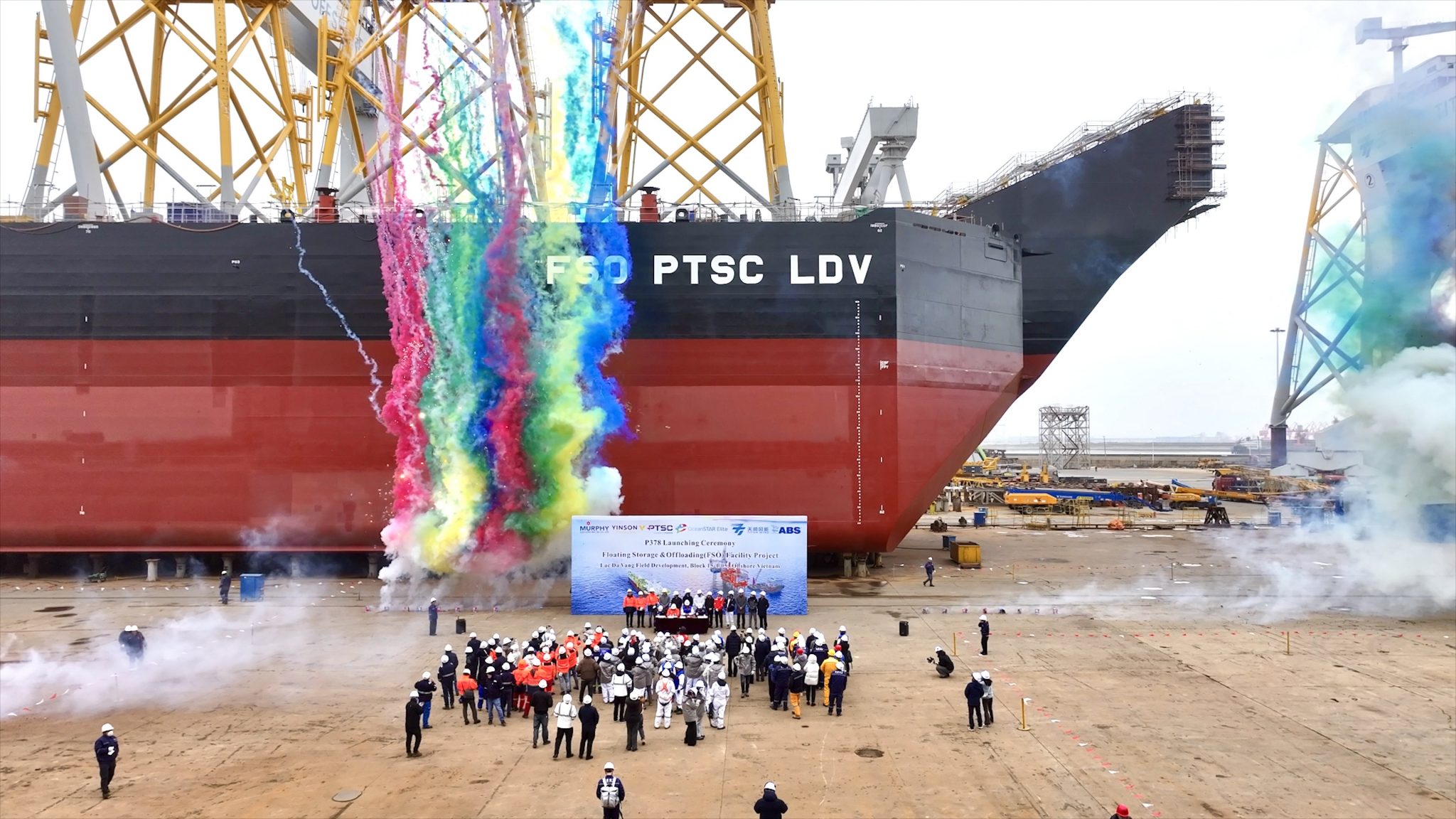
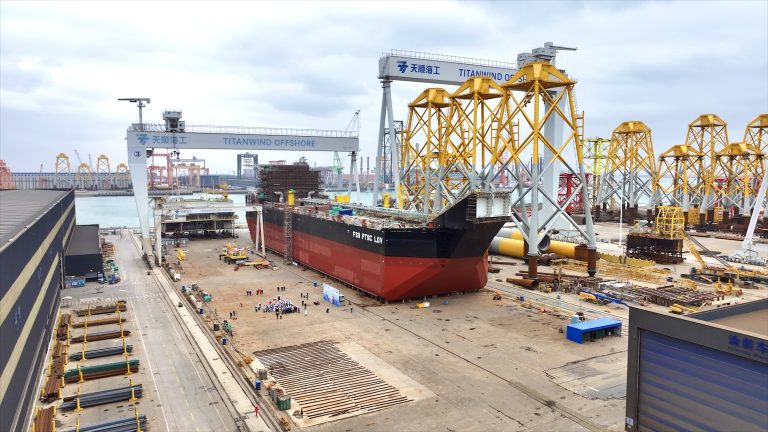
The ceremony was attended by our valued client and partners, including Murphy Cuu Long BacOil, PTSC Asia Pacific, ABS, and Titan Wind Offshore, reflecting the strong collaboration driving this project. Thanks to the excellent teamwork among all stakeholders, the project is currently progressing ahead of schedule.
Developed under the EPCC model, the LDV FSO features a storage capacity of 460,000 barrels and is designed to enhance operational efficiency while supporting sustainable offshore oilfield operations. The project is scheduled for delivery in mid-2026.
In addition, the project team has achieved an outstanding safety milestone of Zero Lost Time Injuries (0 LTI) across 1.2 million man-hours, demonstrating OSE's unwavering commitment to safety and operational excellence.
We sincerely thank all partners for their continued trust and support as we move toward successful project delivery.
On 6 February 2026, OceanSTAR Elite Group (OSE) successfully held the launching ceremony of the LDV Floating Storage and Offloading (FSO) unit at Nantong Strongwind Shipyard, China. This milestone follows the steel cutting in February 2025 and keel laying in July 2025, marking the project's transition into the delivery stage.
The ceremony was attended by our valued client and partners, including Murphy Cuu Long BacOil, PTSC Asia Pacific, ABS, and Titan Wind Offshore, reflecting the strong collaboration driving this project. Thanks to the excellent teamwork among all stakeholders, the project is currently progressing ahead of schedule.
Developed under the EPCC model, the LDV FSO features a storage capacity of 460,000 barrels and is designed to enhance operational efficiency while supporting sustainable offshore oilfield operations. The project is scheduled for delivery in mid-2026.
In addition, the project team has achieved an outstanding safety milestone of Zero Lost Time Injuries (0 LTI) across 1.2 million man-hours, demonstrating OSE's unwavering commitment to safety and operational excellence.
We sincerely thank all partners for their continued trust and support as we move toward successful project delivery.