- Welcome to Oil and Gas World Community.

A Community by the Industry and for the Industry

Recent posts
#31
SBM Offshore / Guyana - Longtail
Last post by Administrator - Apr 13, 2026, 04:49 AMSBM Offshore awarded FEED contracts for the Longtail project in Guyana
SBM Offshore is pleased to announce it has been awarded contracts by ExxonMobil Guyana Limited, an affiliate of Exxon Mobil Corporation, to perform Front End Engineering and Design (FEED) studies for a Floating Production, Storage and Offloading vessel (FPSO) for the Longtail development project in Guyana.
The FEED contracts award triggers the initial release of funds by ExxonMobil Guyana Limited to begin FEED activities and allocate a Fast4Ward® hull for the Longtail development project in Guyana. SBM Offshore will further construct and install the FPSO, subject to government approvals of the development plan, final investment decision by ExxonMobil, and project approval to release the second phase of work.
Under the contracts, the FPSO's ownership is expected to be transferred to the client at the end of the construction period and before start of operations in Guyana. The construction costs are expected to be partially funded by senior loans which will be repaid at the time of the FPSO's transfer to the client.
SBM Offshore is expected to operate the FPSO through its integrated operations and maintenance model combining SBM Offshore and ExxonMobil's expertise and experience, leveraging key learnings and the operational excellence of the units currently deployed in Guyana.
SBM Offshore will design and construct the FPSO using its industry-leading Fast4Ward program using the Company's ninth new build, Multi-Purpose Floater hull, combined with several standardized topsides modules. The FPSO will be designed to process 1,200 million cubic feet of gas per day and produce 250,000 barrels of condensate per day. The FPSO will be spread moored in water depth of about 1,750 meters and will be able to store around 2 million barrels of condensate.
Building on the experience to date of FPSOs Liza Destiny, Liza Unity, Prosperity, ONE GUYANA and Jaguar, SBM Offshore continues to commit to local content development in Guyana by sourcing fabrication scope locally and integrating Guyanese engineers into the execution and operational teams.
SBM Offshore is pleased to announce it has been awarded contracts by ExxonMobil Guyana Limited, an affiliate of Exxon Mobil Corporation, to perform Front End Engineering and Design (FEED) studies for a Floating Production, Storage and Offloading vessel (FPSO) for the Longtail development project in Guyana.
The FEED contracts award triggers the initial release of funds by ExxonMobil Guyana Limited to begin FEED activities and allocate a Fast4Ward® hull for the Longtail development project in Guyana. SBM Offshore will further construct and install the FPSO, subject to government approvals of the development plan, final investment decision by ExxonMobil, and project approval to release the second phase of work.
Under the contracts, the FPSO's ownership is expected to be transferred to the client at the end of the construction period and before start of operations in Guyana. The construction costs are expected to be partially funded by senior loans which will be repaid at the time of the FPSO's transfer to the client.
SBM Offshore is expected to operate the FPSO through its integrated operations and maintenance model combining SBM Offshore and ExxonMobil's expertise and experience, leveraging key learnings and the operational excellence of the units currently deployed in Guyana.
SBM Offshore will design and construct the FPSO using its industry-leading Fast4Ward program using the Company's ninth new build, Multi-Purpose Floater hull, combined with several standardized topsides modules. The FPSO will be designed to process 1,200 million cubic feet of gas per day and produce 250,000 barrels of condensate per day. The FPSO will be spread moored in water depth of about 1,750 meters and will be able to store around 2 million barrels of condensate.
Building on the experience to date of FPSOs Liza Destiny, Liza Unity, Prosperity, ONE GUYANA and Jaguar, SBM Offshore continues to commit to local content development in Guyana by sourcing fabrication scope locally and integrating Guyanese engineers into the execution and operational teams.
QuoteØivind Tangen, SBM Offshore's Chief Executive Officer:
"We are proud to receive this sixth FPSO award from ExxonMobil Guyana. This project underscores the strength of our Fast4Ward approach and extensive experience in large-scale gas-processing systems. SBM Offshore is well positioned to support the Longtail development, a major gas play demanding the highest gas handling capacity ever deployed on an FPSO. Our teams remain fully committed to supporting the success of this project and ExxonMobil's long-term energy development strategy."
#32
Maritime / World’s First 24,000 TEU Metha...
Last post by Administrator - Apr 12, 2026, 04:54 AM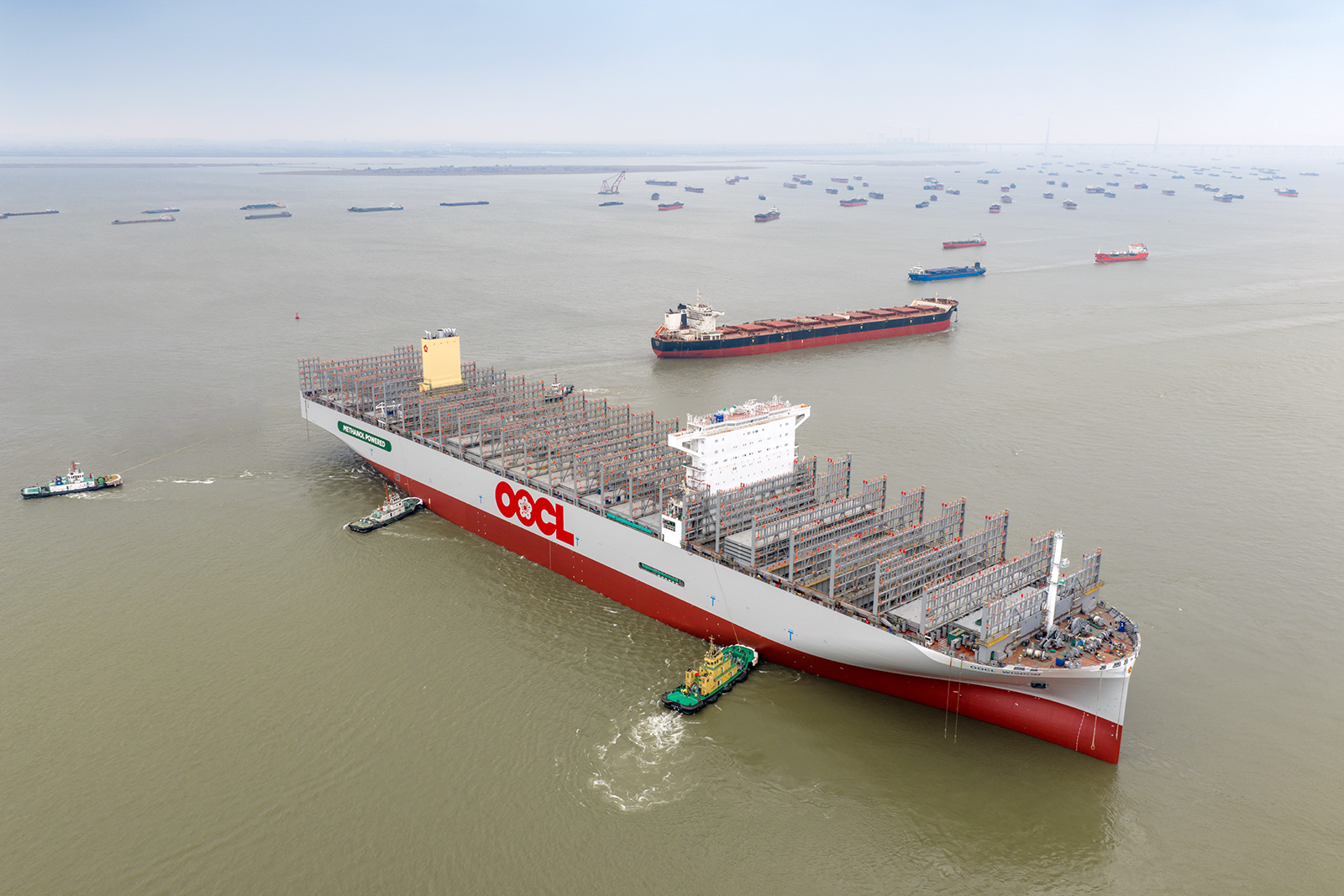
On December 31, 2025, the world's first 24,000 TEU methanol dual-fuel container ship, built by Nantong COSCO KHI Ship Engineering under COSCO Shipping Heavy Industry, was successfully launched. The milestone vessel fills a gap in China's design and construction capability for ultra-large methanol dual-fuel container ships, offering a Chinese contribution to the global maritime industry's low-carbon transition.
The vessel is among the largest and most technologically advanced green container ships in operation today. Measuring 399.99 meters in length, its deck area is comparable to approximately 3.5 standard football fields. Equipped with a methanol dual-fuel propulsion system, the ship is designed for both high efficiency and low emissions, enabling carbon-neutral operations throughout its voyages.
Fully independently designed and built by Nantong COSCO KHI Ship Engineering, the vessel integrates multiple industry-leading technologies. The project overcame key technical challenges, including intelligent and efficient construction of ultra-large hull structures and the structural safety design of methanol fuel tanks. These breakthroughs provide a strong foundation for the independent development and large-scale construction of clean-energy vessels in China.
As one of China's first batch of "National Excellence-Level Smart Factories," Nantong COSCO KHI Ship Engineering has pursued innovation-driven and lean manufacturing development. The company has advanced smart manufacturing and green transformation, establishing multiple automated and intelligent production lines that have significantly improved shipbuilding processes and efficiency. It has delivered a wide range of high-end vessels, including ultra-large container ships, bulk carriers, tankers, and car carriers, filling several domestic and international technological gaps.
In response to the global shipping industry's shift toward green and low-carbon development, COSCO Shipping Heavy Industry continues to prioritize technological innovation and core shipbuilding capabilities, focusing on green, low-carbon, and digital-intelligent transformation. The company aims to provide global clients with more environmentally friendly, intelligent, and safe maritime equipment.
#33
Exploration / Rhino announces successful wel...
Last post by Administrator - Apr 12, 2026, 04:48 AM23 Feb 2026
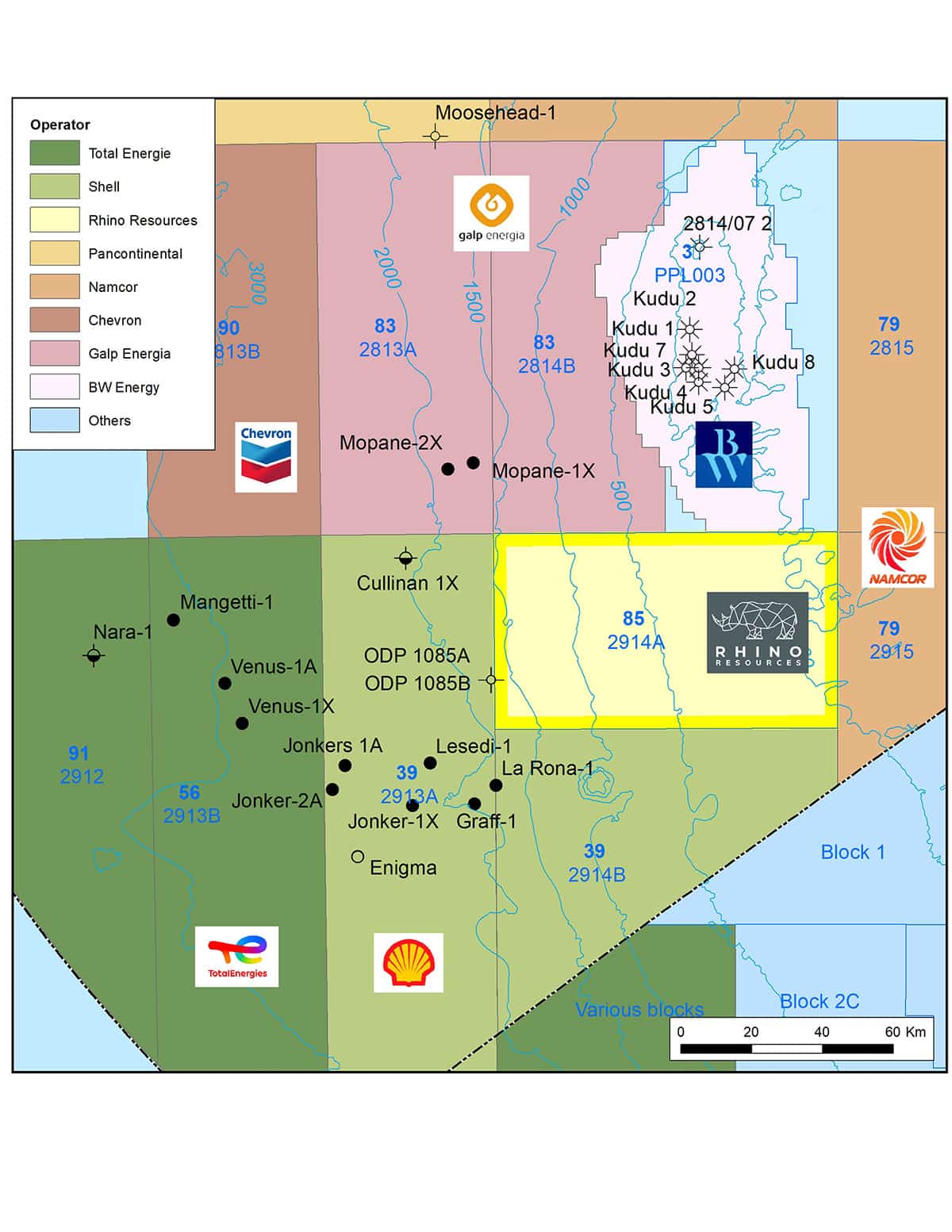
Rhino Resources Namibia Ltd ('Rhino' or 'the Company') provides the following update on behalf of the Petroleum Exploration License 85 ("PEL85") JV regarding the drill stem testing activities of the Volans-1X discovery on Block 2914A, offshore Orange Basin, Namibia.
PEL 85, where the well was drilled, is operated by Rhino with a working interest of 42.5%. Co-venturers are Azule Energy (42.5%), NAMCOR (10%), and Korres Investments (5%).
The Volans-1X well, spudded on 31 July 2025 using the Northern Ocean's semi-submersible Deepsea Mira, reached a total depth of 4,497.5m TVDSS on 30 August 2025, successfully penetrating the Upper Cretaceous target, with partners declaring the well a high liquid-yield gas condensate discovery in excellent quality reservoir on 1 October 2025.
Following the discovery, the partnership returned to Volans-1X to execute well testing operations between 5 and 13 January 2026. The well was perforated across 29,7m of the target reservoir interval which provided the following data:
• Strong deliverability: 33Mmscfd of gas and ~5.3kkbls condensate on a 46/64 choke
• High liquid gas condensate: CGR of ~160 STB/Mmscf
• Low CO2 and H2S: 1-2% CO2 and ca. 3ppm H2S (highest value of 5ppm in 200 samples)
Commenting on the update, Chief Executive Officer Travis Smithard said:
Rhino Resources Namibia Ltd ('Rhino' or 'the Company') provides the following update on behalf of the Petroleum Exploration License 85 ("PEL85") JV regarding the drill stem testing activities of the Volans-1X discovery on Block 2914A, offshore Orange Basin, Namibia.
PEL 85, where the well was drilled, is operated by Rhino with a working interest of 42.5%. Co-venturers are Azule Energy (42.5%), NAMCOR (10%), and Korres Investments (5%).
The Volans-1X well, spudded on 31 July 2025 using the Northern Ocean's semi-submersible Deepsea Mira, reached a total depth of 4,497.5m TVDSS on 30 August 2025, successfully penetrating the Upper Cretaceous target, with partners declaring the well a high liquid-yield gas condensate discovery in excellent quality reservoir on 1 October 2025.
Following the discovery, the partnership returned to Volans-1X to execute well testing operations between 5 and 13 January 2026. The well was perforated across 29,7m of the target reservoir interval which provided the following data:
• Strong deliverability: 33Mmscfd of gas and ~5.3kkbls condensate on a 46/64 choke
• High liquid gas condensate: CGR of ~160 STB/Mmscf
• Low CO2 and H2S: 1-2% CO2 and ca. 3ppm H2S (highest value of 5ppm in 200 samples)
Commenting on the update, Chief Executive Officer Travis Smithard said:
Quote"These well test results validate our pre-drill optimism around Volans with the flow data suggesting that Volans-1x well was drilled in a geologically contiguous reservoir system, which is very encouraging for our ongoing development planning purposes. The test confirmed good flow rates of hydrocarbons, with liquid production in line with the condensate-gas-ratio range that we had previously guided. The data also indicates the useful calibration with the discovery at Capricornus, which has served to de-risk Volans and provide a far more holistic understanding of the reservoir distributions across the block. These positive test results are critical in informing Rhino, in collaboration with our partners Azule Energy, NAMCOR and Korres on how to assess the next steps for appraisal, development and production planning across the acreage."
#34
Middle East / Iran attacked Ras Laffan LNG I...
Last post by Administrator - Apr 12, 2026, 02:45 AMQatarEnergy has estimated that missile strikes on Ras Laffan Industrial City on 18–19 March 2026 will result in roughly $20 billion in annual lost revenue, with repairs expected to take up to five years. The damage is also likely to disrupt energy supplies to key markets in Europe and Asia.
In a statement addressing the incident, Minister of State for Energy Affairs and QatarEnergy CEO Saad Sherida Al-Kaabi confirmed that no injuries were reported. He condemned the attacks, describing them as unjustified and harmful not only to Qatar but to global energy security and stability, emphasizing their broader impact on economic development and reliable energy access.
The strikes affected two LNG production units—Trains 4 and 6—with a combined capacity of 12.8 million tons per year, representing about 17% of Qatar's LNG exports. Both facilities are joint ventures with ExxonMobil. Repairs to the damaged LNG infrastructure are expected to take between three and five years, potentially forcing QatarEnergy to declare force majeure on some long-term supply contracts, particularly affecting countries such as China, South Korea, Italy, and Belgium.
The Pearl GTL facility, operated by Shell, was also targeted. One of its two production trains sustained damage and is expected to remain offline for at least a year. This outage will reduce output of several associated products, including condensates, liquefied petroleum gas, naphtha, sulfur, and helium—each representing notable shares of Qatar's export volumes.
Al-Kaabi also praised the swift response of Qatar's military, security forces, and energy sector emergency teams, noting their professionalism in containing the situation safely and efficiently.
In a statement addressing the incident, Minister of State for Energy Affairs and QatarEnergy CEO Saad Sherida Al-Kaabi confirmed that no injuries were reported. He condemned the attacks, describing them as unjustified and harmful not only to Qatar but to global energy security and stability, emphasizing their broader impact on economic development and reliable energy access.
The strikes affected two LNG production units—Trains 4 and 6—with a combined capacity of 12.8 million tons per year, representing about 17% of Qatar's LNG exports. Both facilities are joint ventures with ExxonMobil. Repairs to the damaged LNG infrastructure are expected to take between three and five years, potentially forcing QatarEnergy to declare force majeure on some long-term supply contracts, particularly affecting countries such as China, South Korea, Italy, and Belgium.
The Pearl GTL facility, operated by Shell, was also targeted. One of its two production trains sustained damage and is expected to remain offline for at least a year. This outage will reduce output of several associated products, including condensates, liquefied petroleum gas, naphtha, sulfur, and helium—each representing notable shares of Qatar's export volumes.
Al-Kaabi also praised the swift response of Qatar's military, security forces, and energy sector emergency teams, noting their professionalism in containing the situation safely and efficiently.
#35
Subsea Construction & Engineering / Subsea7 Wins $1.25B+ Petrobras...
Last post by Administrator - Apr 11, 2026, 01:15 PM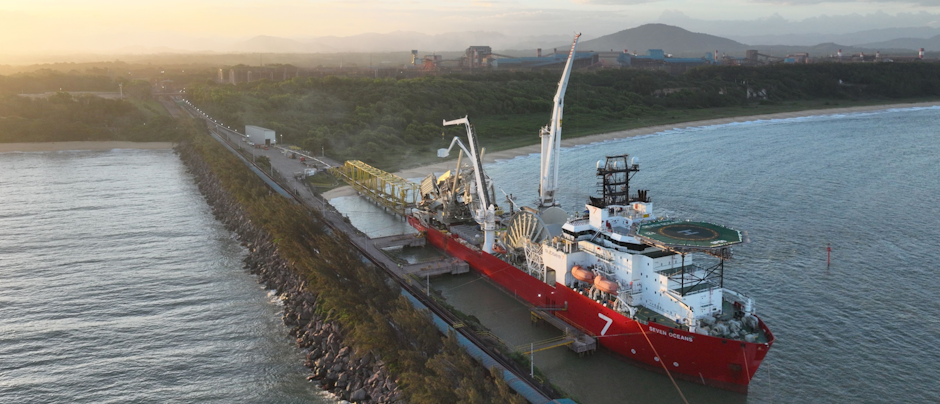
9 April 2026
Subsea7 has secured a supermajor offshore contract from **Petrobras** for the development of the Sépia 2 field in Brazil, marking a major milestone in one of the world's most important deepwater oil regions. Located around 280 kilometres southeast of Rio de Janeiro at a water depth of 2,170 metres, the Sépia 2 project sits within the highly productive pre-salt Santos Basin and represents a key phase in Brazil's ongoing offshore energy expansion.
The Sépia 2 development is widely regarded as one of the largest pre-salt expansion projects, reinforcing Brazil's role as a global leader in deepwater oil production. Under the agreement, Subsea7 will deliver a full SURF scope covering subsea umbilicals, risers, and flowlines. The contract includes engineering, procurement, fabrication, installation, and pre-commissioning for a total of 17 wells, including two wells connected to the earlier Sépia 1 project, as well as a gas export system featuring 18 risers.
Project execution will begin immediately, with engineering and project management activities carried out across Subsea7's offices in Rio de Janeiro, Paris, and Sutton in the United Kingdom. Offshore installation operations are scheduled to commence in 2029, reflecting the long-term and complex nature of ultra-deepwater developments in the pre-salt environment.
This award further strengthens the long-standing partnership between Subsea7 and Petrobras, particularly in Brazil's technically demanding offshore sector. The project will emphasize strong local content, disciplined execution, and close collaboration, supporting infrastructure that is considered critical to Brazil's national energy strategy. According to Subsea7, contracts of this scale are classified as "supermajor," meaning they exceed $1.25 billion in value, placing the Sépia 2 project among the most significant offshore engineering awards globally.
The development also highlights broader industry trends, including increased investment in deepwater oil production, rising demand for advanced subsea infrastructure, and the continued importance of long-term offshore projects in ensuring global energy supply. With this contract, Subsea7 further solidifies its position as a leading provider of offshore engineering and subsea construction services, playing a key role in delivering complex energy projects that enhance efficiency, reliability, and sustainability.
#36
Oil Prices, LNG Prices & Trading / Oil, Gas, and Electricity Mark...
Last post by Administrator - Apr 11, 2026, 10:26 AMGlobal energy markets are undergoing a rare period of simultaneous movement across oil, natural gas, and electricity. Instead of shifting independently, these major energy systems are reacting together to geopolitical tensions, supply chain disruptions, and changing demand patterns. The result is a more volatile and interconnected energy landscape where changes in one market quickly ripple into others.
Oil Markets Are Reacting First to Geopolitical Pressure
Crude oil has been the most immediate responder to recent geopolitical instability in the Middle East. Brent crude prices surged sharply, climbing to multi-month highs as concerns over supply disruptions intensified. The Strait of Hormuz, a critical global oil transit chokepoint, has seen reduced petroleum shipments, while some regional production has been temporarily curtailed.
These disruptions have tightened global supply conditions, pushing prices higher in a short period of time. Market participants are now closely watching whether these conditions will persist or ease as geopolitical tensions evolve. The sensitivity of oil markets to supply shocks remains one of the strongest drivers of global price volatility.
Natural Gas Markets Are Moving in a More Indirect Way
Unlike oil, natural gas markets are not reacting uniformly across regions. In Europe and Asia, liquefied natural gas (LNG) flows affected by Middle East shipping constraints have contributed to upward pressure on prices. However, the United States has remained relatively insulated from these immediate shocks.
Domestic U.S. natural gas prices are instead being shaped more by weather patterns and storage levels. Milder-than-expected winter temperatures have left inventories higher than forecast, helping to moderate price increases. At the same time, structural growth in associated gas production—driven by rising oil output—is adding long-term supply pressure, keeping a lid on price spikes.
Electricity Markets Are Under Structural Transformation
While oil and gas respond to short-term shocks, electricity markets are undergoing a slower but more structural shift. U.S. electricity demand has been rising steadily, growing at around 2% per year since 2021 after a long period of stagnation.
Looking ahead, electricity generation is expected to accelerate further, with growth projected to rise in the coming years. Much of this demand is being driven by industrial expansion, data centers, electrification trends, and regional demand surges, particularly in areas like Texas.
At the same time, the energy mix is changing. Coal-fired generation is declining as older plants are retired and replaced by renewable energy sources such as wind and solar. This transition is reshaping the foundation of electricity supply, making the grid more dependent on variable generation and flexible backup systems.
Why All Three Markets Are Moving Together
What makes the current situation unusual is not just movement in individual markets, but the fact that oil, gas, and electricity are shifting at the same time. This synchronization is happening because the energy system is now tightly interconnected:
As a result, shocks in one segment no longer stay isolated. A disruption in oil supply can influence gas production, which in turn affects electricity pricing and generation decisions.
The Bigger Picture: A More Volatile Energy System
The current energy environment reflects a transition phase where traditional fossil fuel systems and newer energy sources are interacting in complex ways. Short-term geopolitical shocks are amplifying volatility in oil markets, while structural shifts in electricity demand and generation are reshaping long-term energy consumption patterns.
At the same time, natural gas is acting as a bridge between these two worlds—responding to both immediate supply dynamics and long-term production trends.
What This Means Going Forward
The simultaneous movement across oil, gas, and electricity markets suggests that energy price stability may become harder to achieve in the near term. Investors, policymakers, and consumers will need to adapt to a system where energy prices are more interconnected and reactive than in previous decades.
In this environment, understanding the links between these markets is becoming just as important as tracking each one individually. The energy transition is no longer a single-sector story—it is a fully integrated system shift happening in real time.
Oil Markets Are Reacting First to Geopolitical Pressure
Crude oil has been the most immediate responder to recent geopolitical instability in the Middle East. Brent crude prices surged sharply, climbing to multi-month highs as concerns over supply disruptions intensified. The Strait of Hormuz, a critical global oil transit chokepoint, has seen reduced petroleum shipments, while some regional production has been temporarily curtailed.
These disruptions have tightened global supply conditions, pushing prices higher in a short period of time. Market participants are now closely watching whether these conditions will persist or ease as geopolitical tensions evolve. The sensitivity of oil markets to supply shocks remains one of the strongest drivers of global price volatility.
Natural Gas Markets Are Moving in a More Indirect Way
Unlike oil, natural gas markets are not reacting uniformly across regions. In Europe and Asia, liquefied natural gas (LNG) flows affected by Middle East shipping constraints have contributed to upward pressure on prices. However, the United States has remained relatively insulated from these immediate shocks.
Domestic U.S. natural gas prices are instead being shaped more by weather patterns and storage levels. Milder-than-expected winter temperatures have left inventories higher than forecast, helping to moderate price increases. At the same time, structural growth in associated gas production—driven by rising oil output—is adding long-term supply pressure, keeping a lid on price spikes.
Electricity Markets Are Under Structural Transformation
While oil and gas respond to short-term shocks, electricity markets are undergoing a slower but more structural shift. U.S. electricity demand has been rising steadily, growing at around 2% per year since 2021 after a long period of stagnation.
Looking ahead, electricity generation is expected to accelerate further, with growth projected to rise in the coming years. Much of this demand is being driven by industrial expansion, data centers, electrification trends, and regional demand surges, particularly in areas like Texas.
At the same time, the energy mix is changing. Coal-fired generation is declining as older plants are retired and replaced by renewable energy sources such as wind and solar. This transition is reshaping the foundation of electricity supply, making the grid more dependent on variable generation and flexible backup systems.
Why All Three Markets Are Moving Together
What makes the current situation unusual is not just movement in individual markets, but the fact that oil, gas, and electricity are shifting at the same time. This synchronization is happening because the energy system is now tightly interconnected:
- Oil price changes influence drilling activity, which affects natural gas supply.
- Natural gas is increasingly used for power generation, linking it directly to electricity prices.
- Electricity demand growth feeds back into natural gas consumption and infrastructure investment.
As a result, shocks in one segment no longer stay isolated. A disruption in oil supply can influence gas production, which in turn affects electricity pricing and generation decisions.
The Bigger Picture: A More Volatile Energy System
The current energy environment reflects a transition phase where traditional fossil fuel systems and newer energy sources are interacting in complex ways. Short-term geopolitical shocks are amplifying volatility in oil markets, while structural shifts in electricity demand and generation are reshaping long-term energy consumption patterns.
At the same time, natural gas is acting as a bridge between these two worlds—responding to both immediate supply dynamics and long-term production trends.
What This Means Going Forward
The simultaneous movement across oil, gas, and electricity markets suggests that energy price stability may become harder to achieve in the near term. Investors, policymakers, and consumers will need to adapt to a system where energy prices are more interconnected and reactive than in previous decades.
In this environment, understanding the links between these markets is becoming just as important as tracking each one individually. The energy transition is no longer a single-sector story—it is a fully integrated system shift happening in real time.
#37
Industry News & Market Insights / Brent Crude Explodes to $94: I...
Last post by Administrator - Apr 11, 2026, 10:25 AMCrude oil prices have experienced a sharp upward movement following the escalation of military action in the Middle East. Brent crude oil, the global benchmark, settled at around $94 per barrel on March 9, marking an increase of approximately 50% since the beginning of the year. This surge has pushed prices to their highest level since September 2023, driven largely by growing concerns over supply disruptions and geopolitical instability.
A key factor behind the rise in oil prices is the reduction in petroleum shipments through the Strait of Hormuz, one of the world's most critical oil transit routes. In addition, portions of oil production across the Middle East have been temporarily shut in, tightening global supply. These disruptions have added upward pressure on crude oil markets, as traders and analysts closely monitor the potential for further escalation in the region.
Looking ahead, assumptions in current models suggest that an effective closure or continued disruption of the Strait of Hormuz could lead to further declines in oil production across the Middle East in the coming weeks. However, this impact is expected to be temporary, with production gradually recovering as transit routes stabilize and shipping through the Strait resumes.
In terms of price forecasts, Brent crude is expected to remain above $95 per barrel over the next two months before gradually easing. Projections indicate a potential decline below $80 per barrel in the third quarter of 2026, with prices moving closer to $70 per barrel by the end of the year. By 2027, the average price is expected to settle around $64 per barrel. However, these forecasts remain highly sensitive to geopolitical developments, particularly the duration of conflict in the Middle East and the extent of production outages.
Higher crude oil prices are also expected to influence U.S. production levels. As prices strengthen, domestic output becomes more economically attractive, leading to increased drilling activity. U.S. crude oil production is forecast to average 13.6 million barrels per day in 2026, rising further to 13.8 million barrels per day in 2027. This represents an upward revision of approximately 0.5 million barrels per day compared to last month's projections, reflecting stronger-than-expected market conditions.
In the natural gas market, the impact of Middle East disruptions has been more indirect. While reduced liquefied natural gas flows through the Strait of Hormuz have contributed to higher prices in Europe and Asia, U.S. natural gas markets have remained relatively insulated. The Henry Hub spot price is expected to average around $3.80 per million British thermal units in 2026, which is about 13% lower than previous forecasts. This downward revision is largely attributed to milder-than-expected winter temperatures that resulted in higher-than-normal storage levels.
For 2027, natural gas prices are projected to average nearly $3.90 per MMBtu, also lower than earlier estimates. The primary driver of this adjustment is increased associated gas production, which is expected to rise alongside higher crude oil output. As oil drilling activity expands, more natural gas is produced as a byproduct, contributing to greater overall supply and downward pressure on prices.
U.S. natural gas production is forecast to continue its upward trajectory, with marketed production expected to average 121 billion cubic feet per day this year. This represents a 2% increase compared to 2025 levels. By 2027, production is projected to reach 124 billion cubic feet per day, reflecting a further upward revision of nearly 2 billion cubic feet per day from previous estimates. Meanwhile, inventories are expected to end the withdrawal season in March at approximately 1,840 billion cubic feet, aligning closely with the five-year seasonal average. Inventory withdrawals slowed in February following unusually high drawdowns in January caused by extreme cold weather conditions associated with Winter Storm Fern.
In the electricity sector, U.S. power generation has been steadily increasing by an average of 2% annually since 2021, driven by rising demand after nearly a decade of stagnation between 2010 and 2019. This growth trend is expected to continue, with electricity generation projected to increase by 1.2% in 2026 and accelerate to 3.1% in 2027. Much of this growth is expected to come from the Electric Reliability Council of Texas (ERCOT) region, where demand expansion is particularly strong.
At the same time, the structure of U.S. electricity generation is shifting. Coal-fired generation is expected to decline by 7% in 2026 as renewable energy sources continue to expand their share of the market. Additionally, approximately 4% of existing coal-fired generating capacity is expected to be retired as part of the ongoing transition toward cleaner energy sources. This reflects a broader structural change in the U.S. power sector as it adapts to evolving demand patterns and energy policy trends.
A key factor behind the rise in oil prices is the reduction in petroleum shipments through the Strait of Hormuz, one of the world's most critical oil transit routes. In addition, portions of oil production across the Middle East have been temporarily shut in, tightening global supply. These disruptions have added upward pressure on crude oil markets, as traders and analysts closely monitor the potential for further escalation in the region.
Looking ahead, assumptions in current models suggest that an effective closure or continued disruption of the Strait of Hormuz could lead to further declines in oil production across the Middle East in the coming weeks. However, this impact is expected to be temporary, with production gradually recovering as transit routes stabilize and shipping through the Strait resumes.
In terms of price forecasts, Brent crude is expected to remain above $95 per barrel over the next two months before gradually easing. Projections indicate a potential decline below $80 per barrel in the third quarter of 2026, with prices moving closer to $70 per barrel by the end of the year. By 2027, the average price is expected to settle around $64 per barrel. However, these forecasts remain highly sensitive to geopolitical developments, particularly the duration of conflict in the Middle East and the extent of production outages.
Higher crude oil prices are also expected to influence U.S. production levels. As prices strengthen, domestic output becomes more economically attractive, leading to increased drilling activity. U.S. crude oil production is forecast to average 13.6 million barrels per day in 2026, rising further to 13.8 million barrels per day in 2027. This represents an upward revision of approximately 0.5 million barrels per day compared to last month's projections, reflecting stronger-than-expected market conditions.
In the natural gas market, the impact of Middle East disruptions has been more indirect. While reduced liquefied natural gas flows through the Strait of Hormuz have contributed to higher prices in Europe and Asia, U.S. natural gas markets have remained relatively insulated. The Henry Hub spot price is expected to average around $3.80 per million British thermal units in 2026, which is about 13% lower than previous forecasts. This downward revision is largely attributed to milder-than-expected winter temperatures that resulted in higher-than-normal storage levels.
For 2027, natural gas prices are projected to average nearly $3.90 per MMBtu, also lower than earlier estimates. The primary driver of this adjustment is increased associated gas production, which is expected to rise alongside higher crude oil output. As oil drilling activity expands, more natural gas is produced as a byproduct, contributing to greater overall supply and downward pressure on prices.
U.S. natural gas production is forecast to continue its upward trajectory, with marketed production expected to average 121 billion cubic feet per day this year. This represents a 2% increase compared to 2025 levels. By 2027, production is projected to reach 124 billion cubic feet per day, reflecting a further upward revision of nearly 2 billion cubic feet per day from previous estimates. Meanwhile, inventories are expected to end the withdrawal season in March at approximately 1,840 billion cubic feet, aligning closely with the five-year seasonal average. Inventory withdrawals slowed in February following unusually high drawdowns in January caused by extreme cold weather conditions associated with Winter Storm Fern.
In the electricity sector, U.S. power generation has been steadily increasing by an average of 2% annually since 2021, driven by rising demand after nearly a decade of stagnation between 2010 and 2019. This growth trend is expected to continue, with electricity generation projected to increase by 1.2% in 2026 and accelerate to 3.1% in 2027. Much of this growth is expected to come from the Electric Reliability Council of Texas (ERCOT) region, where demand expansion is particularly strong.
At the same time, the structure of U.S. electricity generation is shifting. Coal-fired generation is expected to decline by 7% in 2026 as renewable energy sources continue to expand their share of the market. Additionally, approximately 4% of existing coal-fired generating capacity is expected to be retired as part of the ongoing transition toward cleaner energy sources. This reflects a broader structural change in the U.S. power sector as it adapts to evolving demand patterns and energy policy trends.
#38
PE-Backed Energy Companies / EnCap Investments
Last post by Administrator - Apr 11, 2026, 09:22 AMEnCap Investments is a name that often comes up in searches related to private equity, oil and gas investing, and the broader energy industry. For many people trying to understand who they are, the first question is simple: what does EnCap Investments actually do, and why is it so influential in the energy sector?
EnCap Investments is a private equity firm that specializes in providing growth capital to companies in the energy industry. Unlike oil producers or drilling operators, EnCap does not directly extract resources. Instead, it invests in energy-focused companies, particularly those involved in upstream oil and gas exploration and production. This role places EnCap in a unique position, as it helps fund the development and expansion of companies that operate in some of the most active energy regions in North America.
A major reason EnCap Investments attracts attention is its long-standing presence in the oil and gas sector. Over several decades, the firm has built a reputation for identifying early-stage and mid-stage energy companies with strong growth potential. Many of these companies have gone on to become significant players in the industry, either through expansion, mergers, or public listings. This track record naturally leads people searching online to ask how EnCap consistently manages to back successful ventures.
Another important aspect of EnCap Investments is its focus on disciplined capital deployment. In an industry known for cycles of boom and bust, EnCap is often associated with a more structured and strategic approach to investing. Rather than chasing short-term trends, the firm typically works closely with management teams to build companies over time. This hands-on involvement is one reason it is frequently mentioned in discussions about how energy companies scale and survive volatile market conditions.
People also search for EnCap Investments because of its involvement in major energy deals. The firm has played a role in funding companies that later become acquisition targets for larger corporations or private buyers. When billion-dollar transactions occur in the energy space, private equity firms like EnCap are often part of the story behind the scenes. This connection to large-scale deals increases public curiosity about what the firm owns, invests in, and influences.
In recent years, EnCap Investments has also gained attention due to the broader transformation of the energy sector. While the firm built its reputation in traditional oil and gas, the industry itself is evolving. As a result, many investors want to know whether firms like EnCap are adapting. In response to changing global energy demands, there has been increasing interest in infrastructure, environmental solutions, and energy transition-related investments alongside conventional hydrocarbons.
Another common question that comes up is why energy companies choose to partner with EnCap Investments. The answer lies in more than just funding. EnCap often provides strategic guidance, industry expertise, and long-term partnership support. For growing energy companies, this combination of capital and experience can be critical in navigating exploration risks, commodity price cycles, and operational challenges.
Ultimately, EnCap Investments is often searched because it represents a key but less visible force in the energy industry. While it does not drill wells or produce oil, its influence is felt through the companies it funds and the projects it helps bring to life. For anyone trying to understand the energy sector more deeply, EnCap offers an important example of how private capital helps shape the direction of global energy development.
EnCap Investments is a private equity firm that specializes in providing growth capital to companies in the energy industry. Unlike oil producers or drilling operators, EnCap does not directly extract resources. Instead, it invests in energy-focused companies, particularly those involved in upstream oil and gas exploration and production. This role places EnCap in a unique position, as it helps fund the development and expansion of companies that operate in some of the most active energy regions in North America.
A major reason EnCap Investments attracts attention is its long-standing presence in the oil and gas sector. Over several decades, the firm has built a reputation for identifying early-stage and mid-stage energy companies with strong growth potential. Many of these companies have gone on to become significant players in the industry, either through expansion, mergers, or public listings. This track record naturally leads people searching online to ask how EnCap consistently manages to back successful ventures.
Another important aspect of EnCap Investments is its focus on disciplined capital deployment. In an industry known for cycles of boom and bust, EnCap is often associated with a more structured and strategic approach to investing. Rather than chasing short-term trends, the firm typically works closely with management teams to build companies over time. This hands-on involvement is one reason it is frequently mentioned in discussions about how energy companies scale and survive volatile market conditions.
People also search for EnCap Investments because of its involvement in major energy deals. The firm has played a role in funding companies that later become acquisition targets for larger corporations or private buyers. When billion-dollar transactions occur in the energy space, private equity firms like EnCap are often part of the story behind the scenes. This connection to large-scale deals increases public curiosity about what the firm owns, invests in, and influences.
In recent years, EnCap Investments has also gained attention due to the broader transformation of the energy sector. While the firm built its reputation in traditional oil and gas, the industry itself is evolving. As a result, many investors want to know whether firms like EnCap are adapting. In response to changing global energy demands, there has been increasing interest in infrastructure, environmental solutions, and energy transition-related investments alongside conventional hydrocarbons.
Another common question that comes up is why energy companies choose to partner with EnCap Investments. The answer lies in more than just funding. EnCap often provides strategic guidance, industry expertise, and long-term partnership support. For growing energy companies, this combination of capital and experience can be critical in navigating exploration risks, commodity price cycles, and operational challenges.
Ultimately, EnCap Investments is often searched because it represents a key but less visible force in the energy industry. While it does not drill wells or produce oil, its influence is felt through the companies it funds and the projects it helps bring to life. For anyone trying to understand the energy sector more deeply, EnCap offers an important example of how private capital helps shape the direction of global energy development.
#39
PE-Backed Energy Companies / Quantum Energy Partners
Last post by Administrator - Apr 11, 2026, 08:59 AMQuantum Energy Partners is a name that frequently appears when people start digging into the financial backbone of the energy industry. Unlike oil companies that operate rigs and produce barrels, Quantum Energy Partners plays a different—but equally powerful—role behind the scenes. So when people search for this firm, the first question that usually comes up is: what exactly does Quantum Energy Partners do, and why does it matter so much?
At its core, Quantum Energy Partners is a private investment firm focused on the energy sector. That means instead of drilling wells itself, it provides capital to companies that do. This distinction is important because it places Quantum at the center of decision-making across multiple energy projects. From oil and gas exploration to newer energy transition investments, the firm has been involved in funding and shaping some of the most significant developments in the industry over the past few decades.
One reason curiosity around Quantum Energy Partners continues to grow is its track record. The firm has managed billions of dollars in assets and has backed numerous successful energy companies, many of which have gone on to be acquired or listed publicly. For someone Googling the company, this often leads to the next question: how does Quantum consistently identify winning opportunities? The answer lies in its deep industry expertise, long-standing relationships, and a strategy that focuses on disciplined investment rather than speculative bets.
Another factor driving interest is Quantum's role in major deals. When large acquisitions or mergers happen in the energy sector, there's often a private equity player behind the scenes—and Quantum is frequently one of them. This naturally leads to increased search activity, especially when headlines mention billion-dollar transactions. People want to understand who is financing these deals and how firms like Quantum influence the direction of the energy market.
A key aspect that sets Quantum Energy Partners apart is its long-term approach. Unlike some investment firms that prioritize quick returns, Quantum is known for working closely with management teams over extended periods. This allows it to help build companies from the ground up, improve operations, and ultimately create more sustainable value. For readers, this often answers an underlying question: why do energy companies choose to partner with Quantum? The answer is not just capital, but also strategic guidance and industry insight.
As the global energy landscape evolves, another common query emerges: is Quantum Energy Partners only focused on traditional oil and gas? The answer is increasingly no. While the firm built its reputation in hydrocarbons, it has also expanded into energy transition opportunities, including lower-carbon solutions and infrastructure. This shift reflects a broader trend in the industry, where investors are balancing current energy needs with future sustainability goals.
People also search for Quantum Energy Partners because it represents a larger story about how private capital shapes industries. Unlike public companies that are constantly in the spotlight, firms like Quantum operate more quietly, yet their influence can be enormous. They decide which projects get funded, which companies grow, and in many cases, which technologies move forward. Understanding Quantum, therefore, offers a glimpse into how the energy sector is financed and transformed over time.
Ultimately, the reason Quantum Energy Partners attracts so much attention is a mix of mystery and impact. It doesn't produce oil, it doesn't sell fuel, and it rarely makes headlines on its own—yet it plays a crucial role in enabling the companies that do. For anyone searching its name, the takeaway is clear: if you want to understand where the energy industry is heading, it's not enough to look at producers—you also have to look at the investors shaping the future behind the scenes.
At its core, Quantum Energy Partners is a private investment firm focused on the energy sector. That means instead of drilling wells itself, it provides capital to companies that do. This distinction is important because it places Quantum at the center of decision-making across multiple energy projects. From oil and gas exploration to newer energy transition investments, the firm has been involved in funding and shaping some of the most significant developments in the industry over the past few decades.
One reason curiosity around Quantum Energy Partners continues to grow is its track record. The firm has managed billions of dollars in assets and has backed numerous successful energy companies, many of which have gone on to be acquired or listed publicly. For someone Googling the company, this often leads to the next question: how does Quantum consistently identify winning opportunities? The answer lies in its deep industry expertise, long-standing relationships, and a strategy that focuses on disciplined investment rather than speculative bets.
Another factor driving interest is Quantum's role in major deals. When large acquisitions or mergers happen in the energy sector, there's often a private equity player behind the scenes—and Quantum is frequently one of them. This naturally leads to increased search activity, especially when headlines mention billion-dollar transactions. People want to understand who is financing these deals and how firms like Quantum influence the direction of the energy market.
A key aspect that sets Quantum Energy Partners apart is its long-term approach. Unlike some investment firms that prioritize quick returns, Quantum is known for working closely with management teams over extended periods. This allows it to help build companies from the ground up, improve operations, and ultimately create more sustainable value. For readers, this often answers an underlying question: why do energy companies choose to partner with Quantum? The answer is not just capital, but also strategic guidance and industry insight.
As the global energy landscape evolves, another common query emerges: is Quantum Energy Partners only focused on traditional oil and gas? The answer is increasingly no. While the firm built its reputation in hydrocarbons, it has also expanded into energy transition opportunities, including lower-carbon solutions and infrastructure. This shift reflects a broader trend in the industry, where investors are balancing current energy needs with future sustainability goals.
People also search for Quantum Energy Partners because it represents a larger story about how private capital shapes industries. Unlike public companies that are constantly in the spotlight, firms like Quantum operate more quietly, yet their influence can be enormous. They decide which projects get funded, which companies grow, and in many cases, which technologies move forward. Understanding Quantum, therefore, offers a glimpse into how the energy sector is financed and transformed over time.
Ultimately, the reason Quantum Energy Partners attracts so much attention is a mix of mystery and impact. It doesn't produce oil, it doesn't sell fuel, and it rarely makes headlines on its own—yet it plays a crucial role in enabling the companies that do. For anyone searching its name, the takeaway is clear: if you want to understand where the energy industry is heading, it's not enough to look at producers—you also have to look at the investors shaping the future behind the scenes.
#40
Private Oil & Gas Companies / CrownRock
Last post by Administrator - Apr 11, 2026, 08:47 AMCrownRock is an oil and gas company that has been drawing increasing attention from investors and industry watchers, largely because of its strong performance in one of the most important energy regions in the United States—the Permian Basin. For many people searching the name online, the first question is simple: why is CrownRock suddenly being talked about so much? The answer lies in a combination of strategic land holdings, efficient operations, and its role in a broader shift happening across the energy sector.
At its core, CrownRock is a privately held exploration and production company focused on extracting oil from high-quality reserves. What makes it stand out is not just where it operates, but how it operates. The Permian Basin is known for its vast oil resources, but it's also highly competitive, with dozens of companies drilling and producing simultaneously. CrownRock has managed to carve out a strong position by focusing on some of the most productive acreage, allowing it to generate higher output per well compared to many competitors.
Another reason people are searching for CrownRock is its financial performance and the speculation around major deals. In recent years, the company has been associated with potential acquisitions and high valuation estimates, which naturally sparks curiosity. When a relatively low-profile company suddenly becomes the center of billion-dollar discussions, people want to understand what makes it so valuable. In CrownRock's case, the value comes from a mix of consistent production, efficient cost management, and a large inventory of future drilling opportunities.
One of the most interesting aspects of CrownRock is that it is privately owned. This means it doesn't have to report earnings publicly every quarter or respond to short-term market pressures in the same way publicly traded companies do. For curious readers, this often raises another question: does being private give CrownRock an advantage? In many ways, yes. It allows the company to focus on long-term growth strategies, optimize operations without external pressure, and potentially negotiate deals more flexibly behind the scenes.
People also search for CrownRock to understand its role in the future of energy. With the global push toward renewable energy, it might seem counterintuitive that an oil company is gaining so much attention. However, the reality is that oil still plays a crucial role in powering economies worldwide. Companies like CrownRock, which can produce oil efficiently and profitably, are likely to remain relevant even as the energy mix evolves. This balance between traditional energy and future transition is a key reason why CrownRock continues to generate interest.
Another common curiosity is whether CrownRock represents a broader trend in the oil industry. The answer is yes. The industry has been shifting away from rapid, debt-fueled expansion toward disciplined growth and profitability. CrownRock exemplifies this new approach. Instead of chasing aggressive production targets, it focuses on maximizing returns from existing assets. This strategy not only improves financial stability but also makes the company more attractive to potential buyers or partners.
Ultimately, what makes CrownRock so intriguing is the combination of strong fundamentals and limited public visibility. It's not a household name, yet it operates at a scale and efficiency that rivals some of the biggest players in the industry. For anyone Googling CrownRock, the takeaway is clear: this is a company that quietly built a powerful position in one of the world's most important oil regions—and that's exactly why it's now capturing widespread attention.
At its core, CrownRock is a privately held exploration and production company focused on extracting oil from high-quality reserves. What makes it stand out is not just where it operates, but how it operates. The Permian Basin is known for its vast oil resources, but it's also highly competitive, with dozens of companies drilling and producing simultaneously. CrownRock has managed to carve out a strong position by focusing on some of the most productive acreage, allowing it to generate higher output per well compared to many competitors.
Another reason people are searching for CrownRock is its financial performance and the speculation around major deals. In recent years, the company has been associated with potential acquisitions and high valuation estimates, which naturally sparks curiosity. When a relatively low-profile company suddenly becomes the center of billion-dollar discussions, people want to understand what makes it so valuable. In CrownRock's case, the value comes from a mix of consistent production, efficient cost management, and a large inventory of future drilling opportunities.
One of the most interesting aspects of CrownRock is that it is privately owned. This means it doesn't have to report earnings publicly every quarter or respond to short-term market pressures in the same way publicly traded companies do. For curious readers, this often raises another question: does being private give CrownRock an advantage? In many ways, yes. It allows the company to focus on long-term growth strategies, optimize operations without external pressure, and potentially negotiate deals more flexibly behind the scenes.
People also search for CrownRock to understand its role in the future of energy. With the global push toward renewable energy, it might seem counterintuitive that an oil company is gaining so much attention. However, the reality is that oil still plays a crucial role in powering economies worldwide. Companies like CrownRock, which can produce oil efficiently and profitably, are likely to remain relevant even as the energy mix evolves. This balance between traditional energy and future transition is a key reason why CrownRock continues to generate interest.
Another common curiosity is whether CrownRock represents a broader trend in the oil industry. The answer is yes. The industry has been shifting away from rapid, debt-fueled expansion toward disciplined growth and profitability. CrownRock exemplifies this new approach. Instead of chasing aggressive production targets, it focuses on maximizing returns from existing assets. This strategy not only improves financial stability but also makes the company more attractive to potential buyers or partners.
Ultimately, what makes CrownRock so intriguing is the combination of strong fundamentals and limited public visibility. It's not a household name, yet it operates at a scale and efficiency that rivals some of the biggest players in the industry. For anyone Googling CrownRock, the takeaway is clear: this is a company that quietly built a powerful position in one of the world's most important oil regions—and that's exactly why it's now capturing widespread attention.