- Welcome to Oil and Gas World Community.

A Community by the Industry and for the Industry

Recent posts
#21
Helix Energy / Well Enhancer
Last post by Administrator - Apr 19, 2026, 02:24 PMHelix Energy's Well Enhancer is the world's first mono-hull vessel capable of coiled-tubing intervention built to perform a range of subsea well testing and production flow-back services and is supported by both saturation diving and work class ROV capabilities.

The UK-registered Well Enhancer, a MODU (Mobile Offshore Drilling Unit) class mono-hull vessel, features a 150Tonne Active Heave Compensated multi-purpose tower (MPT) utilized for subsea well operations and a customized coiled-tubing spread within 1,100 m2 of main deck space. She is built to perform a range of subsea well testing and production flow-back services. It features a purpose-built Huisman Tower is over a 7 m x 7 m moonpool and has a traveling block rated to 150Te capacity with active over passive compensation.
The Well Enhancer's moonpool design, skidding system, and our ability to disconnect and reconnect the control umbilicals subsea enable us to operate safely in harsh North Sea weather conditions that may typically sideline other intervention vessels.
The Well Enhancer operates with Helix Energy's in-house designed Subsea Intervention Lubricator (SIL), a 7-3/8" bore, 10,000 PSI rated, single-trip system. This SIL system converts to 5.5" ID HP riser-to-surface connected to a Coiled Tubing Lift Frame, allowing for a wide variety of Coiled Tubing operations including slickline, eline, Digital Slick Line, braided line /High Definition, coiled hose, and coiled tubing operations in 80-200m water depths.
The Well Enhancer's 18-man saturation diving spread is rated to 300 meters water depth and, combined with the vessel's 2 x work class ROVs, provides for full inspection, repair and maintenance (IRM) and light construction services.
The UK-registered Well Enhancer, a MODU (Mobile Offshore Drilling Unit) class mono-hull vessel, features a 150Tonne Active Heave Compensated multi-purpose tower (MPT) utilized for subsea well operations and a customized coiled-tubing spread within 1,100 m2 of main deck space. She is built to perform a range of subsea well testing and production flow-back services. It features a purpose-built Huisman Tower is over a 7 m x 7 m moonpool and has a traveling block rated to 150Te capacity with active over passive compensation.
The Well Enhancer's moonpool design, skidding system, and our ability to disconnect and reconnect the control umbilicals subsea enable us to operate safely in harsh North Sea weather conditions that may typically sideline other intervention vessels.
The Well Enhancer operates with Helix Energy's in-house designed Subsea Intervention Lubricator (SIL), a 7-3/8" bore, 10,000 PSI rated, single-trip system. This SIL system converts to 5.5" ID HP riser-to-surface connected to a Coiled Tubing Lift Frame, allowing for a wide variety of Coiled Tubing operations including slickline, eline, Digital Slick Line, braided line /High Definition, coiled hose, and coiled tubing operations in 80-200m water depths.
The Well Enhancer's 18-man saturation diving spread is rated to 300 meters water depth and, combined with the vessel's 2 x work class ROVs, provides for full inspection, repair and maintenance (IRM) and light construction services.
#22
Drilling, Work-over & Intervention / Helix Energy Announced Three-Y...
Last post by Administrator - Apr 19, 2026, 02:20 PM14 July 2025
Helix Energy Solutions Announces Three-Year Plug and Abandonment Agreement.
Award further demonstrates Helix's strength as a leading well intervention services provider in the U.S. Gulf.
Helix Energy Solutions Group, Inc. ("Helix") (NYSE: HLX) is pleased to announce that its Louisiana-based shallow water abandonment group, Helix Alliance, has secured a three-year framework agreement ("Agreement") with ExxonMobil for offshore plug and abandonment ("P&A") services.
"This agreement underscores our commitment to delivering high-value, fit-for-purpose decommissioning services," said Owen Kratz, President and Chief Executive Officer of Helix. "This agreement also demonstrates Helix Alliance's position as a trusted partner for comprehensive offshore solutions, providing well intervention, diving, heavy lift, and marine support services on the U.S. Gulf of America shelf."
Helix Energy Solutions Announces Three-Year Plug and Abandonment Agreement.
Award further demonstrates Helix's strength as a leading well intervention services provider in the U.S. Gulf.
Helix Energy Solutions Group, Inc. ("Helix") (NYSE: HLX) is pleased to announce that its Louisiana-based shallow water abandonment group, Helix Alliance, has secured a three-year framework agreement ("Agreement") with ExxonMobil for offshore plug and abandonment ("P&A") services.
"This agreement underscores our commitment to delivering high-value, fit-for-purpose decommissioning services," said Owen Kratz, President and Chief Executive Officer of Helix. "This agreement also demonstrates Helix Alliance's position as a trusted partner for comprehensive offshore solutions, providing well intervention, diving, heavy lift, and marine support services on the U.S. Gulf of America shelf."
#23
Private Oil & Gas Companies / Cnergy
Last post by Administrator - Apr 18, 2026, 09:37 AMThe name "Cnergy" can refer to several unrelated businesses globally, but in Singapore it most commonly points to **Cnergy**, a company operating within the country's fuel retail and mobility energy space. For curious observers, it sits at an interesting intersection: a relatively new entrant in a highly competitive market dominated by long-established petroleum giants, yet one that reflects the broader transition toward cleaner and more diversified energy solutions.
Cnergy's background is closely tied to Singapore's evolving transport and energy ecosystem. Traditionally, petrol stations in Singapore have been controlled by major multinational oil companies, but in recent years the government has opened up opportunities for alternative operators to introduce competition and innovation. Cnergy emerged within this context as a **local player aiming to modernize the concept of a service station**, moving beyond just selling petrol and diesel into a broader "mobility hub" model. Its stations are designed not only to serve conventional internal combustion vehicles but also to accommodate electric vehicles (EVs), reflecting Singapore's national push toward cleaner transport.
Unlike startup narratives built around a single high-profile founder, Cnergy does not present itself publicly as a founder-driven story. Instead, it appears to be structured more like a **corporate-backed venture**, likely involving experienced stakeholders from the fuel distribution, logistics, or infrastructure sectors. This is common in the fuel retail business, where high capital requirements, regulatory compliance, and supply chain complexity tend to favor consortiums or industry veterans rather than first-time entrepreneurs. As a result, information about individual founders is relatively limited, and the company's identity is more closely tied to its operations and partnerships than to personalities.
From a business model perspective, Cnergy's revenue streams are relatively straightforward but layered. At its core, the company earns income through the **retail sale of fuel**, including petrol and diesel, much like traditional service stations. Margins in this segment are typically thin and dependent on volume, pricing strategies, and supply agreements. However, Cnergy differentiates itself by expanding into **electric vehicle charging services**, positioning itself to capture future demand as EV adoption rises in Singapore. Charging infrastructure can generate revenue through usage fees, subscriptions, or partnerships with fleet operators.
Beyond fuel and charging, Cnergy stations often incorporate **ancillary retail and services**, which are crucial for profitability in modern service stations. These may include convenience stores, food and beverage outlets, car wash services, and other automotive-related offerings. Such add-ons are not just supplementary—they are often key profit drivers, as retail margins can be higher than fuel sales. The idea is to turn each station into a multi-purpose stop where customers spend more time and money rather than simply refueling and leaving.
In terms of funding and investment, Cnergy's operations suggest **significant upfront capital backing**. Building and operating fuel stations in Singapore requires substantial investment in land leases, infrastructure, safety systems, and regulatory compliance. This indicates that the company is likely supported by institutional investors, private capital, or strategic partners rather than relying on venture capital in the traditional tech startup sense. Additionally, participation in EV infrastructure may involve collaboration with government initiatives or energy ecosystem partners, aligning the company with Singapore's long-term sustainability goals.
What makes Cnergy particularly interesting to observers is how it reflects a broader shift in the industry. It is not just another petrol station operator; it represents a **transitional model between old and new energy paradigms**. On one hand, it still depends on fossil fuel sales, which remain dominant today. On the other, it is actively positioning itself within the future of mobility by integrating EV charging and potentially other smart services. This dual identity—serving present needs while preparing for future demand—is a defining characteristic of many emerging energy companies in urban markets like Singapore.
Ultimately, Cnergy's story is less about a dramatic founding moment and more about **strategic positioning in a changing industry**. It operates in a space where regulation, infrastructure, and long-term national planning play as much of a role as entrepreneurship. For those trying to understand it, the key is not just who started the company, but why it exists now: as part of a broader transformation in how cities power movement, manage energy, and rethink the role of something as familiar as the neighborhood petrol station.
Cnergy's background is closely tied to Singapore's evolving transport and energy ecosystem. Traditionally, petrol stations in Singapore have been controlled by major multinational oil companies, but in recent years the government has opened up opportunities for alternative operators to introduce competition and innovation. Cnergy emerged within this context as a **local player aiming to modernize the concept of a service station**, moving beyond just selling petrol and diesel into a broader "mobility hub" model. Its stations are designed not only to serve conventional internal combustion vehicles but also to accommodate electric vehicles (EVs), reflecting Singapore's national push toward cleaner transport.
Unlike startup narratives built around a single high-profile founder, Cnergy does not present itself publicly as a founder-driven story. Instead, it appears to be structured more like a **corporate-backed venture**, likely involving experienced stakeholders from the fuel distribution, logistics, or infrastructure sectors. This is common in the fuel retail business, where high capital requirements, regulatory compliance, and supply chain complexity tend to favor consortiums or industry veterans rather than first-time entrepreneurs. As a result, information about individual founders is relatively limited, and the company's identity is more closely tied to its operations and partnerships than to personalities.
From a business model perspective, Cnergy's revenue streams are relatively straightforward but layered. At its core, the company earns income through the **retail sale of fuel**, including petrol and diesel, much like traditional service stations. Margins in this segment are typically thin and dependent on volume, pricing strategies, and supply agreements. However, Cnergy differentiates itself by expanding into **electric vehicle charging services**, positioning itself to capture future demand as EV adoption rises in Singapore. Charging infrastructure can generate revenue through usage fees, subscriptions, or partnerships with fleet operators.
Beyond fuel and charging, Cnergy stations often incorporate **ancillary retail and services**, which are crucial for profitability in modern service stations. These may include convenience stores, food and beverage outlets, car wash services, and other automotive-related offerings. Such add-ons are not just supplementary—they are often key profit drivers, as retail margins can be higher than fuel sales. The idea is to turn each station into a multi-purpose stop where customers spend more time and money rather than simply refueling and leaving.
In terms of funding and investment, Cnergy's operations suggest **significant upfront capital backing**. Building and operating fuel stations in Singapore requires substantial investment in land leases, infrastructure, safety systems, and regulatory compliance. This indicates that the company is likely supported by institutional investors, private capital, or strategic partners rather than relying on venture capital in the traditional tech startup sense. Additionally, participation in EV infrastructure may involve collaboration with government initiatives or energy ecosystem partners, aligning the company with Singapore's long-term sustainability goals.
What makes Cnergy particularly interesting to observers is how it reflects a broader shift in the industry. It is not just another petrol station operator; it represents a **transitional model between old and new energy paradigms**. On one hand, it still depends on fossil fuel sales, which remain dominant today. On the other, it is actively positioning itself within the future of mobility by integrating EV charging and potentially other smart services. This dual identity—serving present needs while preparing for future demand—is a defining characteristic of many emerging energy companies in urban markets like Singapore.
Ultimately, Cnergy's story is less about a dramatic founding moment and more about **strategic positioning in a changing industry**. It operates in a space where regulation, infrastructure, and long-term national planning play as much of a role as entrepreneurship. For those trying to understand it, the key is not just who started the company, but why it exists now: as part of a broader transformation in how cities power movement, manage energy, and rethink the role of something as familiar as the neighborhood petrol station.
#24
Maritime / Inpex Shipping signed charter ...
Last post by Administrator - Apr 18, 2026, 09:17 AMTOKYO-Mitsui O.S.K. Lines, Ltd. (MOL; President & CEO: Jotaro Tamura, Headquarters: Minato-ku, Tokyo) today announced the signing of a long-term charter contract for a newbuilding LNG carrier with INPEX Shipping Co., Ltd., a wholly owned subsidiary of INPEX Corporation (INPEX President: Takayuki Ueda; Headquarters: Minato-ku, Tokyo), through its wholly owned subsidiary MOL Encean Pte. Ltd. This is the first LNG carrier to sail under a long-term charter contract with the INPEX Group, equipped with technologies designed to reduce environmental impact.
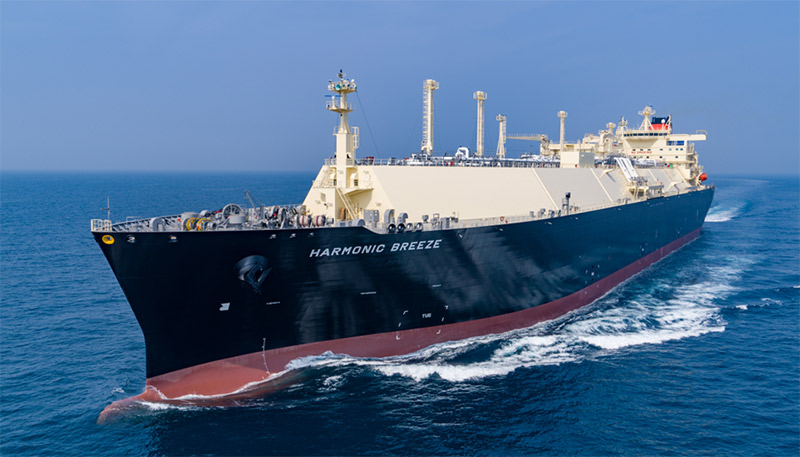
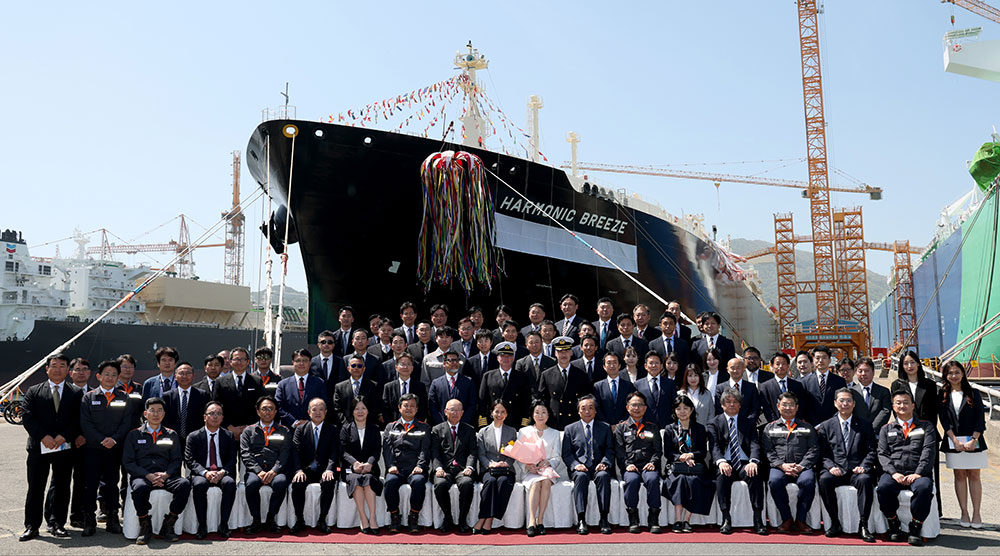
The naming ceremony was held at Hanwha Ocean Co., Ltd.'s Geoje Shipyard in South Korea. INPEX Representative Director, President and CEO Takayuki Ueda and MOL Representative Director, Chairman of the Board Takeshi Hashimoto attended the ceremony. In the presence of numerous stakeholders, the vessel was named the Harmonic Breeze. After delivery, the vessel will contribute to the stable transportation of LNG and INPEX's reliable energy supply.
In addition, the vessel is equipped with an Air Lubrication System (Note 1) and a Shaft Generator (Note 2) as environmental impact reduction systems, and is designed to achieve superior fuel efficiency and reduced GHG emissions compared to conventional LNG carriers.
Based on the management plan "BLUE ACTION 2035," the MOL Group is driving forward a portfolio transformation aimed at increasing the proportion of its stable revenue businesses. This project will help transform the group's earnings foundation, reducing susceptibility to fluctuations in the shipping market-by further expanding its LNG carrier fleet, which is among the largest in the world, and steadily securing long-term charter contracts.
MOL will strive to further deepen and develop its partnership with INPEX, while working to expand its low-carbon and decarbonization businesses as outlined in the "Environmental Vision -BLUE ACTION 2035 Phase 2-." As a leading company in LNG transport, MOL remains committed to providing safe, high-quality services that contribute to reducing environmental impact.
The naming ceremony was held at Hanwha Ocean Co., Ltd.'s Geoje Shipyard in South Korea. INPEX Representative Director, President and CEO Takayuki Ueda and MOL Representative Director, Chairman of the Board Takeshi Hashimoto attended the ceremony. In the presence of numerous stakeholders, the vessel was named the Harmonic Breeze. After delivery, the vessel will contribute to the stable transportation of LNG and INPEX's reliable energy supply.
In addition, the vessel is equipped with an Air Lubrication System (Note 1) and a Shaft Generator (Note 2) as environmental impact reduction systems, and is designed to achieve superior fuel efficiency and reduced GHG emissions compared to conventional LNG carriers.
Based on the management plan "BLUE ACTION 2035," the MOL Group is driving forward a portfolio transformation aimed at increasing the proportion of its stable revenue businesses. This project will help transform the group's earnings foundation, reducing susceptibility to fluctuations in the shipping market-by further expanding its LNG carrier fleet, which is among the largest in the world, and steadily securing long-term charter contracts.
MOL will strive to further deepen and develop its partnership with INPEX, while working to expand its low-carbon and decarbonization businesses as outlined in the "Environmental Vision -BLUE ACTION 2035 Phase 2-." As a leading company in LNG transport, MOL remains committed to providing safe, high-quality services that contribute to reducing environmental impact.
#25
West Africa / Republic of Congo - Moho
Last post by Administrator - Apr 18, 2026, 07:38 AMRepublic of the Congo: TotalEnergies Makes a Hydrocarbon Discovery on the Moho License
Paris, April 13, 2026 – TotalEnergies EP Congo (63.5%, operator) announces a hydrocarbon discovery on the Moho license, offshore the Republic of Congo, following the drilling of the MHNM-6 NFW exploration well targeting the Moho G structure.
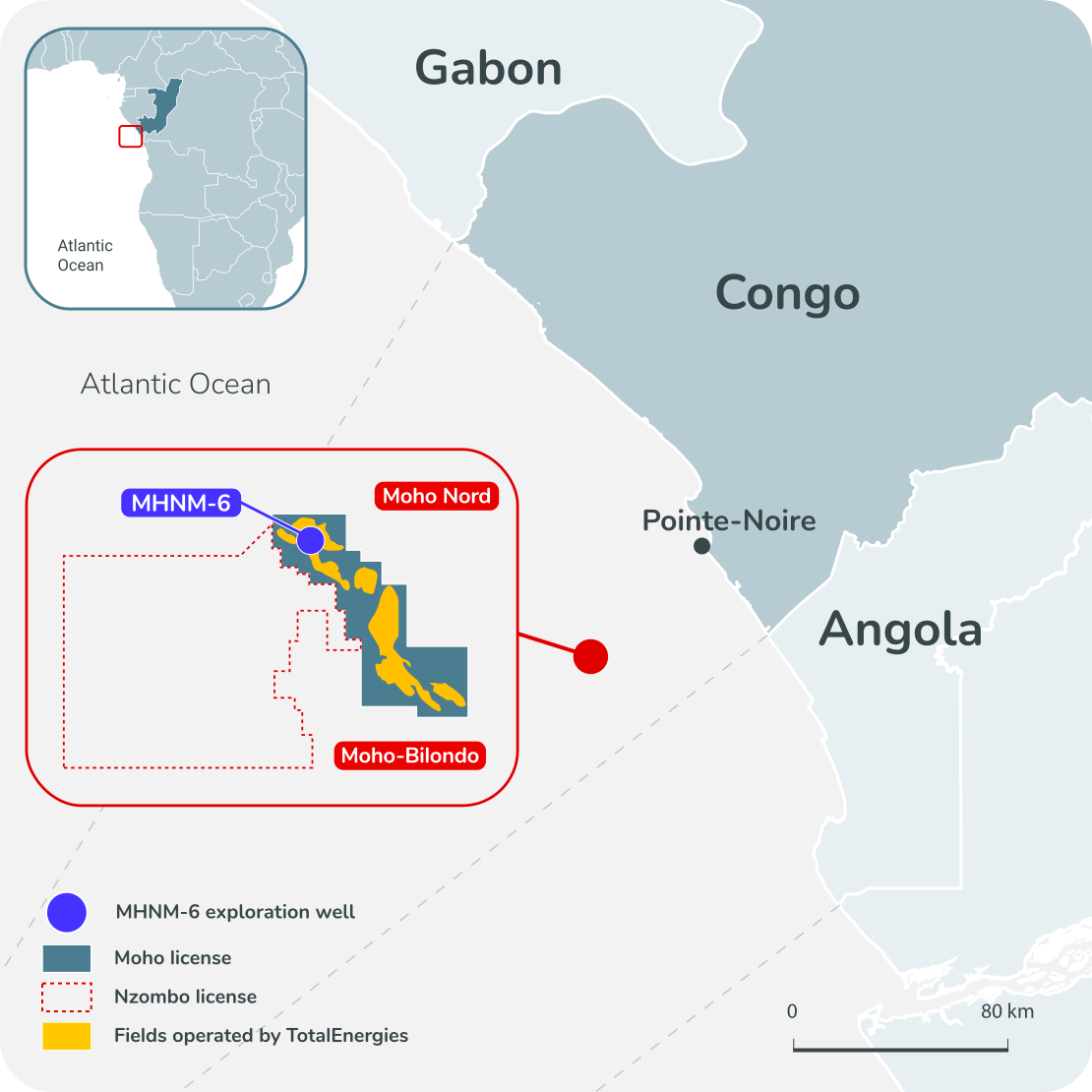
The well encountered a hydrocarbon column of approximately 160 meters in good-quality Albian reservoirs, and an extensive data acquisition and sampling campaign was carried out to support the subsurface interpretation and future development.
The Moho G discovery, together with the discovery previously made on the nearby Moho F structure, represents recoverable resources estimated at close to 100 million barrels, which are planned to be developed as a tie-back to the existing Moho facilities.
This new discovery on the Moho license benefits from its proximity to existing production infrastructure, allowing a short cycle, cost effective tie-back development, said Nicola Mavilla, Senior Vice-President Exploration at TotalEnergies. By leveraging our technical expertise and existing infrastructure, we are creating the conditions for future value-accretive production for the Company.
TotalEnergies EP Congo is the operator of Moho license with a 63.5% participation, alongside Trident Energy (21.5%) and the Société Nationale des Pétroles du Congo (SNPC, 15%). Existing production facilities include two Floating Production Units (FPU), Alima and Likouf, combining for a current output of around 90 kboe/d (100%).
Paris, April 13, 2026 – TotalEnergies EP Congo (63.5%, operator) announces a hydrocarbon discovery on the Moho license, offshore the Republic of Congo, following the drilling of the MHNM-6 NFW exploration well targeting the Moho G structure.
The well encountered a hydrocarbon column of approximately 160 meters in good-quality Albian reservoirs, and an extensive data acquisition and sampling campaign was carried out to support the subsurface interpretation and future development.
The Moho G discovery, together with the discovery previously made on the nearby Moho F structure, represents recoverable resources estimated at close to 100 million barrels, which are planned to be developed as a tie-back to the existing Moho facilities.
This new discovery on the Moho license benefits from its proximity to existing production infrastructure, allowing a short cycle, cost effective tie-back development, said Nicola Mavilla, Senior Vice-President Exploration at TotalEnergies. By leveraging our technical expertise and existing infrastructure, we are creating the conditions for future value-accretive production for the Company.
TotalEnergies EP Congo is the operator of Moho license with a 63.5% participation, alongside Trident Energy (21.5%) and the Société Nationale des Pétroles du Congo (SNPC, 15%). Existing production facilities include two Floating Production Units (FPU), Alima and Likouf, combining for a current output of around 90 kboe/d (100%).
#26
OceanSTAR Elite / Indonesia - Madura FPU Trunojo...
Last post by Administrator - Apr 15, 2026, 09:49 AMTechnical Report: FPU Trunojoyo 01
Developed by OceanSTAR Elite Group
1. Introduction
This report provides a technical overview of the Floating Production Unit (FPU) Trunojoyo 01, developed and operated by OceanSTAR Elite Group through PT Timas Oceanstar Indonesia. The unit supports offshore gas production in the Madura Strait, East Java, Indonesia, and represents a significant milestone in the company's transition into upstream asset operations.
2. Project Background
The Trunojoyo field development required a floating production solution capable of processing and delivering natural gas under offshore conditions. OceanSTAR Elite was awarded the project under a full EPCIC (Engineering, Procurement, Construction, Installation, and Commissioning) contract scope.
The FPU was designed to:
3. Design Specifications
3.1 General Particulars
The topside facilities include:
4. Engineering and Construction
The FPU was fabricated at a shipyard in China and completed within approximately 15 months, demonstrating accelerated project execution despite pandemic-related constraints.
Key engineering highlights include:
5. Installation and Commissioning
5.1 Offshore Installation
The short commissioning timeline reflects effective system integration and pre-commissioning strategies.
6. Operational Performance
Since start-up, FPU Trunojoyo 01 has demonstrated strong operational reliability:
These metrics indicate robust system design, effective maintenance practices, and strong operational management.
7. Health, Safety, and Environmental (HSE) Considerations
The FPU incorporates multiple safety-critical systems, including:
Operational procedures emphasize:
8. Strategic Significance
FPU Trunojoyo 01 represents:
The project establishes a technical and operational benchmark for future offshore developments undertaken by the company.
9. Conclusion
FPU Trunojoyo 01 demonstrates effective integration of engineering design, accelerated construction, and high operational reliability. The project highlights OceanSTAR Elite's capability to deliver complex offshore production systems under challenging conditions while maintaining strong safety and performance standards.
The successful deployment and operation of the unit position the company for continued growth in offshore energy infrastructure and production operations.
Developed by OceanSTAR Elite Group
1. Introduction
This report provides a technical overview of the Floating Production Unit (FPU) Trunojoyo 01, developed and operated by OceanSTAR Elite Group through PT Timas Oceanstar Indonesia. The unit supports offshore gas production in the Madura Strait, East Java, Indonesia, and represents a significant milestone in the company's transition into upstream asset operations.
2. Project Background
The Trunojoyo field development required a floating production solution capable of processing and delivering natural gas under offshore conditions. OceanSTAR Elite was awarded the project under a full EPCIC (Engineering, Procurement, Construction, Installation, and Commissioning) contract scope.
The FPU was designed to:
- Process raw gas from subsea wells
- Treat and compress gas to pipeline specifications
- Export processed gas to onshore facilities
3. Design Specifications
3.1 General Particulars
- Vessel Type: Floating Production Unit (FPU)
- Length Overall (LOA): ~160 m
- Breadth: ~32 m
- Accommodation Capacity: Up to 70 personnel
- Gas Processing Rate: ~175 MMscf/d
The topside facilities include:
- Inlet separation system
- Gas compression system
- Gas dehydration unit
- Metering and export system
- Power generation units
- Firewater and safety systems
- Instrument air and control systems
- Telecommunications and navigation systems
4. Engineering and Construction
The FPU was fabricated at a shipyard in China and completed within approximately 15 months, demonstrating accelerated project execution despite pandemic-related constraints.
Key engineering highlights include:
- Modular topside integration to reduce construction time
- Compliance with international offshore design standards
- Optimization for maintainability and operational efficiency
5. Installation and Commissioning
5.1 Offshore Installation
- Transportation to Madura Strait: Completed September 2022
- Offshore hookup and integration with subsea infrastructure
- Commissioning duration: ~30 days post-installation
- First Gas Achievement: 23 October 2022
The short commissioning timeline reflects effective system integration and pre-commissioning strategies.
6. Operational Performance
Since start-up, FPU Trunojoyo 01 has demonstrated strong operational reliability:
- Availability: 100% uptime (reported period)
- Safety Performance: Zero Lost Time Injuries (LTI)
- Stable production output meeting design capacity
These metrics indicate robust system design, effective maintenance practices, and strong operational management.
7. Health, Safety, and Environmental (HSE) Considerations
The FPU incorporates multiple safety-critical systems, including:
- Emergency shutdown (ESD) systems
- Fire and gas detection systems
- Passive and active fire protection
- Hazardous area classification compliance
Operational procedures emphasize:
- Risk-based inspection (RBI)
- Preventive maintenance
- Workforce safety training and compliance
8. Strategic Significance
FPU Trunojoyo 01 represents:
- OceanSTAR Elite's first operated offshore production asset
- A successful transition from EPC contractor to asset operator
- A key contributor to Indonesia's domestic gas supply
The project establishes a technical and operational benchmark for future offshore developments undertaken by the company.
9. Conclusion
FPU Trunojoyo 01 demonstrates effective integration of engineering design, accelerated construction, and high operational reliability. The project highlights OceanSTAR Elite's capability to deliver complex offshore production systems under challenging conditions while maintaining strong safety and performance standards.
The successful deployment and operation of the unit position the company for continued growth in offshore energy infrastructure and production operations.
#27
SBM Offshore / Brazil - SEAP II - P-87 FPSO
Last post by Administrator - Apr 15, 2026, 09:32 AMPetrobras Advances SEAP Development with FID on SEAP I
Petrobras has taken Final Investment Decision (FID) on the SEAP I module in the Sergipe-Alagoas Basin, marking a key step in the phased development of the Sergipe Deepwater Project (SEAP), an emerging offshore production hub in Brazil. This follows the earlier FID for SEAP II in December 2025, confirming full-field development progression.
Project Economics and Commercial Structuring
Project sanction was enabled by a combination of cost optimization measures, supply chain engagement, and revised commercial frameworks. Petrobras worked closely with contractors to restructure contractual terms and improve project economics, enhancing overall IRR and resilience under oil price volatility scenarios.
A notable outcome was the joint procurement strategy for the P-81 (SEAP I) and P-87 (SEAP II) FPSOs. Bundling these units allowed Petrobras to capture synergies, standardization benefits, and economies of scale—key factors in achieving commercially viable agreements.
As a result, SEAP I has been incorporated into Petrobras' Base Implementation Portfolio, reinforcing the role of collaborative supplier engagement in unlocking complex deepwater developments.
Execution Model and Contracting Strategy
Both FPSOs will be delivered under a BOT (Build, Operate, Transfer) model, with SBM Offshore responsible for EPCIC and operations during the initial contract period prior to asset transfer. This model provides capital efficiency, schedule acceleration, and operational continuity.
Contract signing is expected in May 2026, subject to final governance approvals and partner alignment, enabling transition into the execution phase.
Production Capacity and Timeline
Combined, the two FPSOs will deliver:
First oil is targeted for 2030, with gas export infrastructure coming online in 2031.
Field Development Scope
The SEAP development plan includes:
Tendering for subsea hardware is already in progress, with additional packages scheduled for bid in 2026.
Strategic Importance
SEAP represents a major addition to Brazil's upstream portfolio, with total capex exceeding BRL 60 billion and expected recovery above 1 billion boe. Beyond liquids production, the project is strategically positioned to expand domestic gas supply, supporting energy security and infrastructure development in the Northeast region.
Asset Breakdown
SEAP I (P-81 FPSO):
SEAP II (P-87 FPSO):
Petrobras has taken Final Investment Decision (FID) on the SEAP I module in the Sergipe-Alagoas Basin, marking a key step in the phased development of the Sergipe Deepwater Project (SEAP), an emerging offshore production hub in Brazil. This follows the earlier FID for SEAP II in December 2025, confirming full-field development progression.
Project Economics and Commercial Structuring
Project sanction was enabled by a combination of cost optimization measures, supply chain engagement, and revised commercial frameworks. Petrobras worked closely with contractors to restructure contractual terms and improve project economics, enhancing overall IRR and resilience under oil price volatility scenarios.
A notable outcome was the joint procurement strategy for the P-81 (SEAP I) and P-87 (SEAP II) FPSOs. Bundling these units allowed Petrobras to capture synergies, standardization benefits, and economies of scale—key factors in achieving commercially viable agreements.
As a result, SEAP I has been incorporated into Petrobras' Base Implementation Portfolio, reinforcing the role of collaborative supplier engagement in unlocking complex deepwater developments.
Execution Model and Contracting Strategy
Both FPSOs will be delivered under a BOT (Build, Operate, Transfer) model, with SBM Offshore responsible for EPCIC and operations during the initial contract period prior to asset transfer. This model provides capital efficiency, schedule acceleration, and operational continuity.
Contract signing is expected in May 2026, subject to final governance approvals and partner alignment, enabling transition into the execution phase.
Production Capacity and Timeline
Combined, the two FPSOs will deliver:
- Oil production capacity: 240,000 bbl/d
- Gas processing capacity: 22 million m³/d
First oil is targeted for 2030, with gas export infrastructure coming online in 2031.
Field Development Scope
The SEAP development plan includes:
- Drilling and completion of 32 subsea wells
- Installation of subsea production systems, including Christmas trees and associated infrastructure
- A 134 km gas export pipeline (111 km offshore, 23 km onshore)
Tendering for subsea hardware is already in progress, with additional packages scheduled for bid in 2026.
Strategic Importance
SEAP represents a major addition to Brazil's upstream portfolio, with total capex exceeding BRL 60 billion and expected recovery above 1 billion boe. Beyond liquids production, the project is strategically positioned to expand domestic gas supply, supporting energy security and infrastructure development in the Northeast region.
Asset Breakdown
SEAP I (P-81 FPSO):
- Targets light oil accumulations in Agulhinha, Agulhinha Oeste, and Palombeta (BM-SEAL-10/11).
- Capacity: 120,000 bbl/d oil, 10 million m³/d gas
- Petrobras operatorship: 100% (BM-SEAL-10), 60% (BM-SEAL-11)
SEAP II (P-87 FPSO):
- Covers Budião, Budião NW, and Palombeta (~80 km offshore, BM-SEAL-4/4A/10).
- Capacity: 120,000 bbl/d oil, 12 million m³/d gas
- Petrobras operatorship: 75% (BM-SEAL-4), 100% (BM-SEAL-4A/10)
#28
SBM Offshore / Brazil - SEAP I - P-81 FPSO
Last post by Administrator - Apr 15, 2026, 09:24 AMPetrobras Advances SEAP Development with FID on SEAP I
Petrobras has taken Final Investment Decision (FID) on the SEAP I module in the Sergipe-Alagoas Basin, marking a key step in the phased development of the Sergipe Deepwater Project (SEAP), an emerging offshore production hub in Brazil. This follows the earlier FID for SEAP II in December 2025, confirming full-field development progression.
Project Economics and Commercial Structuring
Project sanction was enabled by a combination of cost optimization measures, supply chain engagement, and revised commercial frameworks. Petrobras worked closely with contractors to restructure contractual terms and improve project economics, enhancing overall IRR and resilience under oil price volatility scenarios.
A notable outcome was the joint procurement strategy for the P-81 (SEAP I) and P-87 (SEAP II) FPSOs. Bundling these units allowed Petrobras to capture synergies, standardization benefits, and economies of scale—key factors in achieving commercially viable agreements.
As a result, SEAP I has been incorporated into Petrobras' Base Implementation Portfolio, reinforcing the role of collaborative supplier engagement in unlocking complex deepwater developments.
Execution Model and Contracting Strategy
Both FPSOs will be delivered under a BOT (Build, Operate, Transfer) model, with SBM Offshore responsible for EPCIC and operations during the initial contract period prior to asset transfer. This model provides capital efficiency, schedule acceleration, and operational continuity.
Contract signing is expected in May 2026, subject to final governance approvals and partner alignment, enabling transition into the execution phase.
Production Capacity and Timeline
Combined, the two FPSOs will deliver:
First oil is targeted for 2030, with gas export infrastructure coming online in 2031.
Field Development Scope
The SEAP development plan includes:
Tendering for subsea hardware is already in progress, with additional packages scheduled for bid in 2026.
Strategic Importance
SEAP represents a major addition to Brazil's upstream portfolio, with total capex exceeding BRL 60 billion and expected recovery above 1 billion boe. Beyond liquids production, the project is strategically positioned to expand domestic gas supply, supporting energy security and infrastructure development in the Northeast region.
Asset Breakdown
SEAP I (P-81 FPSO):
SEAP II (P-87 FPSO):
Petrobras has taken Final Investment Decision (FID) on the SEAP I module in the Sergipe-Alagoas Basin, marking a key step in the phased development of the Sergipe Deepwater Project (SEAP), an emerging offshore production hub in Brazil. This follows the earlier FID for SEAP II in December 2025, confirming full-field development progression.
Project Economics and Commercial Structuring
Project sanction was enabled by a combination of cost optimization measures, supply chain engagement, and revised commercial frameworks. Petrobras worked closely with contractors to restructure contractual terms and improve project economics, enhancing overall IRR and resilience under oil price volatility scenarios.
A notable outcome was the joint procurement strategy for the P-81 (SEAP I) and P-87 (SEAP II) FPSOs. Bundling these units allowed Petrobras to capture synergies, standardization benefits, and economies of scale—key factors in achieving commercially viable agreements.
As a result, SEAP I has been incorporated into Petrobras' Base Implementation Portfolio, reinforcing the role of collaborative supplier engagement in unlocking complex deepwater developments.
Execution Model and Contracting Strategy
Both FPSOs will be delivered under a BOT (Build, Operate, Transfer) model, with SBM Offshore responsible for EPCIC and operations during the initial contract period prior to asset transfer. This model provides capital efficiency, schedule acceleration, and operational continuity.
Contract signing is expected in May 2026, subject to final governance approvals and partner alignment, enabling transition into the execution phase.
Production Capacity and Timeline
Combined, the two FPSOs will deliver:
- Oil production capacity: 240,000 bbl/d
- Gas processing capacity: 22 million m³/d
First oil is targeted for 2030, with gas export infrastructure coming online in 2031.
Field Development Scope
The SEAP development plan includes:
- Drilling and completion of 32 subsea wells
- Installation of subsea production systems, including Christmas trees and associated infrastructure
- A 134 km gas export pipeline (111 km offshore, 23 km onshore)
Tendering for subsea hardware is already in progress, with additional packages scheduled for bid in 2026.
Strategic Importance
SEAP represents a major addition to Brazil's upstream portfolio, with total capex exceeding BRL 60 billion and expected recovery above 1 billion boe. Beyond liquids production, the project is strategically positioned to expand domestic gas supply, supporting energy security and infrastructure development in the Northeast region.
Asset Breakdown
SEAP I (P-81 FPSO):
- Targets light oil accumulations in Agulhinha, Agulhinha Oeste, and Palombeta (BM-SEAL-10/11).
- Capacity: 120,000 bbl/d oil, 10 million m³/d gas
- Petrobras operatorship: 100% (BM-SEAL-10), 60% (BM-SEAL-11)
SEAP II (P-87 FPSO):
- Covers Budião, Budião NW, and Palombeta (~80 km offshore, BM-SEAL-4/4A/10).
- Capacity: 120,000 bbl/d oil, 12 million m³/d gas
- Petrobras operatorship: 75% (BM-SEAL-4), 100% (BM-SEAL-4A/10)
#29
Field Development / Re: Brazil - Sergipe Deepwater...
Last post by Administrator - Apr 15, 2026, 02:59 AMPetrobras Advances SEAP Development with FID on SEAP I
Petrobras has taken Final Investment Decision (FID) on the SEAP I module in the Sergipe-Alagoas Basin, marking a key step in the phased development of the Sergipe Deepwater Project (SEAP), an emerging offshore production hub in Brazil. This follows the earlier FID for SEAP II in December 2025, confirming full-field development progression.
Project Economics and Commercial Structuring
Project sanction was enabled by a combination of cost optimization measures, supply chain engagement, and revised commercial frameworks. Petrobras worked closely with contractors to restructure contractual terms and improve project economics, enhancing overall IRR and resilience under oil price volatility scenarios.
A notable outcome was the joint procurement strategy for the P-81 (SEAP I) and P-87 (SEAP II) FPSOs. Bundling these units allowed Petrobras to capture synergies, standardization benefits, and economies of scale—key factors in achieving commercially viable agreements.
As a result, SEAP I has been incorporated into Petrobras' Base Implementation Portfolio, reinforcing the role of collaborative supplier engagement in unlocking complex deepwater developments.
Execution Model and Contracting Strategy
Both FPSOs will be delivered under a BOT (Build, Operate, Transfer) model, with SBM Offshore responsible for EPCIC and operations during the initial contract period prior to asset transfer. This model provides capital efficiency, schedule acceleration, and operational continuity.
Contract signing is expected in May 2026, subject to final governance approvals and partner alignment, enabling transition into the execution phase.
Production Capacity and Timeline
Combined, the two FPSOs will deliver:
Oil production capacity: 240,000 bbl/d
Gas processing capacity: 22 million m³/d
First oil is targeted for 2030, with gas export infrastructure coming online in 2031.
Field Development Scope
The SEAP development plan includes:
Drilling and completion of 32 subsea wells
Installation of subsea production systems, including Christmas trees and associated infrastructure
A 134 km gas export pipeline (111 km offshore, 23 km onshore)
Tendering for subsea hardware is already in progress, with additional packages scheduled for bid in 2026.
Strategic Importance
SEAP represents a major addition to Brazil's upstream portfolio, with total capex exceeding BRL 60 billion and expected recovery above 1 billion boe. Beyond liquids production, the project is strategically positioned to expand domestic gas supply, supporting energy security and infrastructure development in the Northeast region.
Asset Breakdown
SEAP I (P-81 FPSO):
Targets light oil accumulations in Agulhinha, Agulhinha Oeste, and Palombeta (BM-SEAL-10/11).
Capacity: 120,000 bbl/d oil, 10 million m³/d gas
Petrobras operatorship: 100% (BM-SEAL-10), 60% (BM-SEAL-11)
SEAP II (P-87 FPSO):
Covers Budião, Budião NW, and Palombeta (~80 km offshore, BM-SEAL-4/4A/10).
Capacity: 120,000 bbl/d oil, 12 million m³/d gas
Petrobras operatorship: 75% (BM-SEAL-4), 100% (BM-SEAL-4A/10)
Petrobras has taken Final Investment Decision (FID) on the SEAP I module in the Sergipe-Alagoas Basin, marking a key step in the phased development of the Sergipe Deepwater Project (SEAP), an emerging offshore production hub in Brazil. This follows the earlier FID for SEAP II in December 2025, confirming full-field development progression.
Project Economics and Commercial Structuring
Project sanction was enabled by a combination of cost optimization measures, supply chain engagement, and revised commercial frameworks. Petrobras worked closely with contractors to restructure contractual terms and improve project economics, enhancing overall IRR and resilience under oil price volatility scenarios.
A notable outcome was the joint procurement strategy for the P-81 (SEAP I) and P-87 (SEAP II) FPSOs. Bundling these units allowed Petrobras to capture synergies, standardization benefits, and economies of scale—key factors in achieving commercially viable agreements.
As a result, SEAP I has been incorporated into Petrobras' Base Implementation Portfolio, reinforcing the role of collaborative supplier engagement in unlocking complex deepwater developments.
Execution Model and Contracting Strategy
Both FPSOs will be delivered under a BOT (Build, Operate, Transfer) model, with SBM Offshore responsible for EPCIC and operations during the initial contract period prior to asset transfer. This model provides capital efficiency, schedule acceleration, and operational continuity.
Contract signing is expected in May 2026, subject to final governance approvals and partner alignment, enabling transition into the execution phase.
Production Capacity and Timeline
Combined, the two FPSOs will deliver:
Oil production capacity: 240,000 bbl/d
Gas processing capacity: 22 million m³/d
First oil is targeted for 2030, with gas export infrastructure coming online in 2031.
Field Development Scope
The SEAP development plan includes:
Drilling and completion of 32 subsea wells
Installation of subsea production systems, including Christmas trees and associated infrastructure
A 134 km gas export pipeline (111 km offshore, 23 km onshore)
Tendering for subsea hardware is already in progress, with additional packages scheduled for bid in 2026.
Strategic Importance
SEAP represents a major addition to Brazil's upstream portfolio, with total capex exceeding BRL 60 billion and expected recovery above 1 billion boe. Beyond liquids production, the project is strategically positioned to expand domestic gas supply, supporting energy security and infrastructure development in the Northeast region.
Asset Breakdown
SEAP I (P-81 FPSO):
Targets light oil accumulations in Agulhinha, Agulhinha Oeste, and Palombeta (BM-SEAL-10/11).
Capacity: 120,000 bbl/d oil, 10 million m³/d gas
Petrobras operatorship: 100% (BM-SEAL-10), 60% (BM-SEAL-11)
SEAP II (P-87 FPSO):
Covers Budião, Budião NW, and Palombeta (~80 km offshore, BM-SEAL-4/4A/10).
Capacity: 120,000 bbl/d oil, 12 million m³/d gas
Petrobras operatorship: 75% (BM-SEAL-4), 100% (BM-SEAL-4A/10)
#30
Dgitilization (AI, Machine Learning, Data) / SLB and Azule Energy Scale Ent...
Last post by Administrator - Apr 13, 2026, 04:53 AMHOUSTON Mar. 31, 2026 — Global technology company SLB (NYSE: SLB) today announced a three-year agreement with Azule Energy to continue and expand the use of its enterprise digital platform across Azule's operations in Angola. The platform will help Azule drive more consistent execution, accelerate decision-making, and support reliable energy delivery across its portfolio.
Azule Energy — a joint venture of bp and Eni and the largest independent energy producer in Angola — operates some of the region's most complex assets. The agreement builds on two years of Delfi™ use within Azule's reservoir organization, where the platform supports reservoir studies, modelling, simulation, and well planning workflows, and supports enterprise-scale digital integration by connecting reservoir workflows with broader operational data environments over time.
"Azule operates large, complex energy assets where execution reliability and consistency matter," said ND Maduemezia, president, Europe and Africa, SLB. "This agreement expands the use of an enterprise digital platform that connects workflows and data, strengthening and accelerating decision-making and improving execution predictability in support of reliable energy delivery in Angola."
The agreement reflects a move to enterprise-scale digital operations, enabled by SLB's digital platform and cloud-based capabilities. Delivery is supported through the SLB Luanda Performance Center, which enables digital solutions to be deployed and sustained locally.
The platform supports key workflows across Azule's reservoir and planning activities, with integration into broader operational data environments over time. It also positions Azule to rapidly adopt new digital and AI-enabled technologies as they emerge, enabling continuous performance improvement.
Early deployments demonstrate impact: integrated workflows, including DrillPlan™ coherent well planning and engineering solutions, have cut planning cycles from days to hours while increasing automation and minimizing manual coordination.
The enterprise platform reinforces execution consistency across Azule's large, mature operations, where operational discipline is central to sustaining performance.
Azule Energy — a joint venture of bp and Eni and the largest independent energy producer in Angola — operates some of the region's most complex assets. The agreement builds on two years of Delfi™ use within Azule's reservoir organization, where the platform supports reservoir studies, modelling, simulation, and well planning workflows, and supports enterprise-scale digital integration by connecting reservoir workflows with broader operational data environments over time.
"Azule operates large, complex energy assets where execution reliability and consistency matter," said ND Maduemezia, president, Europe and Africa, SLB. "This agreement expands the use of an enterprise digital platform that connects workflows and data, strengthening and accelerating decision-making and improving execution predictability in support of reliable energy delivery in Angola."
The agreement reflects a move to enterprise-scale digital operations, enabled by SLB's digital platform and cloud-based capabilities. Delivery is supported through the SLB Luanda Performance Center, which enables digital solutions to be deployed and sustained locally.
The platform supports key workflows across Azule's reservoir and planning activities, with integration into broader operational data environments over time. It also positions Azule to rapidly adopt new digital and AI-enabled technologies as they emerge, enabling continuous performance improvement.
Early deployments demonstrate impact: integrated workflows, including DrillPlan™ coherent well planning and engineering solutions, have cut planning cycles from days to hours while increasing automation and minimizing manual coordination.
The enterprise platform reinforces execution consistency across Azule's large, mature operations, where operational discipline is central to sustaining performance.